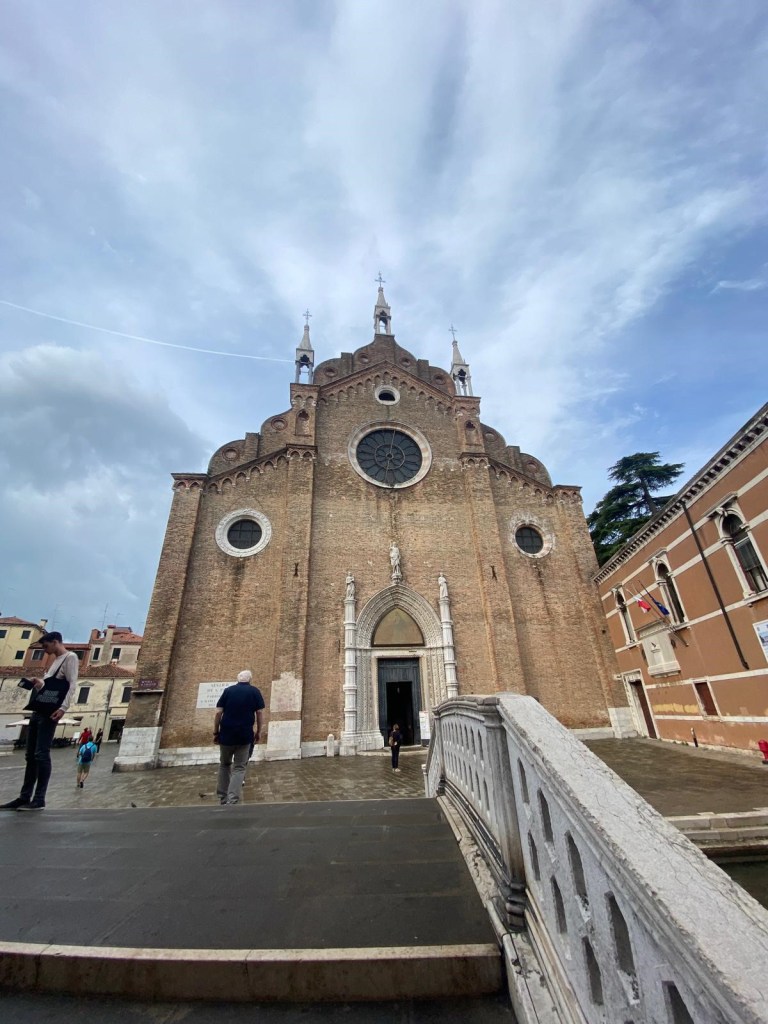
On my recent trip to Venice , I prioritised the first couple of days visiting various big name museums such as the Penny Guggenheim Museum as well as the Ca’ Pesaro International Gallery of Modern Art. It was only when I had exhausted all the places I wanted to visit with my museum pass, wandering around the streets of the city, that I stumbled on the Basilica di Santa Maria dei Friari. I later read that its widely noted that the austere exterior of this place contrasts greatly with the magnificent interior. This was something I only found out when looking up this beautiful church on google, deciding if I should enter the place.
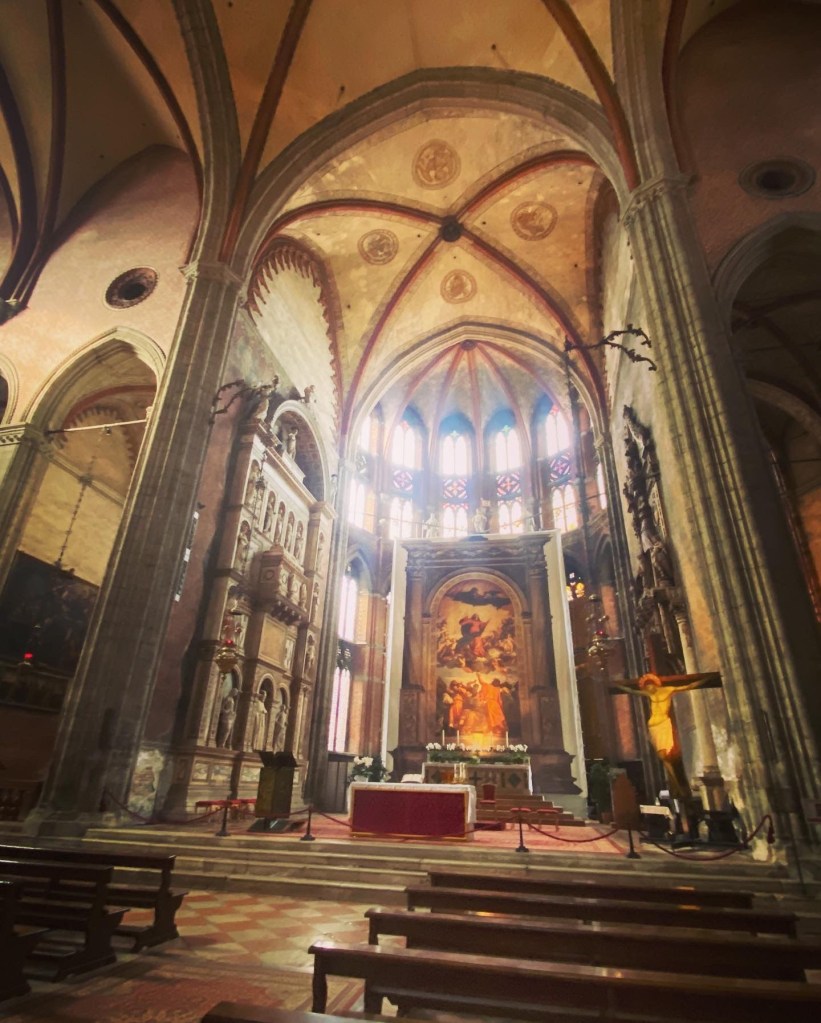
I decided to return the next day when a thunderstorm was on the weather cards, so that I would be well- sheltered by the elements in this gothic architecture. It was the right decision as you can see from the pictures seen on this post. The interior that is bath in the glorious morning sun rays of an autumn day in Venice. The pictures I took that morning were stunning. It would be appropriate to use #nofiltersneeded on Instagram if I were to post these images, don’t you think?
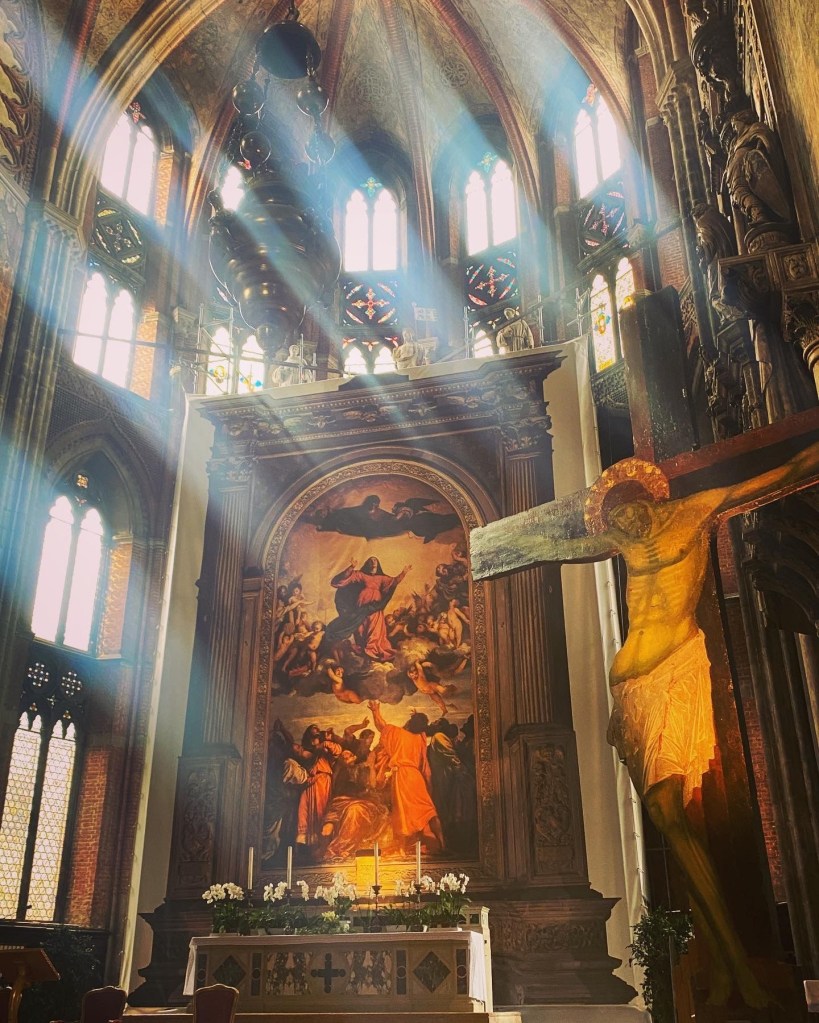
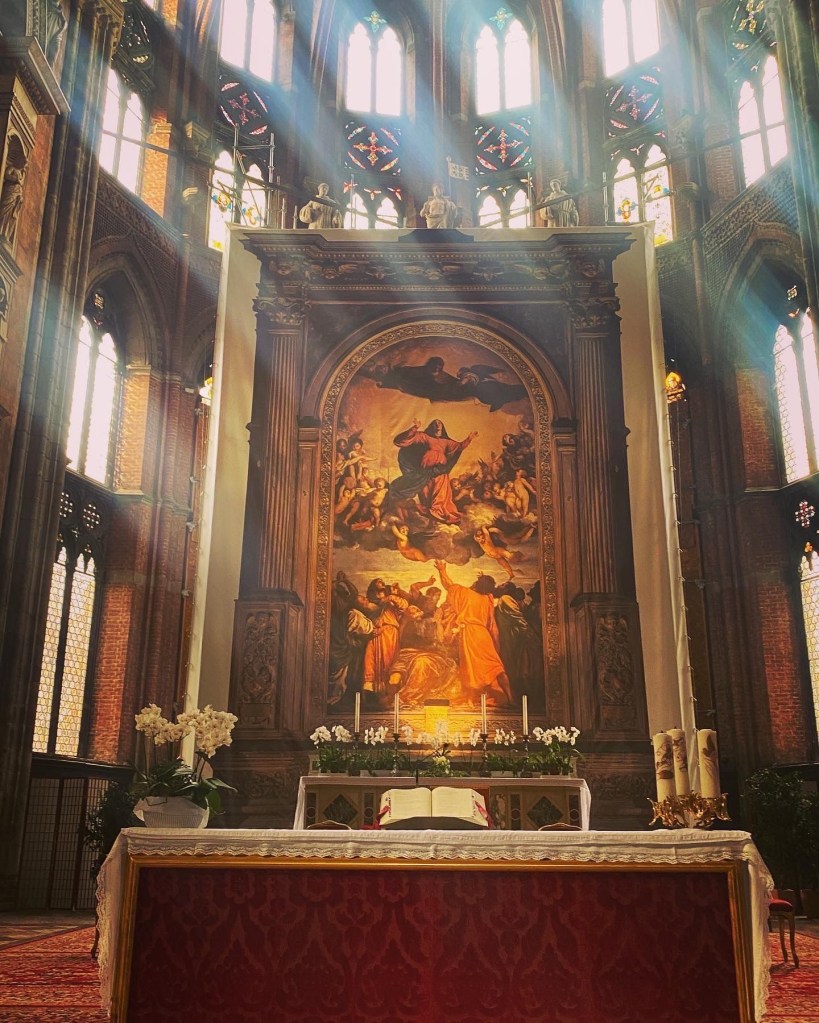
Tiziano Veciello’s name has always been synonymous with the city itself. His works have been exemplary representations of the school of Venice where the focus was on colour, in contrast to the central Florentine preoccupation with ‘disegno’. Venice’s artistic rendition resulted in an innovation in colour richness, dynamic compositions and a certain type of special expression. One prime example can be found in Titian’s Assumption of the Virgin which adorns the main altar of the Basilica. This divine piece represented extraordinarily novel decisions Titian took in his interpretation of the divine event, creating a groundbreaking painting for its intense chromatic pairings, heroic figure scale, size and creative representation of the Virgin rising into heaven while the apostles witness this miraculous event with their mouths agape.
The composition includes two figural groups: the Virgin Mary in a circle, and the amazed apostles in a rectangular block. The ascending Virgin is adorned in a crimson robe, basking in an explosion of brilliant light. The bold color of her robe is repeated in the red worn by two of the apostles below, providing a unification of the two halves of the scene through the colour. Mary is bathed in gold, while the apostles below are set against a cool azure sky, creating a visual division between the earthly and heavenly domains. God the Father awaits with an angel to crown The Blessed Virgin.
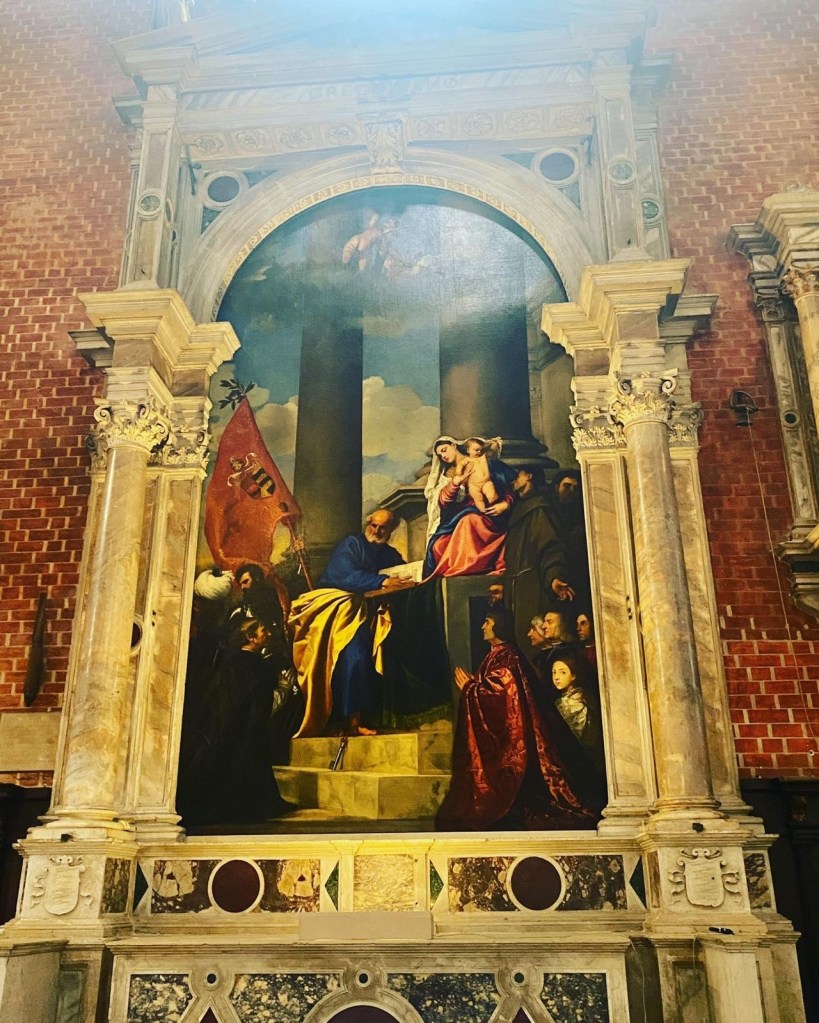
Another of Titian’s masterpiece is found elsewhere closely in the magnificent church. In Pesaro Madonna, we see the classical columns framing the picture, very much like Raphael’s School of Athens. These columns act as a form of a gateway into the pictorial space , heightening the illusion experience for the beholder. St Francis is featured prominently next to the Christ Child. His presence there is most likely due to the fact that the Basilica is under the Franciscan Order. Placed below St. Francis are the members of the Pesaro Family. The Virgin and Child is accompanied by St. Peter who is clad in blue. St Peter turns his gaze to the other group of figures , unifying the two figural groups. The other group features Jacopo Pesaro who was a military leader who just defeated the Turks in a symbolic victory of Christianity over Islam. The message imbedded here is symbolised by Jacopo bringing the Turk prisoner of war to the Catholic Church, represented by St Peter. The image’s off-centre composition , the deviation from the traditional representations of The Virgin and Christ Child were unseen in the time of Titian before the Pesaro Madonna. The effect of Titian’s design decisions enabled the devotee , while walking into the church of the Frari and seeing the painting above a side altar to his left, feel as if one could enter into the painting if he or she wanted to. The angle at which we see the painting corresponded with the direction from which visitors to the church came. This calculated artistic direction shows the ingenuity of Titian, making it obvious as to why he earned his place in this very Basilica as his final resting place with a majestic tomb that will be featured in the later part of this blog.
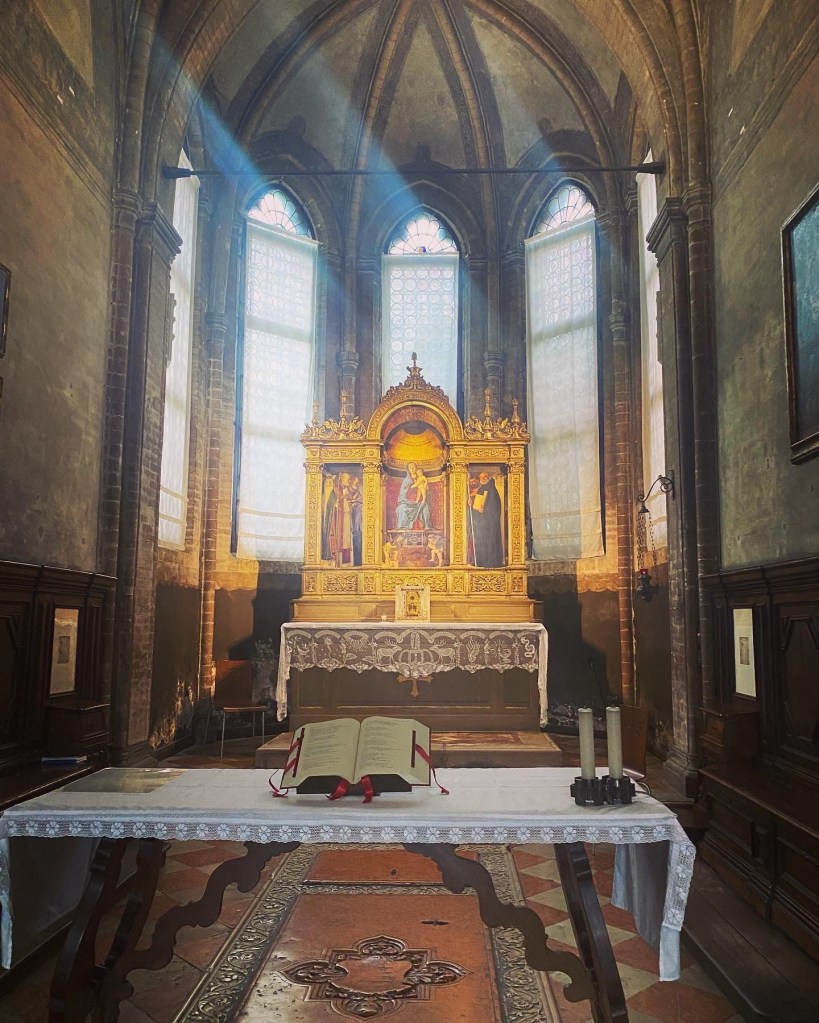
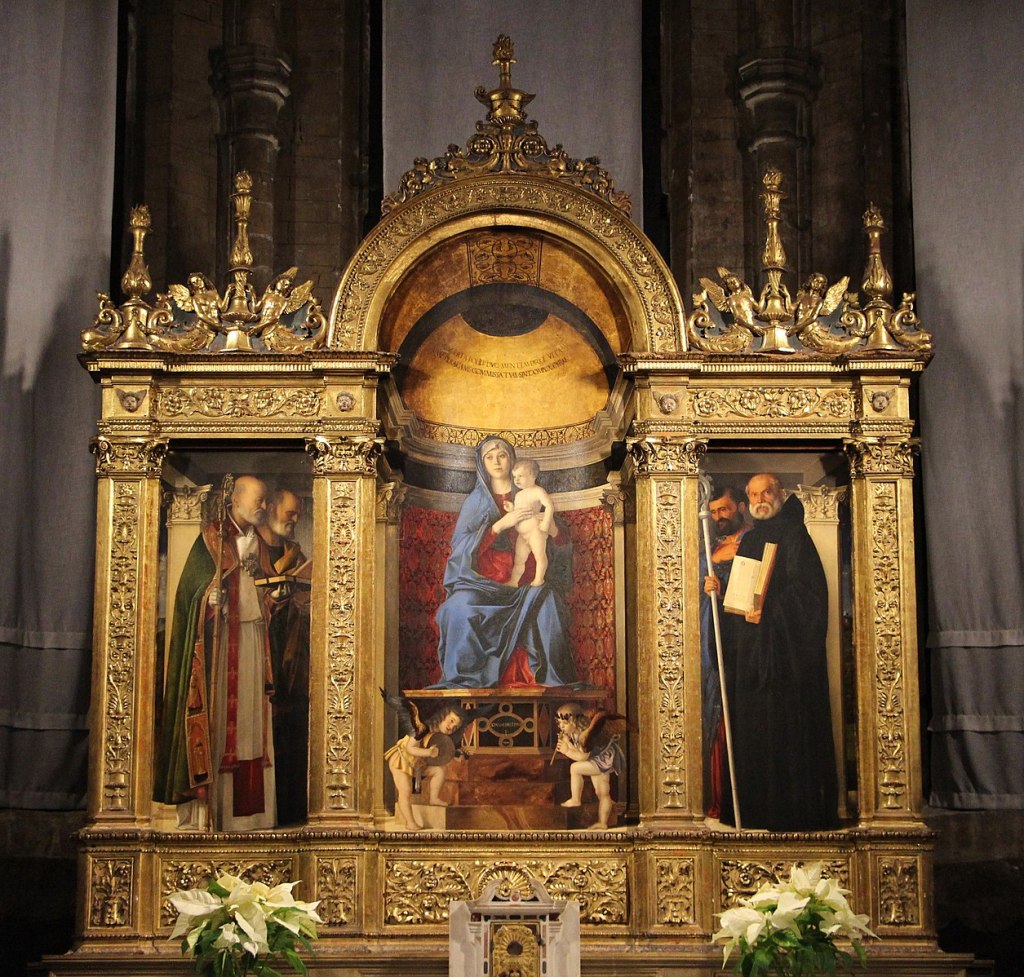
In the sacristy , a beautiful triptych by Giovanni Bellini , Titian’s mentor, is also found. Featured prominently in the centre , Madonna and The Christ Child are enthroned while Christ raises his hand in blessing while safely wrapped in the arms of his mother. The archetypal Venetian chromatic richness is also found here in the robes of the divine figures which are portrayed with solidity and three-dimensionality that was even more rare in the time of Bellini. Madonna and the baby Jesus are flanked by St Mark and St Benedict on the right , while the left stand Saint Nicholas of Bari as well as St Peter.
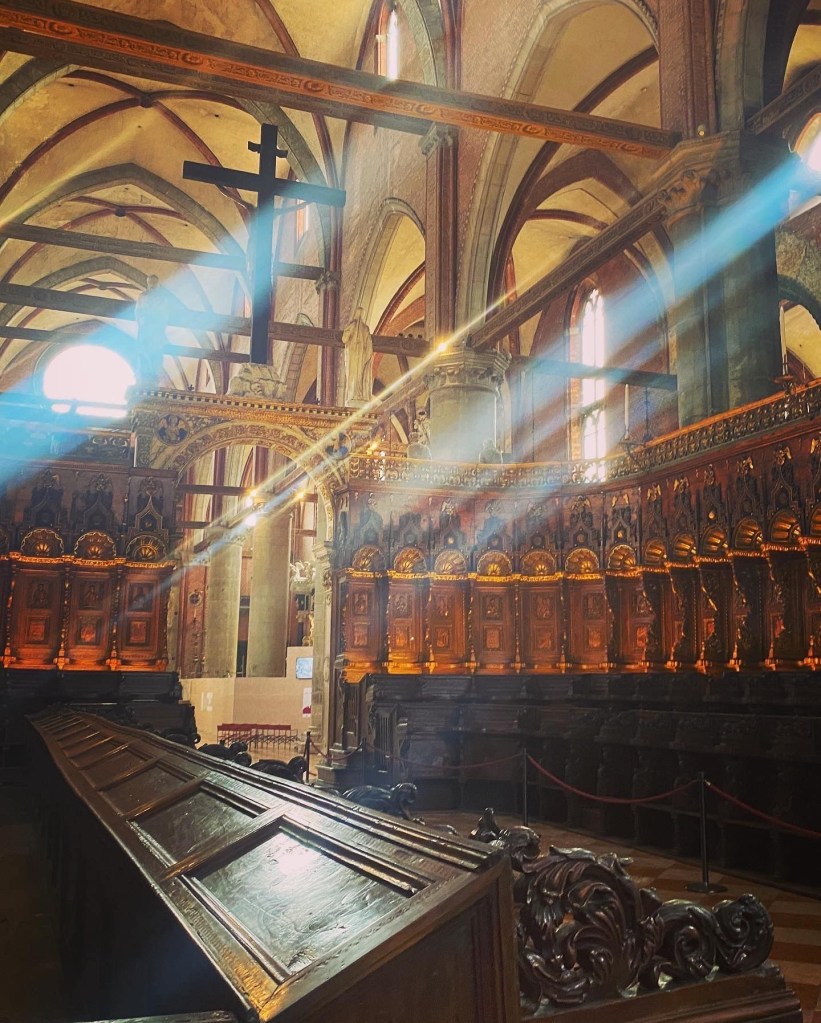
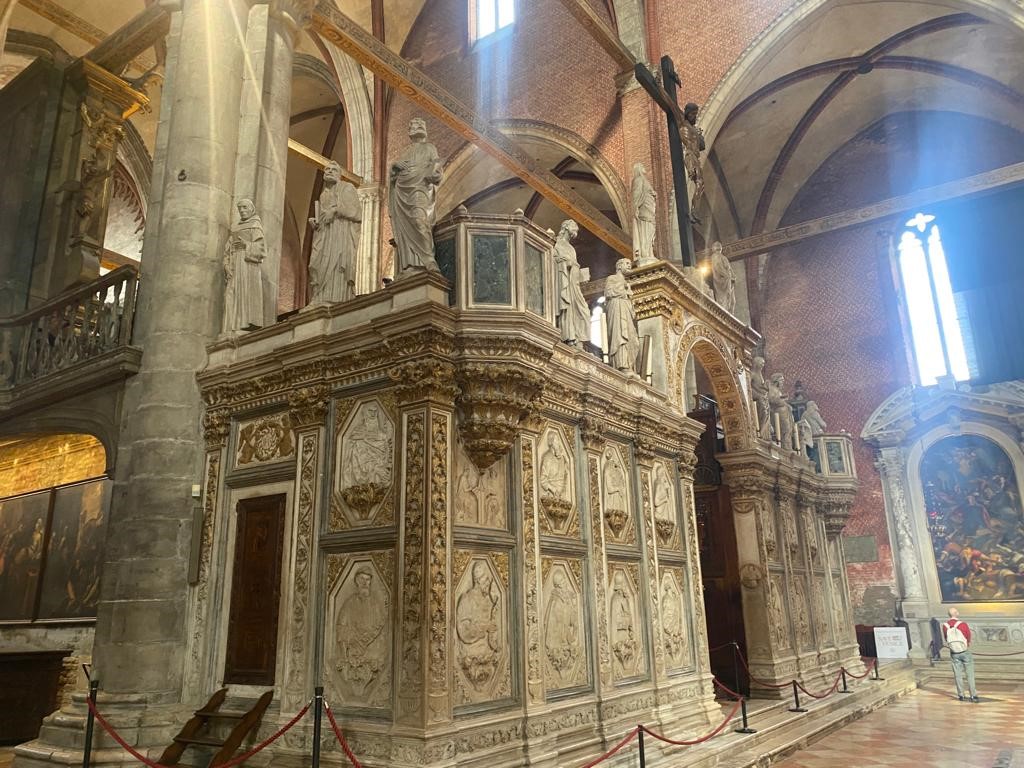

Rood screen of the Basilica. This structure is designed to separate the clergy from the other worshippers. A rare find , since rood screens have mostly ceased in existence.
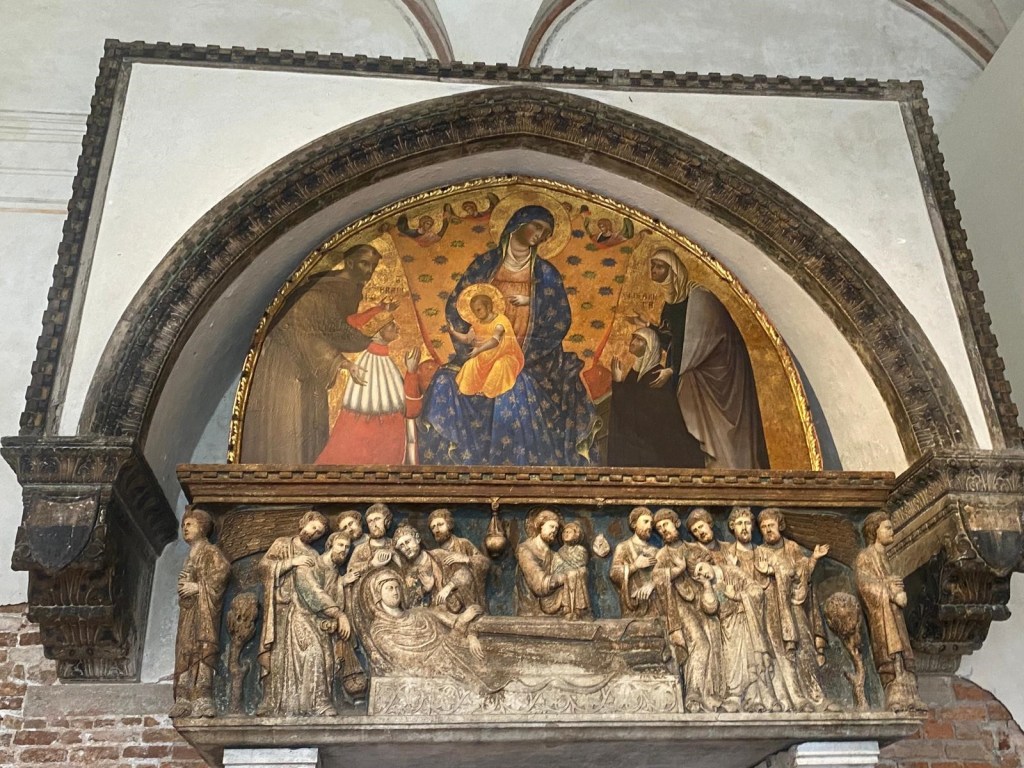

Francesco Pianta the Younger , Clock , 17th Century
Another interesting feature found in the Basilica, a carved wooden clock that represents the allegory of time. The changing of the seasons that symbolise the life span of man in four major periods are succinctly represented on cherry wood.
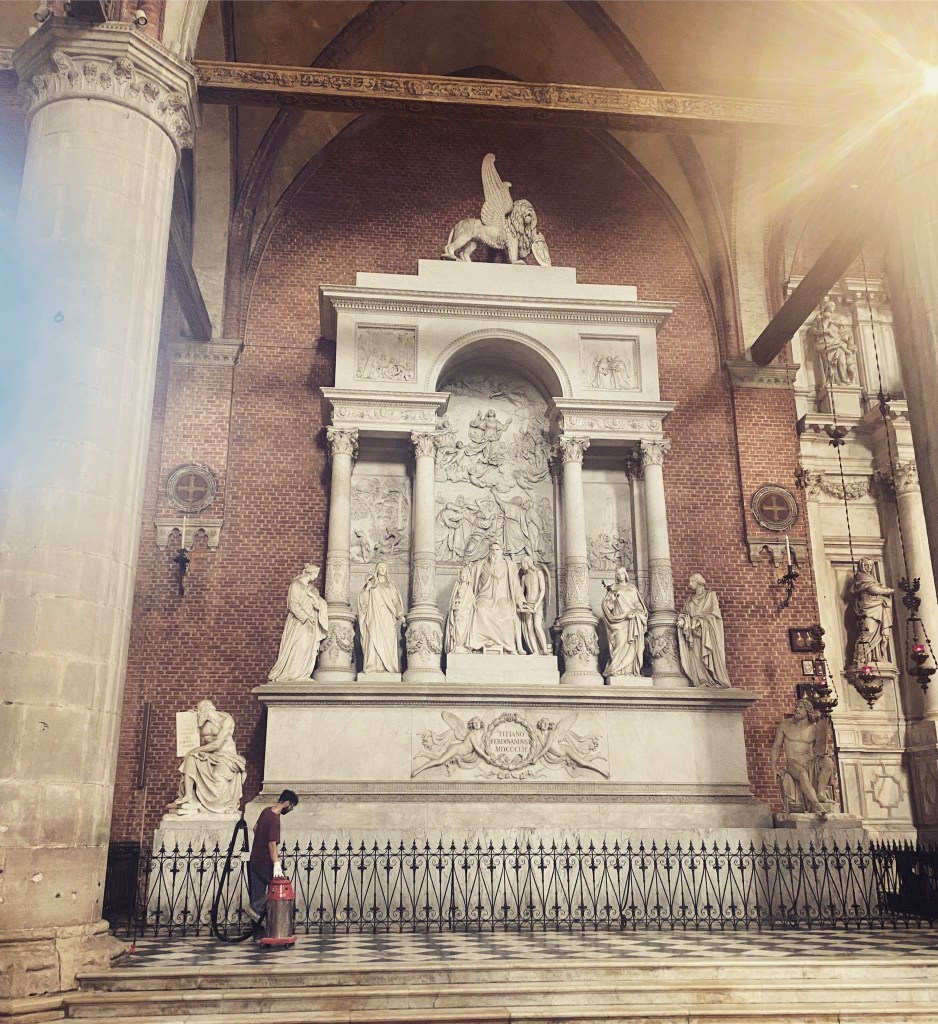
On my way out , I finally stop to admire the beautiful tombs of Titian, as well as that of Antonio Canova. The tombs were located nearer to the entrance , but since I was drawn to view the Assumption at the high altar , I went past both tombs and rushed to the painting immediately . It was only on my way out that I gave them my full attention. At the tomb of Titian, the centre is dominated by the artist himself crowned with a laurel wreath. Nearby are statues representing Painting, Sculpture, Graphic Art and Architecture. Five bas-reliefs also recall Titian’s most important works for the Church.

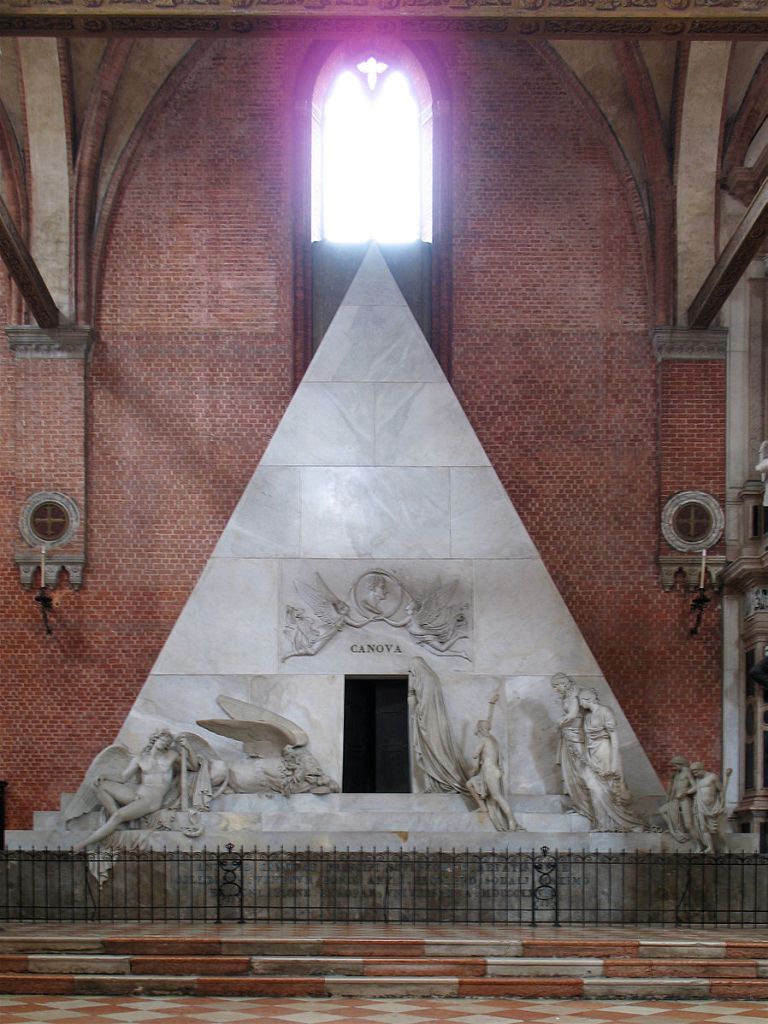
The tomb of Canova was undergoing reconstruction, and it was such waste because the monument is absolutely stunning. I had to content with a google search to see the full shrine. I found it very interesting that this monument was in the shape of a pyramid, reminiscent of the ones found in Giza in Egypt. It’s design came from the hands of Canova himself who originally visualised the tomb for Titian. He unfortunately, never executed this due to the fall of the Republic of Venice as well as lack of funds. A mourning winged lion is represented here as Venice , while the allegory of inspiration and genius blows off the torch as darkness descends. Eternity is represented a serpent devouring its own tail around the cameo of the artist’s profile.
All in all, I have to say that it was a lovely morning where I managed to see so many masterpieces in one place. As they say, never judge a book by its cover. The facade of the Basilica di Santa Maria dei Friari sure did nearly pulled a wool over my eyes!
 writingaboutpaintings
Leave a comment