Knossos Palace is the most popular tourist destination in the Hellenic Republic after the Acropolis in Athens for good reason. Tied to a famous myth, this archaeological site fascinates due to the captivating insights into the Minoan Civilisation, also dubbed as the earliest European settlement.
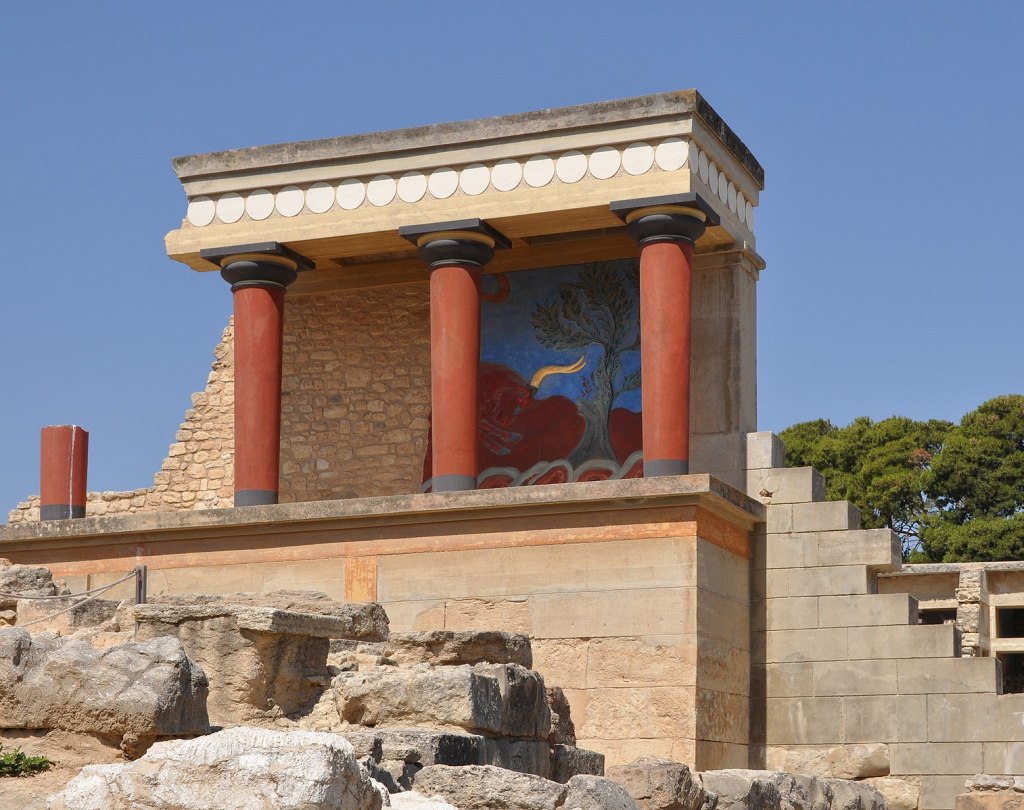
Knossos was purported to be the very labyrinth that imprisoned the inconceivable Minotaur due to it’s maze-like structure, as well as being the very iconography featured on several Minoan frescoes. Through the efforts of Minos Kalokairinos and Sir Arthur Evans in the 19th century, this site was unearthed and was established as the possible legendary labyrinth in question . What convinced Evans further of this fact was that he found frescoes of people leaping over bulls, which firmly ties in to origins of the Minotaur by association.
Indeed, the bull itself pervades multiple layers of myth for this Bronze Age civilisation so much so that walking through the streets of Heraklion, it would be hard pressed for one to not come across some form of souvenir with the head of the bull reappearing on countless mugs, T shirts and magnets in souvenir shops.
It all really started from that infamous beginning where mighty Zeus, while going on his infamous MO of tricking maidens transformed himself into an adorable white bull to trick Princess Europa to follow its lead into Crete where she was finally taken for his pleasure. King Minos (after which the civilisation was named after) himself was born of this questionable union.
As Minos grew into adulthood, he was preoccupied by his legitimacy to rule.He prayed to his uncle Poseidon for a bull to be sacrificed hoping to show that he was the legitimate King of Crete. Poseidon hence gifted him a bull so resplendent, Minos decided to keep it for himself and was punished harshly for his choice. As a result, his wife Pasiphae lusted after the bull and from this union, the ghastly Minotaur with the head of a bull but a body of a man was born. Obviously Poseidon was so pissed he was prepared to forget about family relations. King Minos then did his best to contain the damage by imprisoning the his stepson in a labyrinth where he/it was ultimately finished off by Theseus. Ever since the Renaissance, people who have been enamoured by this fine legend have tirelessly been looking for this labyrinth. The myth itself provides a fascinating backdrop to know the Minoan Civilisation. However, there are several other points that I have learnt about this captivating civilisation that makes them so wildly magnetic that I would like to present here.
1) The Labryinth in Question
I am highly aware that the tale I revealed to you was weird on so many levels that that seems to be a stretch to believe in the legend of the Minotaur and believing it to be The Labryinth, but the meandering orientation of the place probably contributed to the myth by inspiring its contemporaries. Perplexing by nature, Knossos Palace was designed to confound and confuse due to multiple reasons. The architectural layout was used to control cognition and perception so that the entire site acts as a doorway between the material and the metaphysical making it an almost spiritual experience. The serpentine layout also ties in with the Snake Goddess figurines found, as the Snake Cult believed firmly in household protection. The very length of the hallways and corridors also created mesmerising experience that connected one from the real to the otherworldly.
Design to also confuse and disorientate to create this ‘neither here nor there’ experience, other devices were employed architecturally through the clever creation of fragmentary views of the space within the palace. Light and shadow were also controlled and manipulated, making it difficult to make out the true shape of things, thus playing on the imagination of the viewer. 1 Evoking a range of emotions at the same time, it must have caused overwhelming thoughts in especially an intruder, which also made them an excellent form of psychological warfare not least through the relation of the myth of the Minotaur. One can then see that the spatial setting was not only a labyrinth because of its layout, but also due to its intention to complicate and confuse the minds of viewers by taking away the element of feeling that someone was fairly rooted in their physical space.
2) Physical Appearance of the Minoans
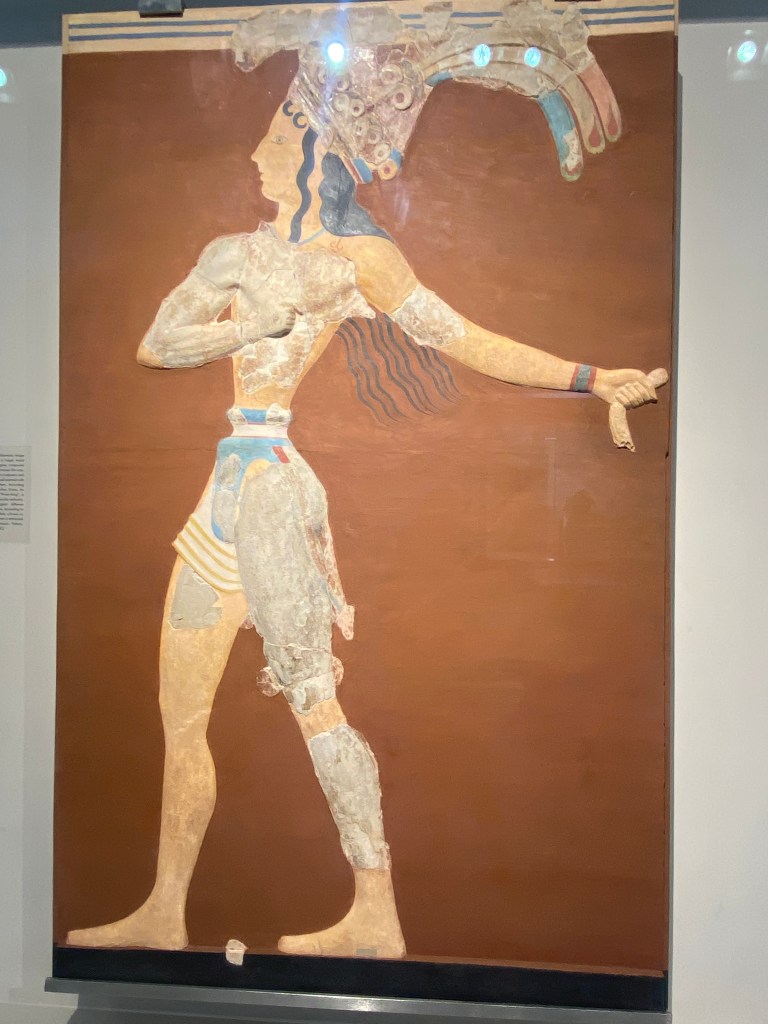
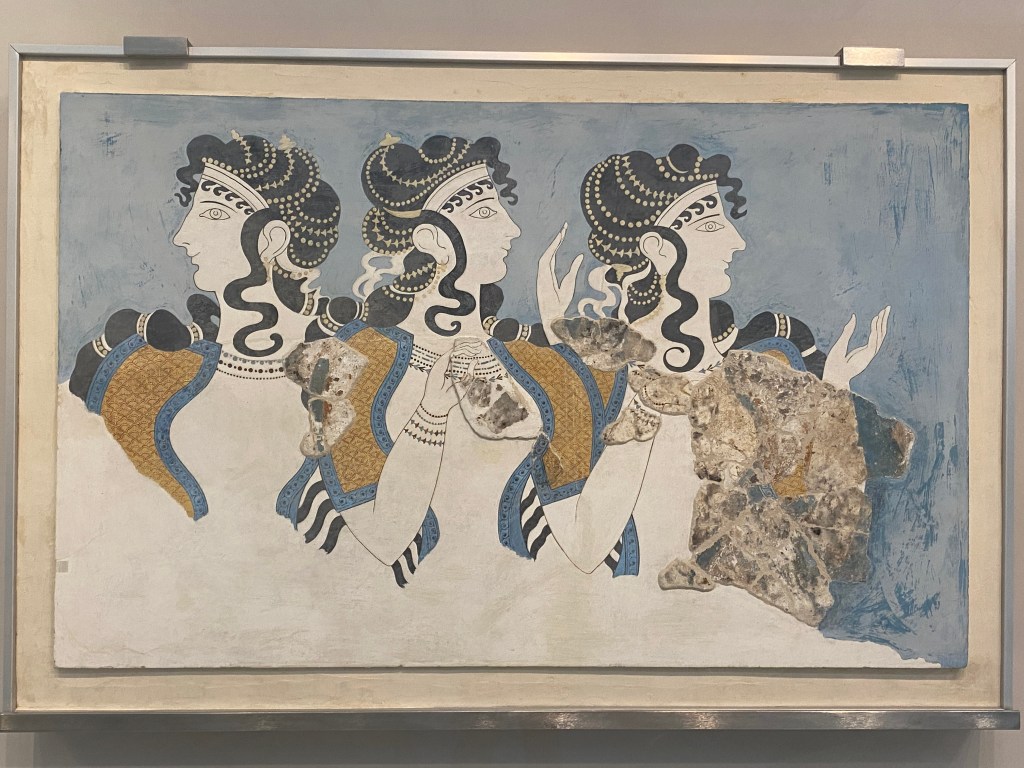
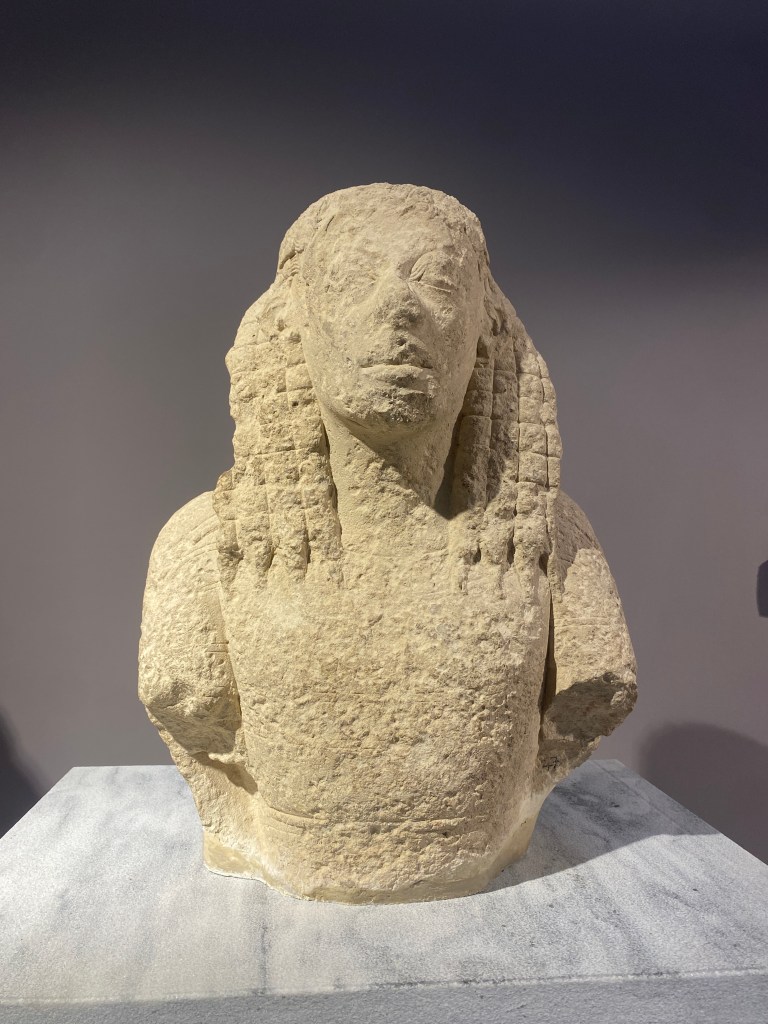
I admit I am shallow, but hey if I reading about such an impressive group of people, I would be very much inclined to image what they look like. As seen from how the Minoans already believed in the power of psychology and how to leverage on such processes, the Minoans not only possessed mysteriously intelligent minds, but their smouldering looks mirrored their thought processes. The ancient Minoans are purported to be indigenous europeans with mostly dreamy dark hair and dusky eyes. There is nothing as exciting as going into the mind of a dark mysterious stranger (in this case an entire group of people) is there?

3) Writing Systems
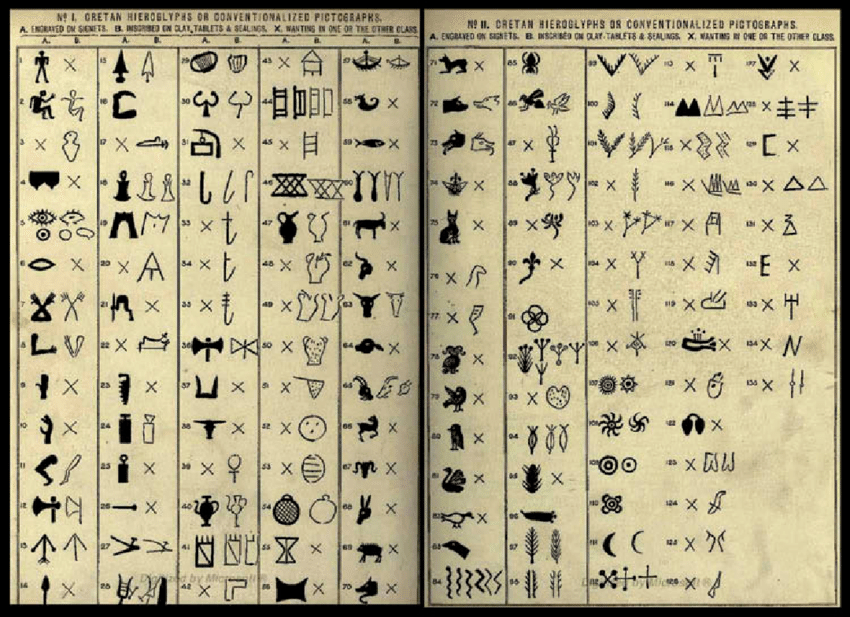
To further act onto their enigma, many facts regarding the Minoans still remain in the shadows as their scripts found in Linear A and Cretan Hieroplgypics have not been fully successfully deciphered yet.
4) Minoan Columns
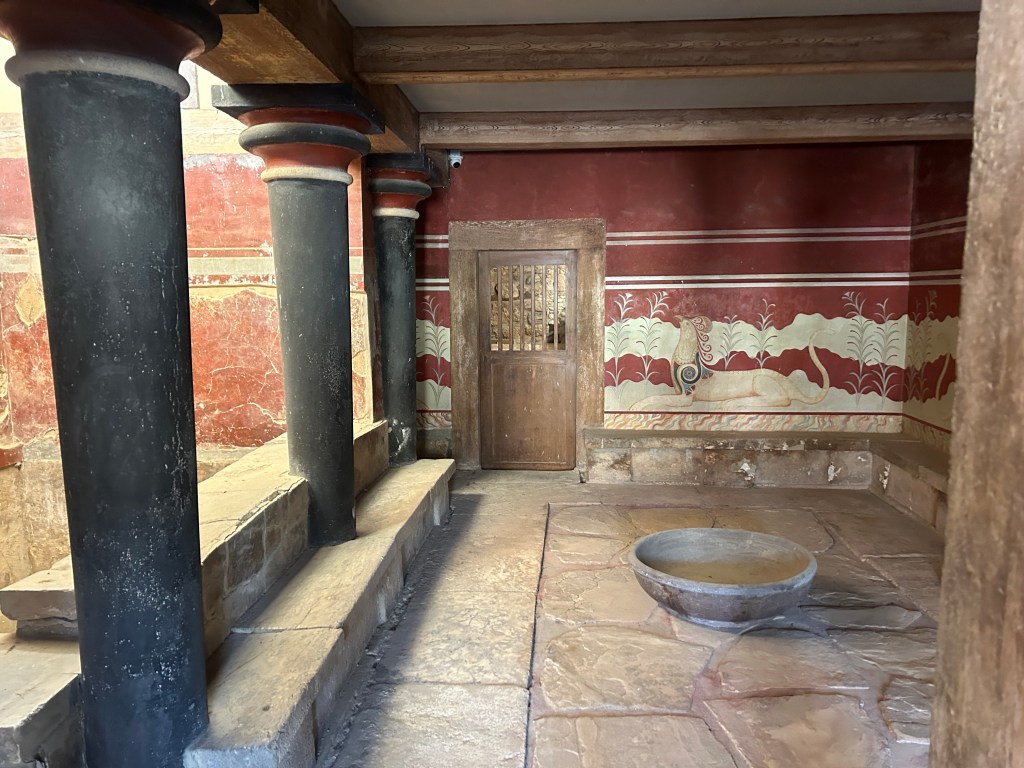
Adding on to their predilection towards unconventional solutions, unlike traditional Greek columns, the ones at Knossos were wooden and made of upside down cypress tree trunks painted in mystifying shades of black and red. Through this method, the palatial structure becomes more earthquake resistant by allowing the columns to sway without giving way entirely. The colour red which has come to be an iconic aspect of the site was surely not a random choice but was probably symbolic in its meaning such as regeneration, life, power of other areas of Cosmology.2
5) Other Incredible Innovations
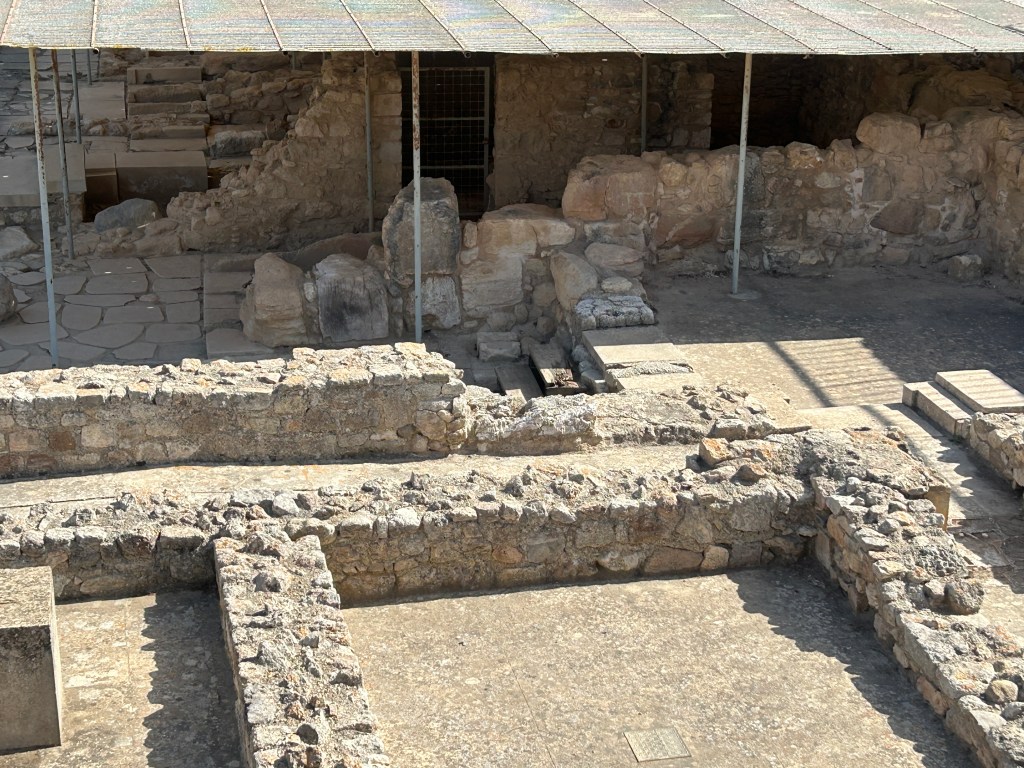
The technological prowess of the Minoans was also seen in other everyday key aspects. For example, they were revolutionary in how they managed their water system being the first people to ever use underground clay pipes for sanitation and water supply.3 With the perpetual Cretian heat in summer, they also developed an ancient air-conditioning system through the use of sophisticated ventilation systems. all without ringing up hefty electricity bills.
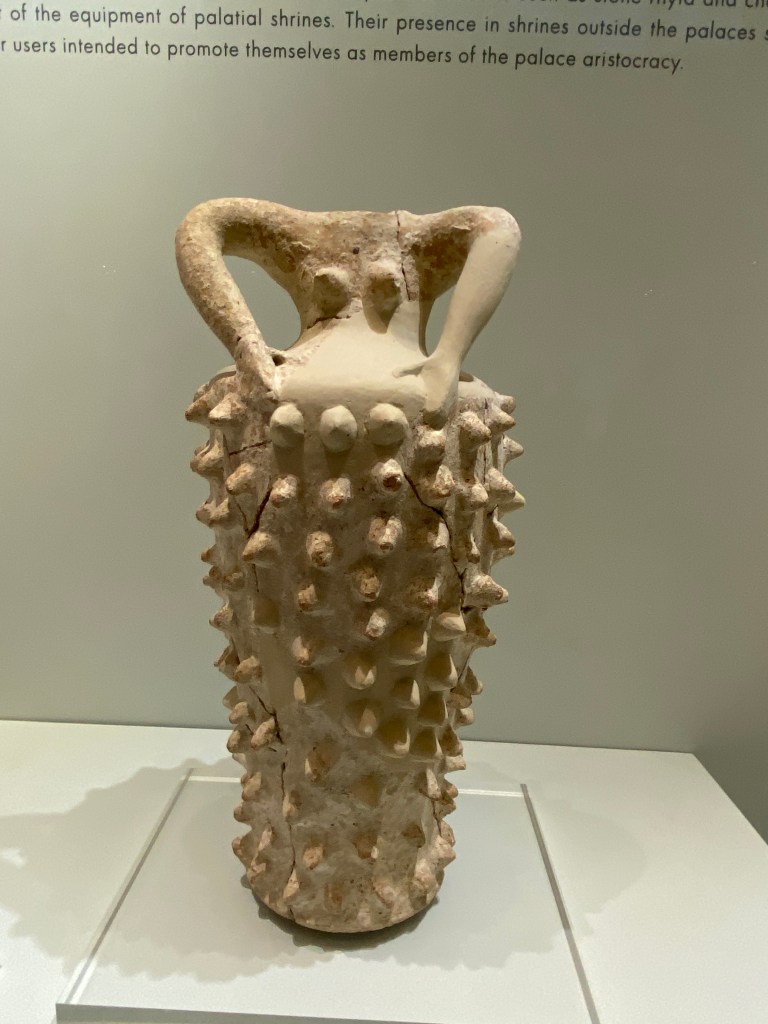
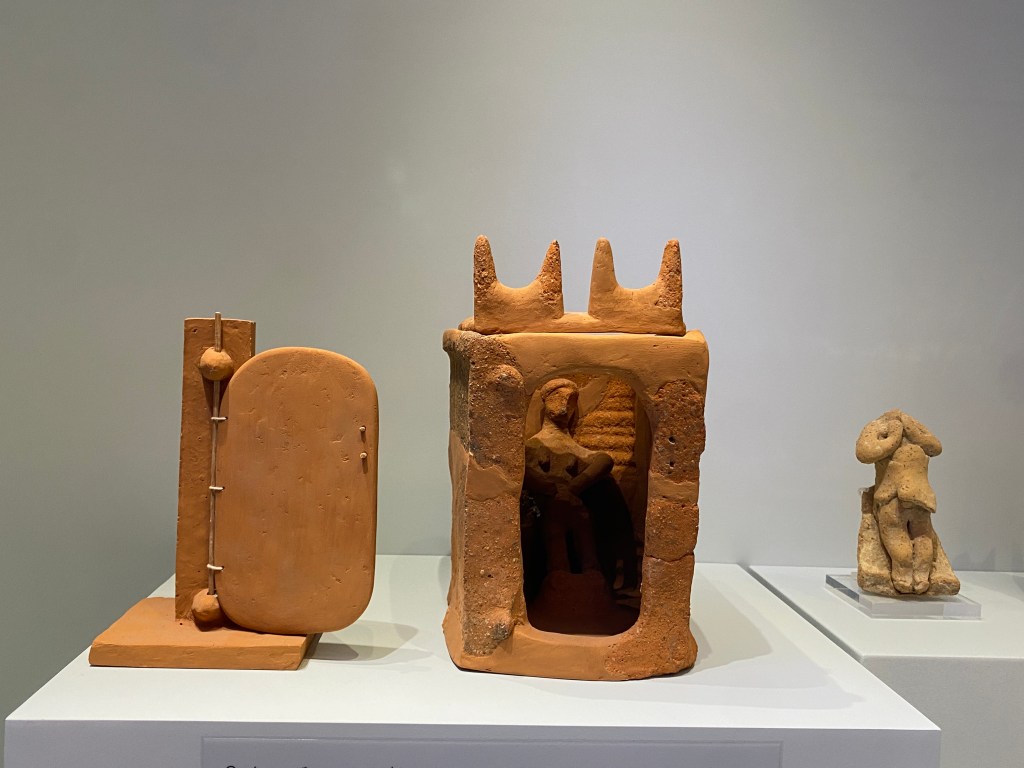
6) The position of females in Minoan society. I was slightly amused when my tour guide digressed to talk about the injustices women face in the world today. If Minoan women were found in positions of prestige 4000 years ago, why can’t we? Indeed, small religious sculptures of women with snakes coiled around their arms have been found although it cannot be ascertained if they were goddesses or priestesses. The serpent is an important aspect of Minoan religion, as a symbol of household protection and these artefacts represent the powerful place of women in politics and religion. These Snake Goddesses had a deep impact on Minoan art, acting as muses for painters, potters, weavers, and sculptors, as they represented the spiritual essence of the Minoan women. 4 It is also worth mentioning that women were also allowed to take part in sporting events such as the thrilling pastime of bull-somersaulting which firmly confirms that they shared at least equal rights with their male counterparts.

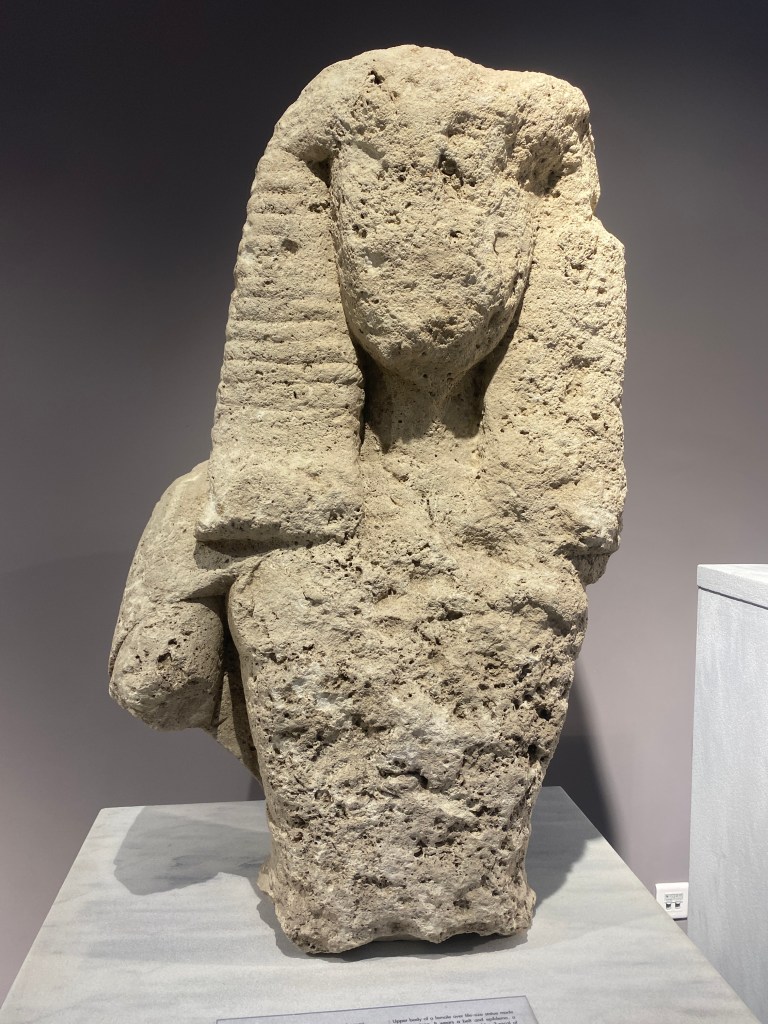
7) Similarities with Egyptian contemporaries. Mirroring some of the practices of Ancient Egypt, the Minoans used the same colour coding standards of their counterparts by using the depiction of reddish skin for males and white for females. Indeed, the Egyptian style was also seen reflected in various frescoes especially in how the figures are portrayed through the profile with frontal looking eyes. Interestingly, Minoan frescoes have also been found in Ancient Egyptian palaces such as Tell el-Dab’a. There might be more in common between both ancient powerhouses than what is currently known.
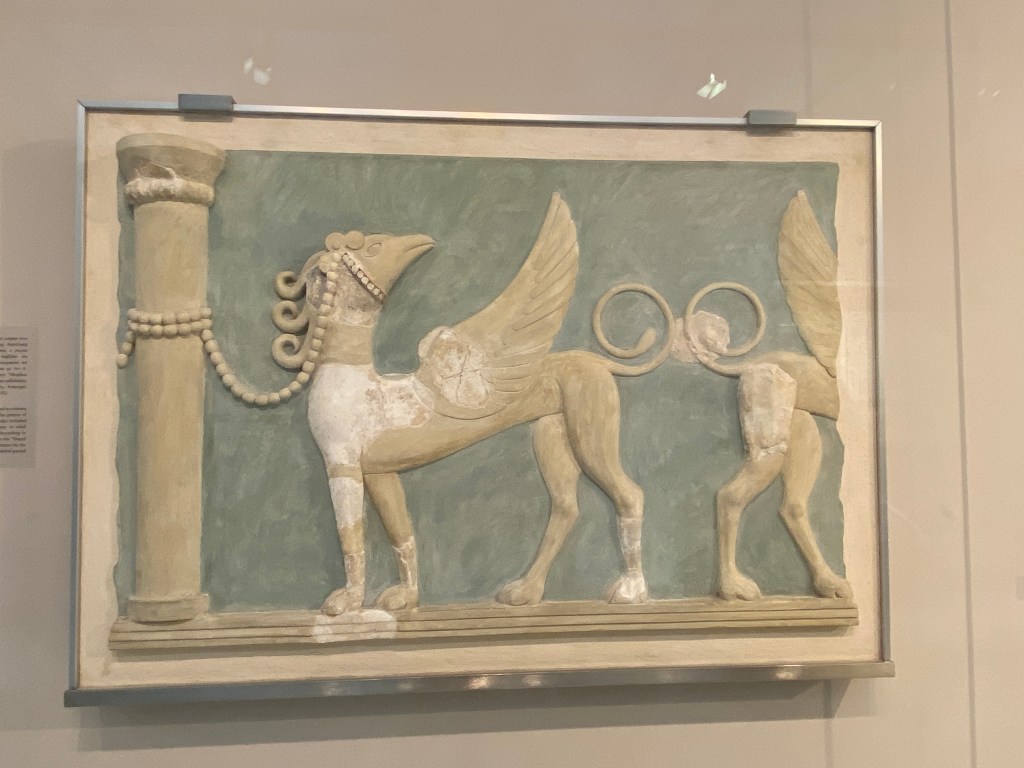
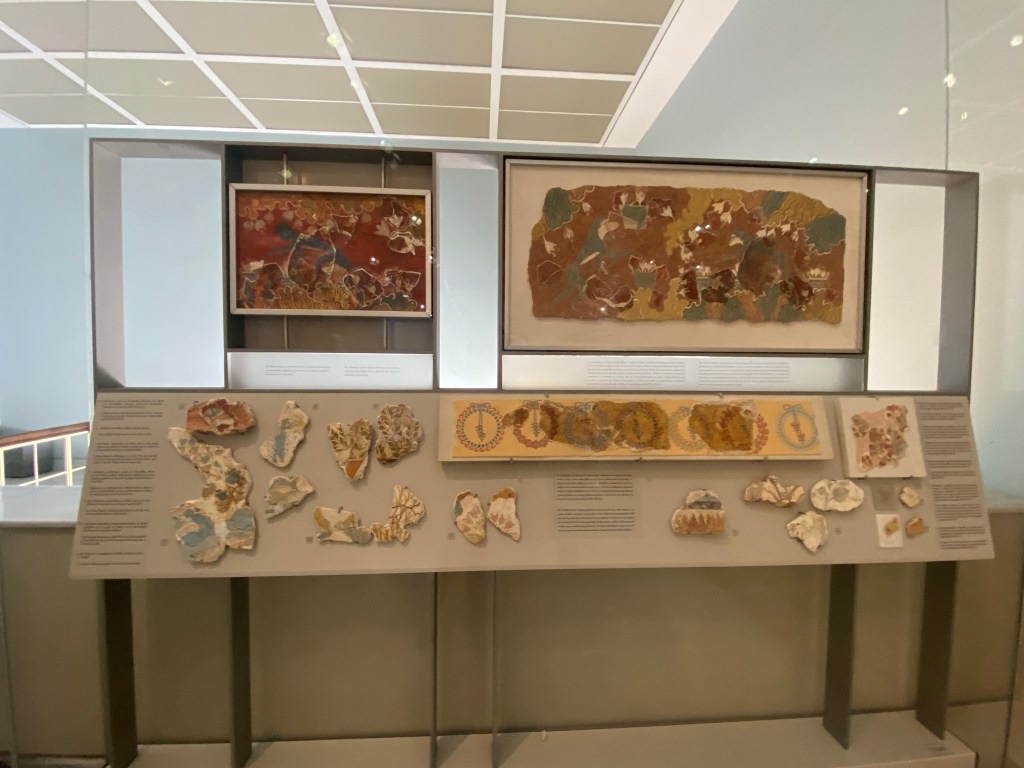
8) Frescoes of Nature. The Minoans were also the first to create frescoes without human representation. They enjoyed portraying animals from monkeys to dolphins. These frescoes were usually bordered by geometric forms and sometimes formed an interactive space by extending into the space of the viewer, further creating the illusion between physical space and a metaphysical world. Seeing how the Minoans were pioneers in so many aspects, one would be inclined to agree that they were true forces of nature.
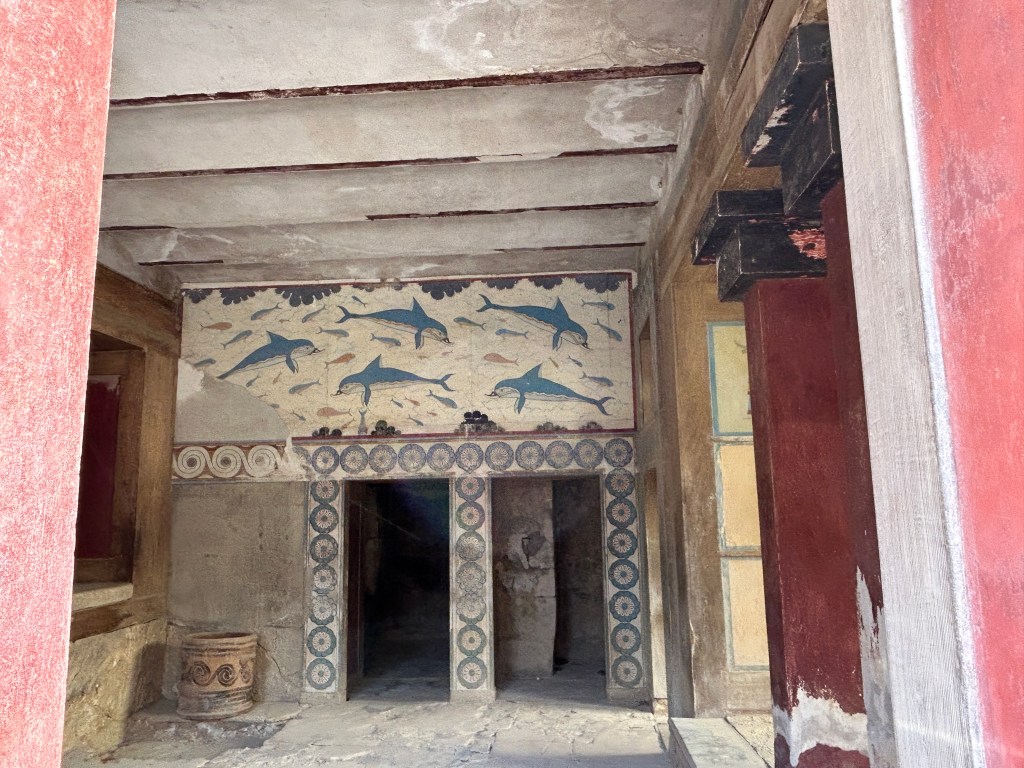
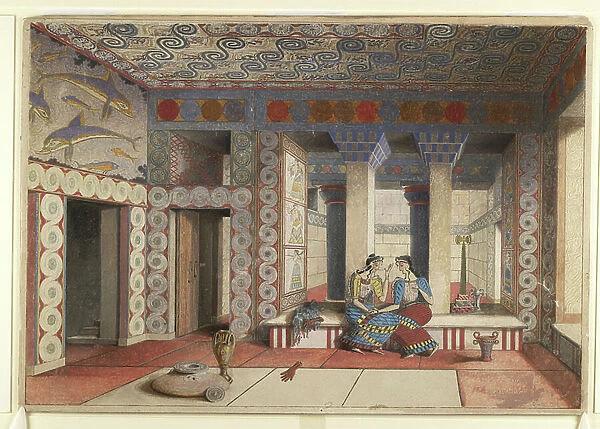
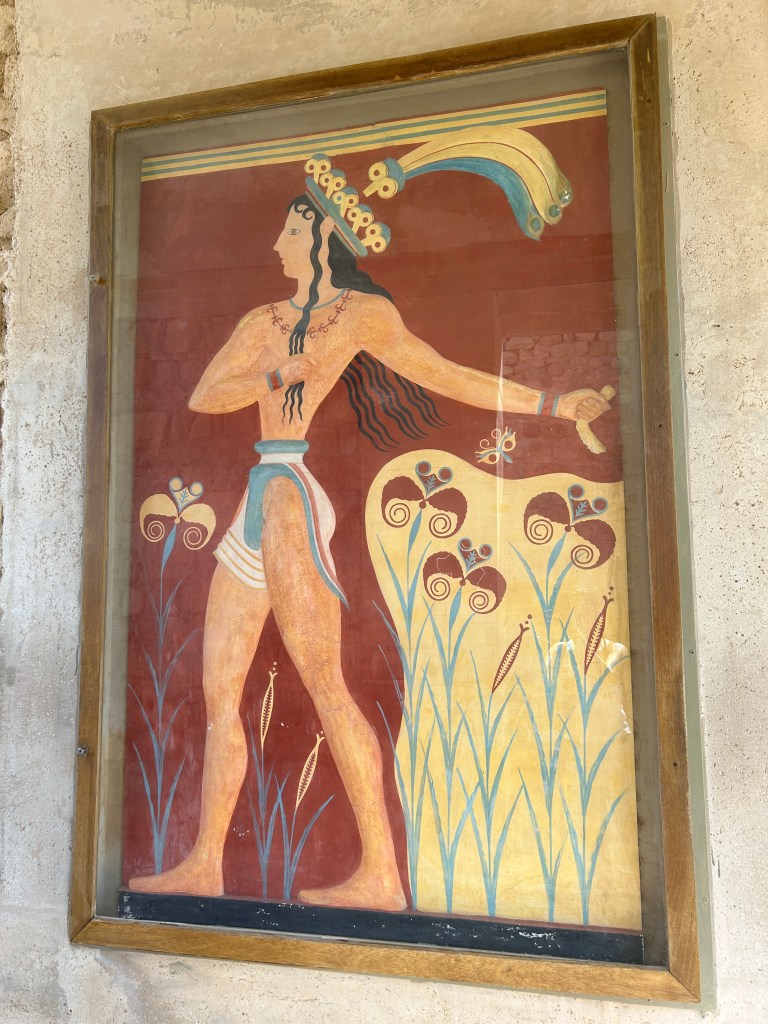
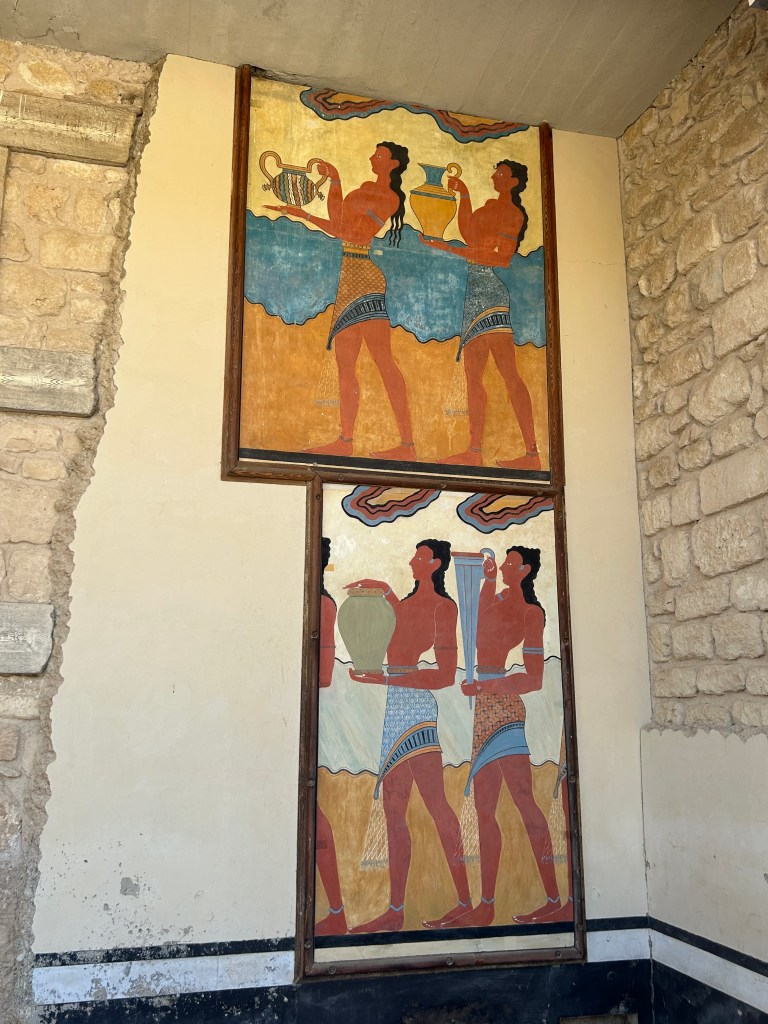
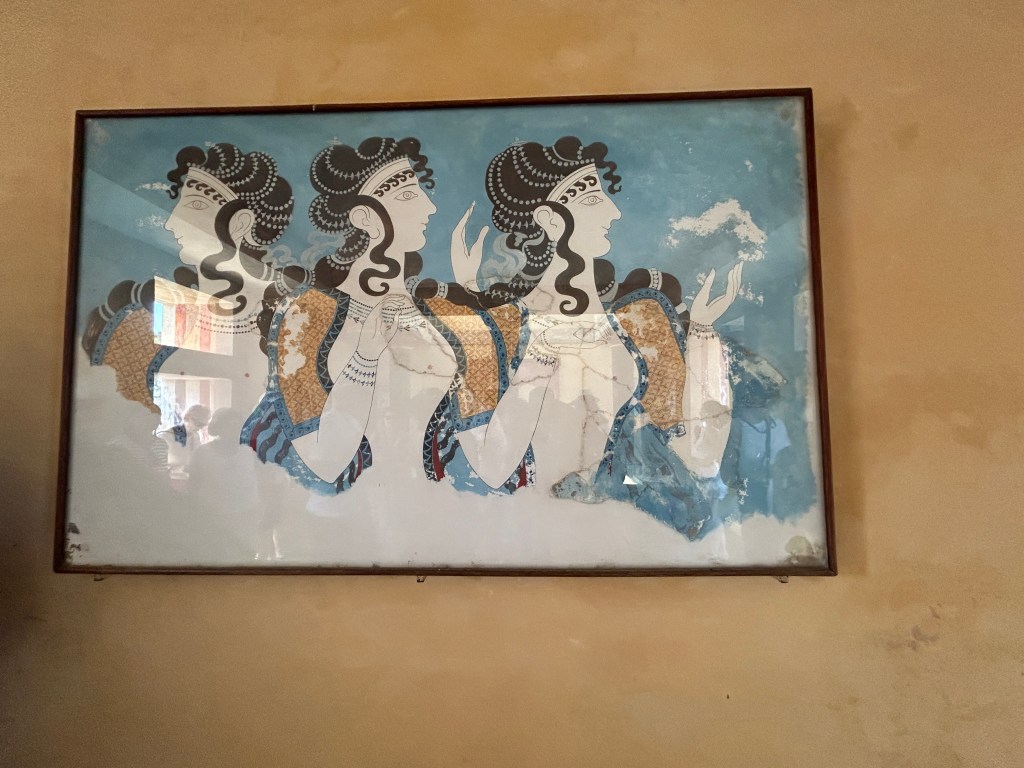
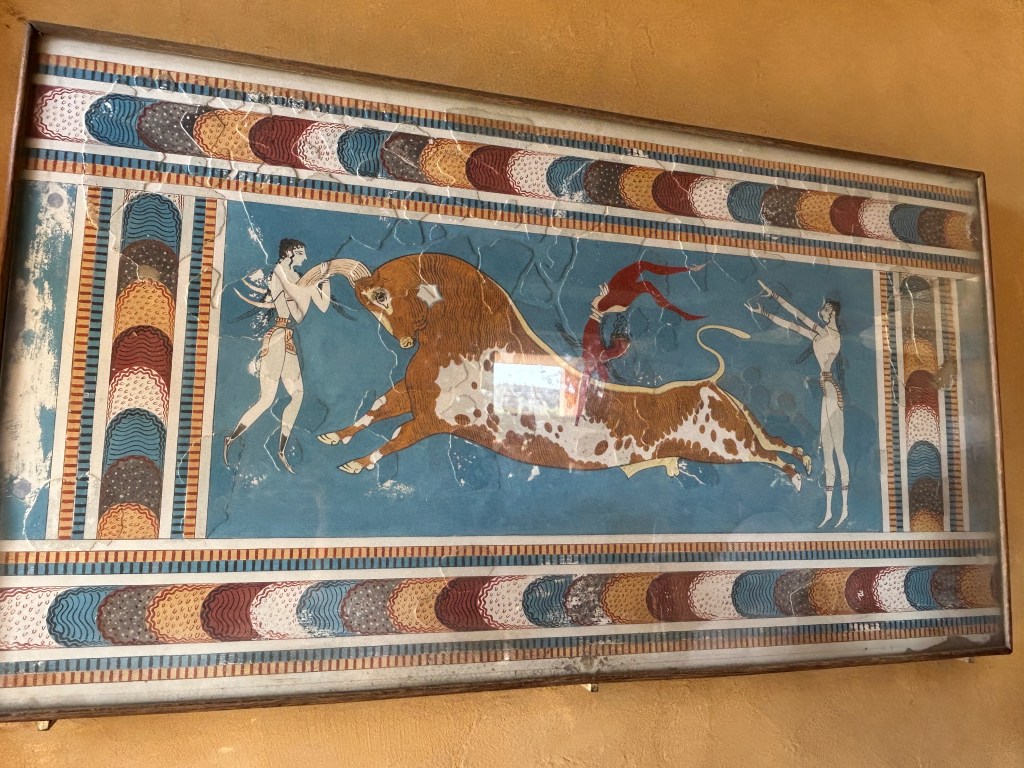

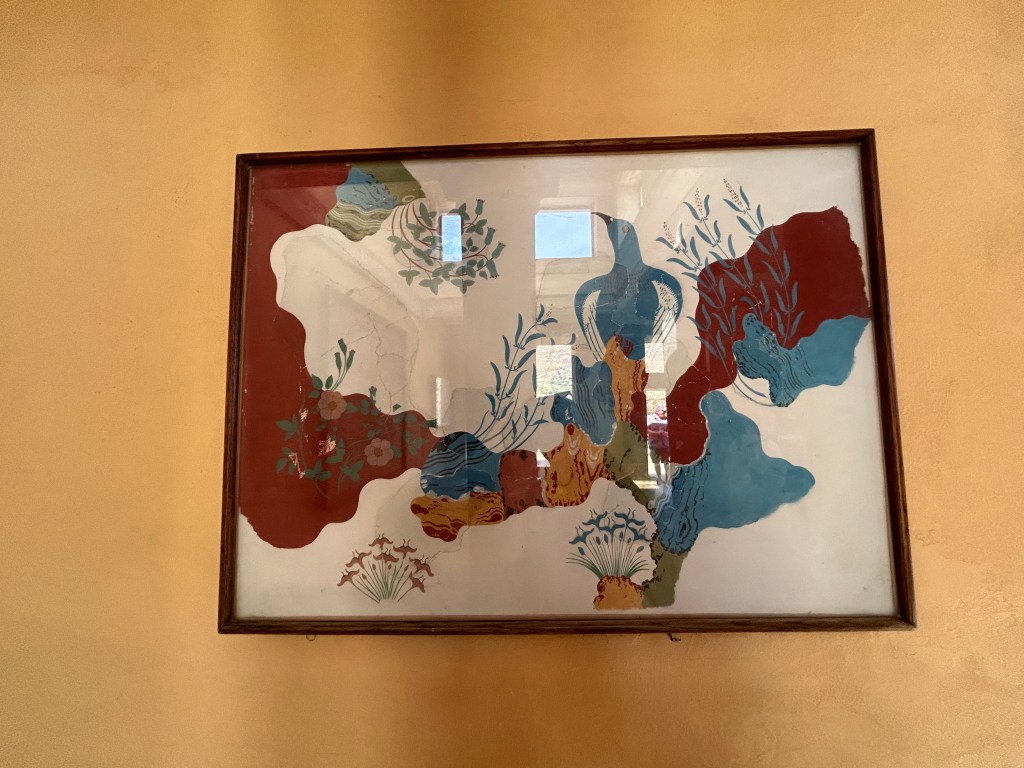
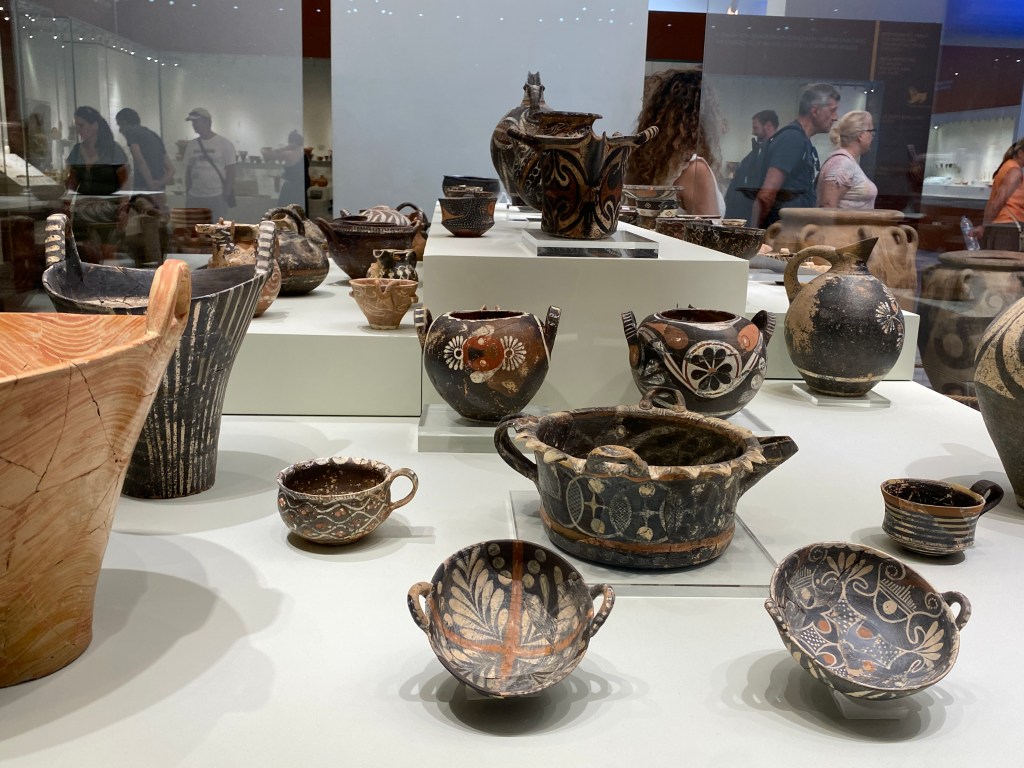
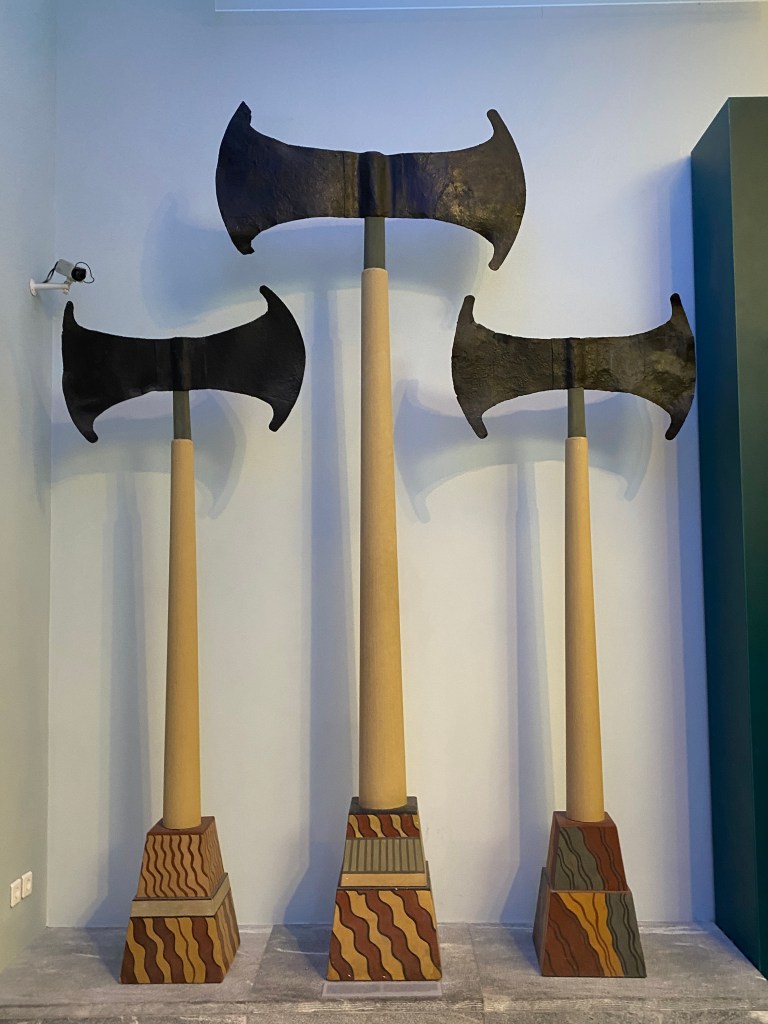
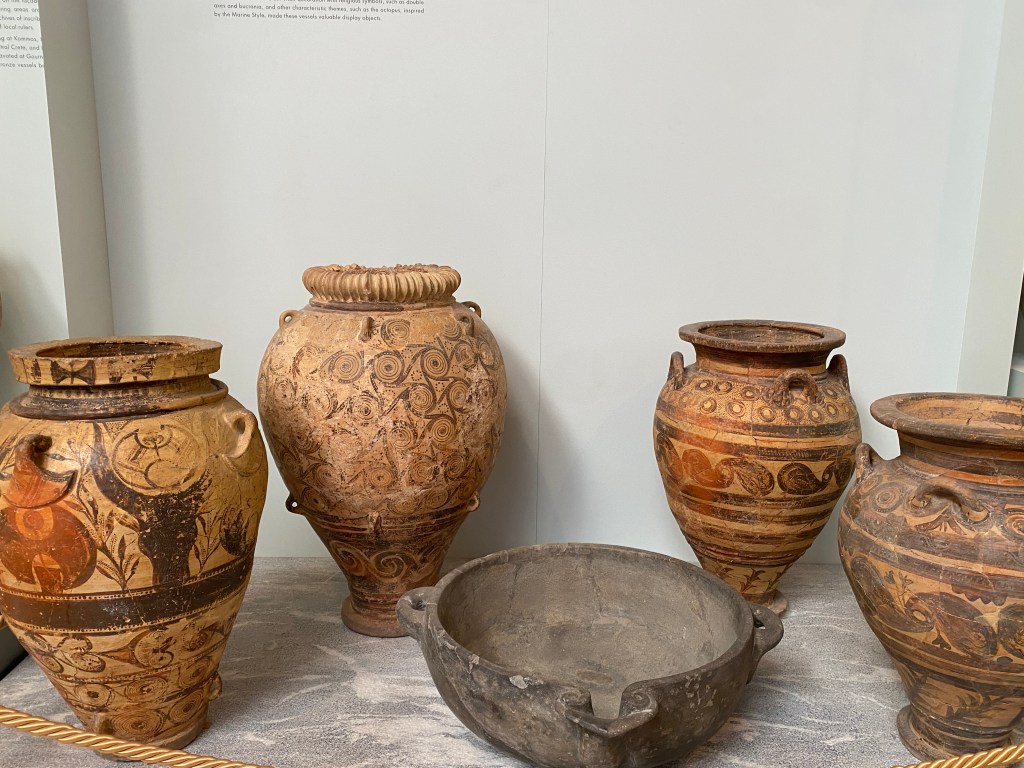
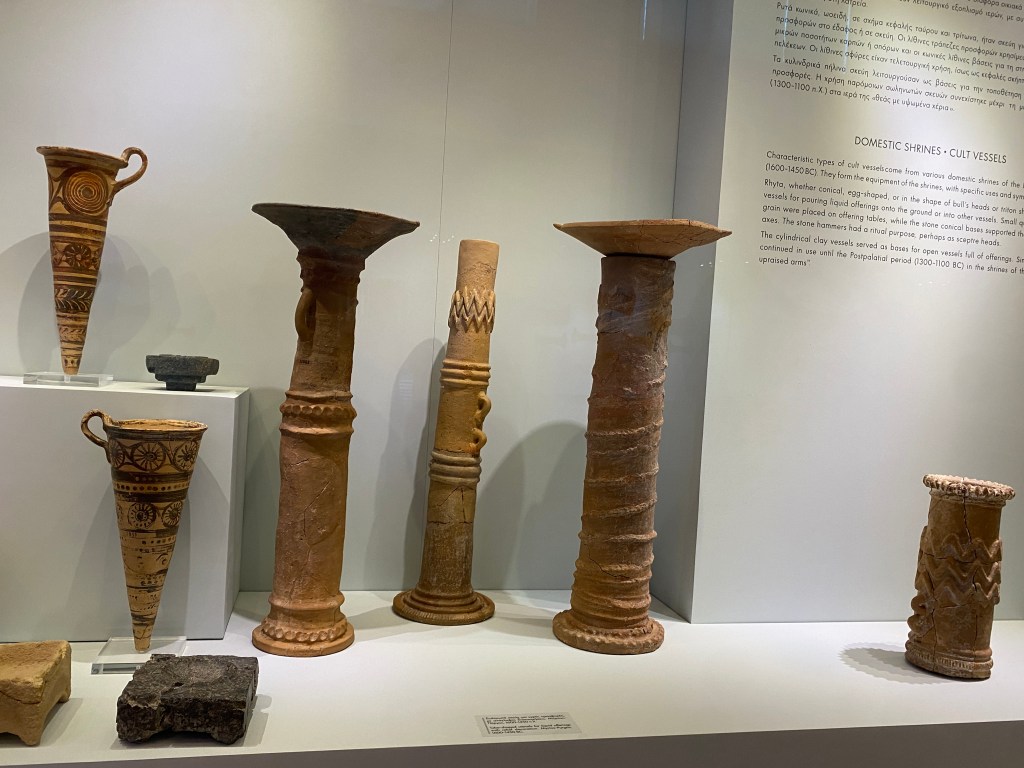
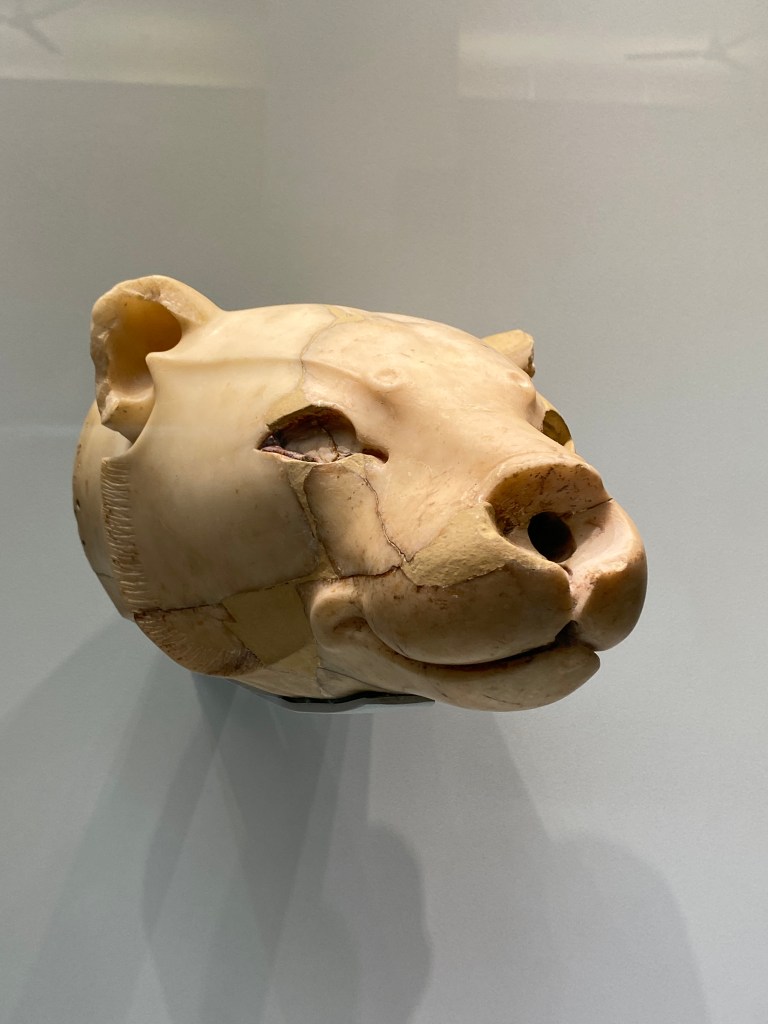
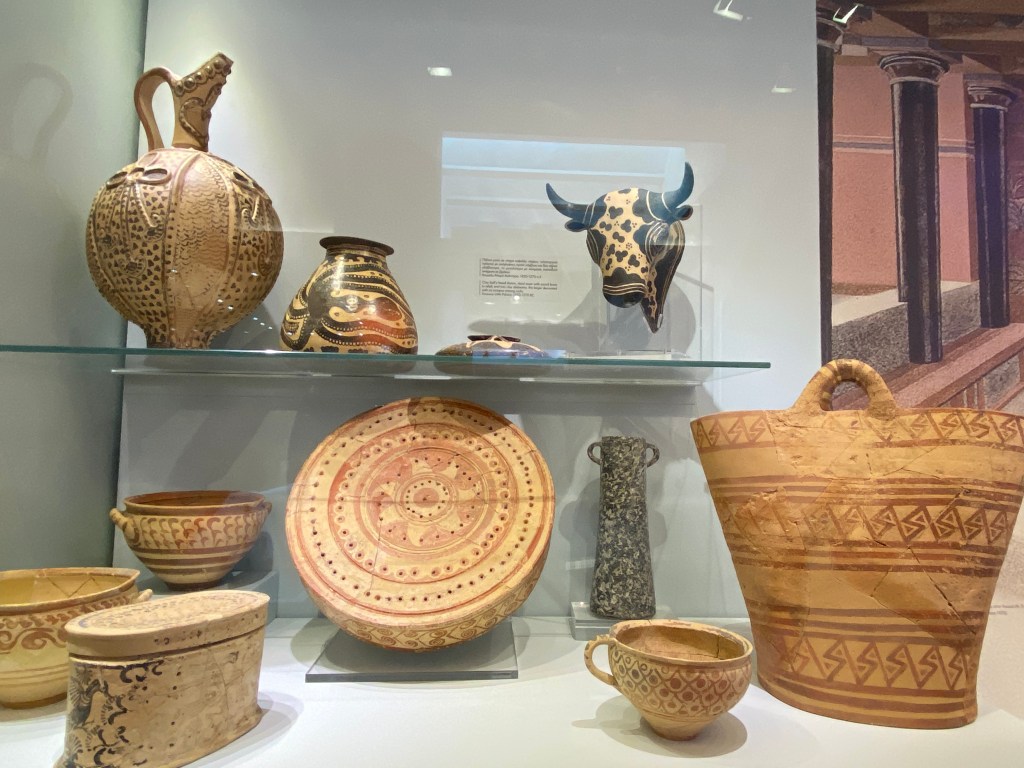
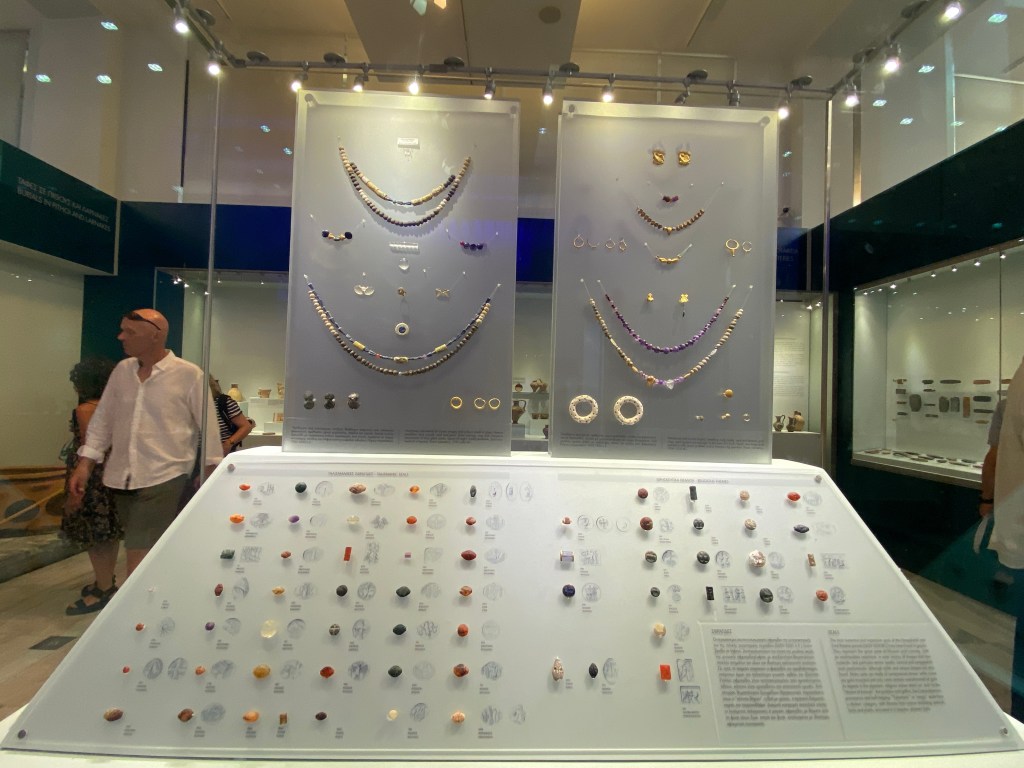
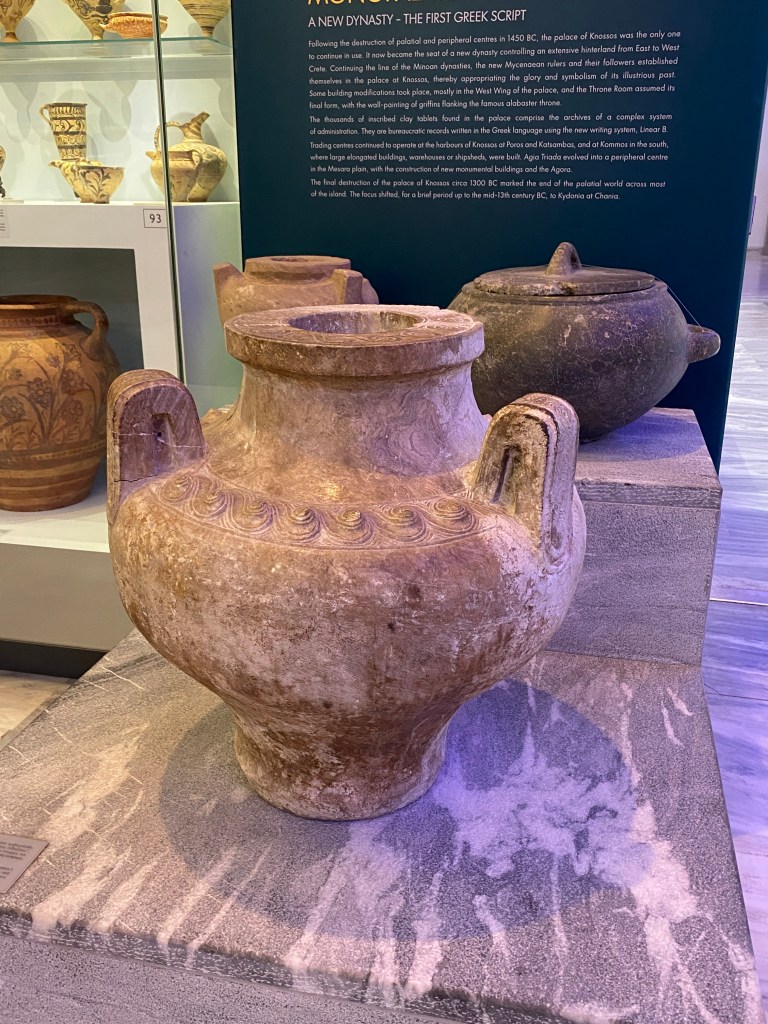
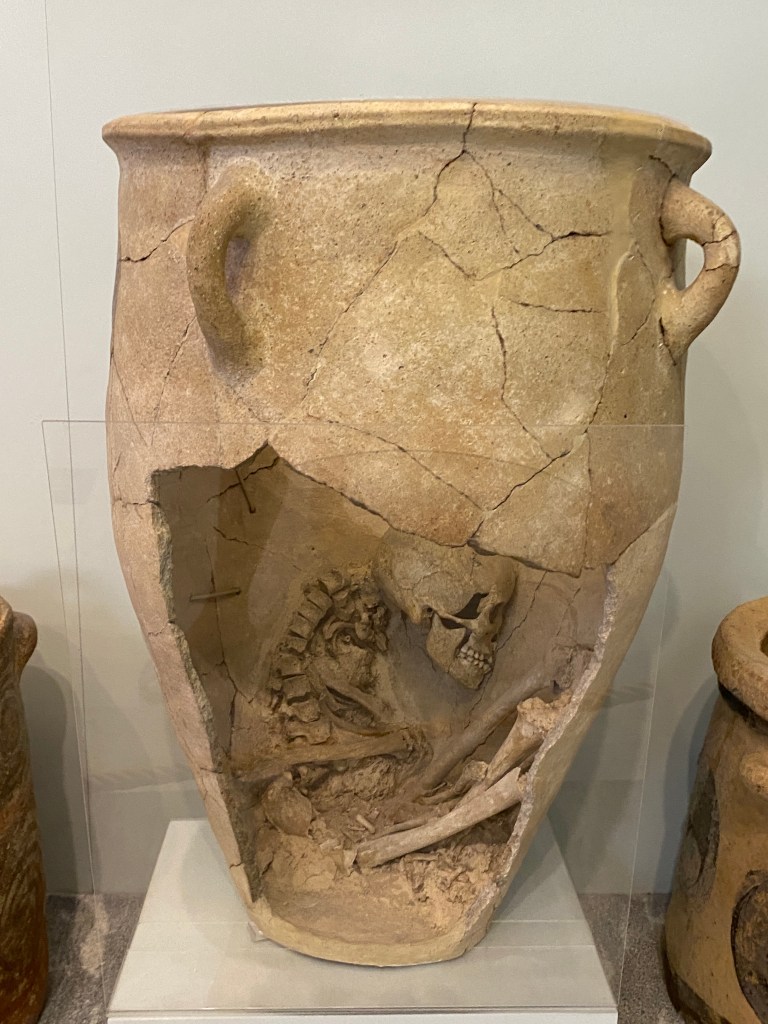
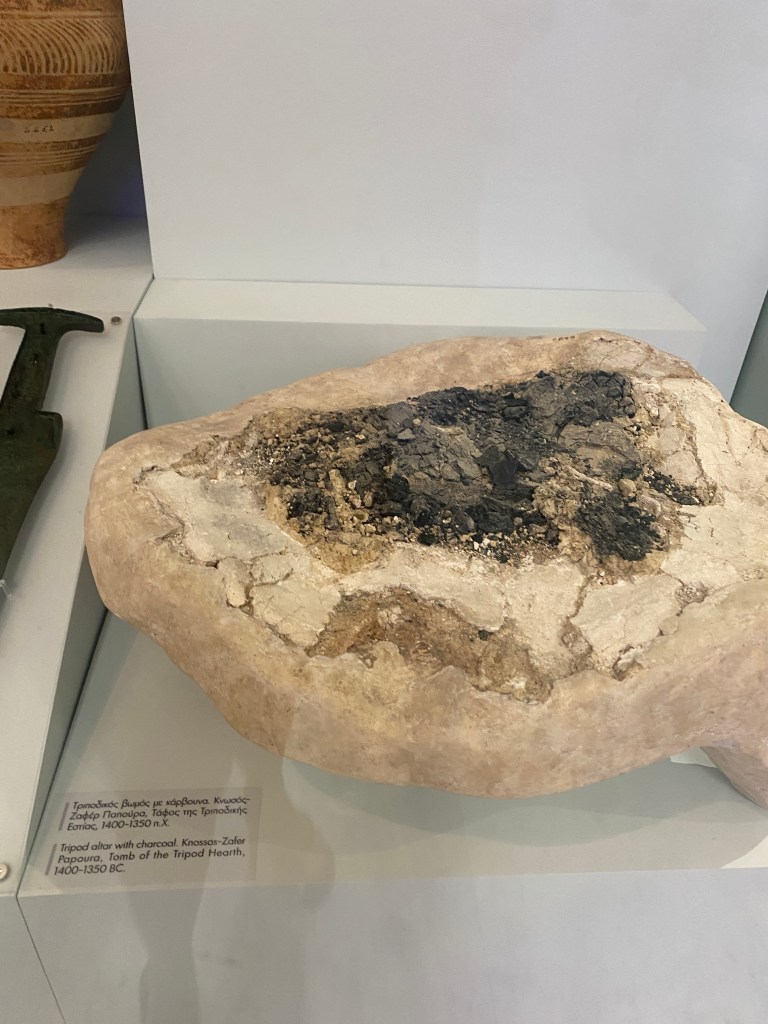
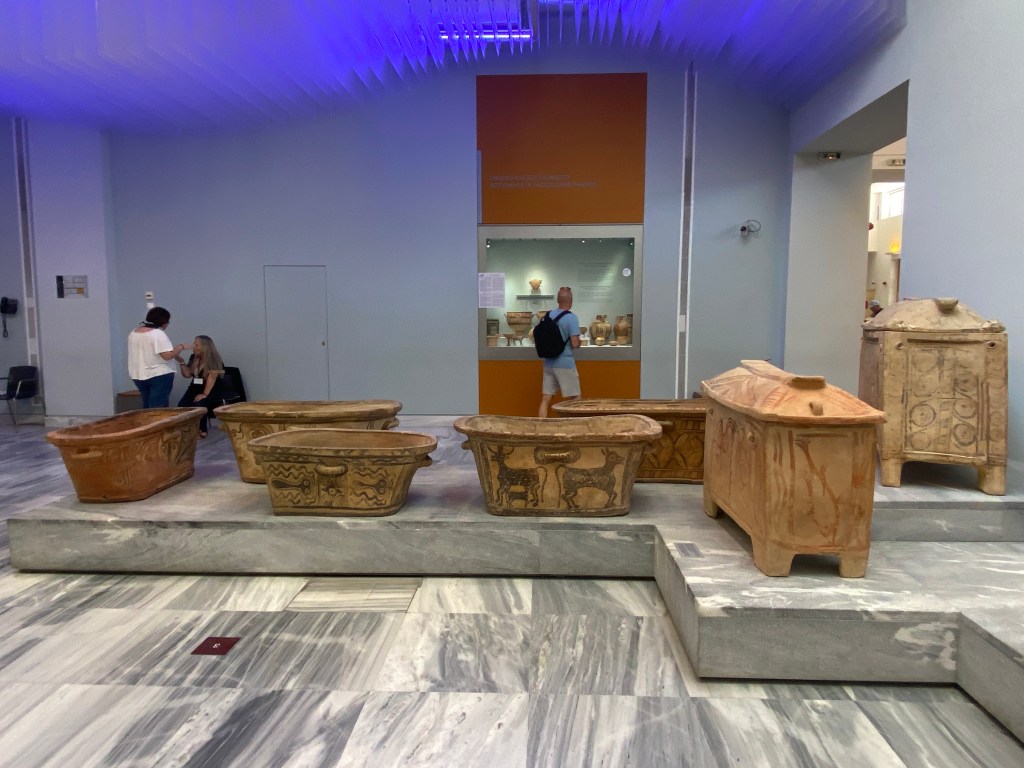
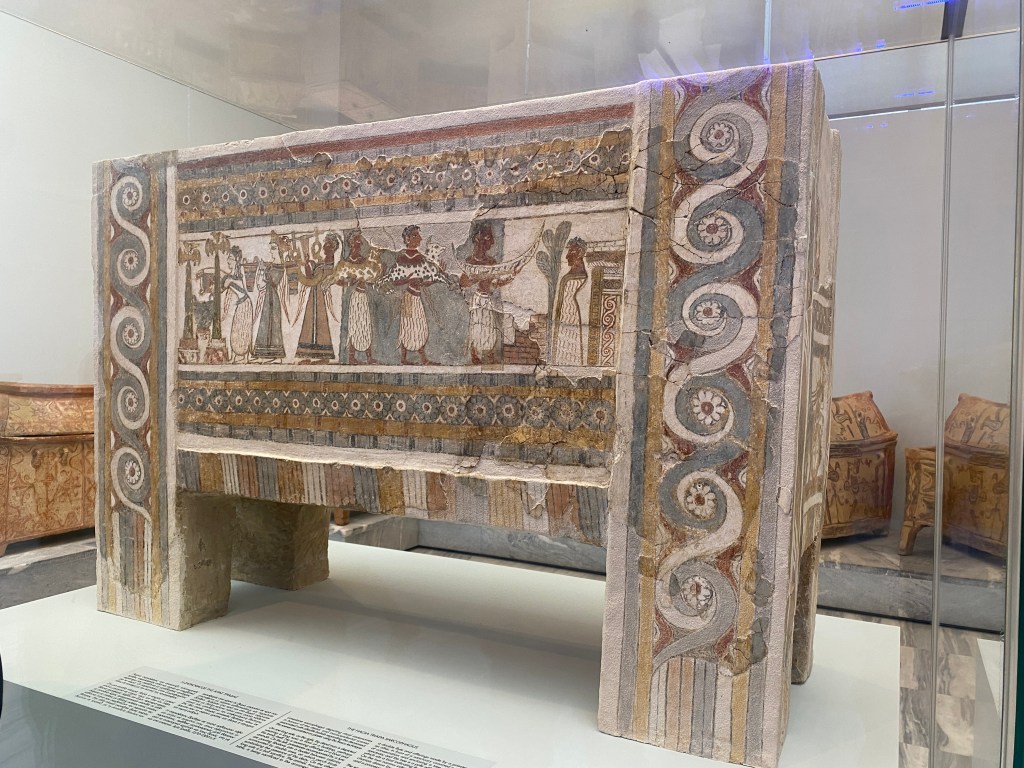
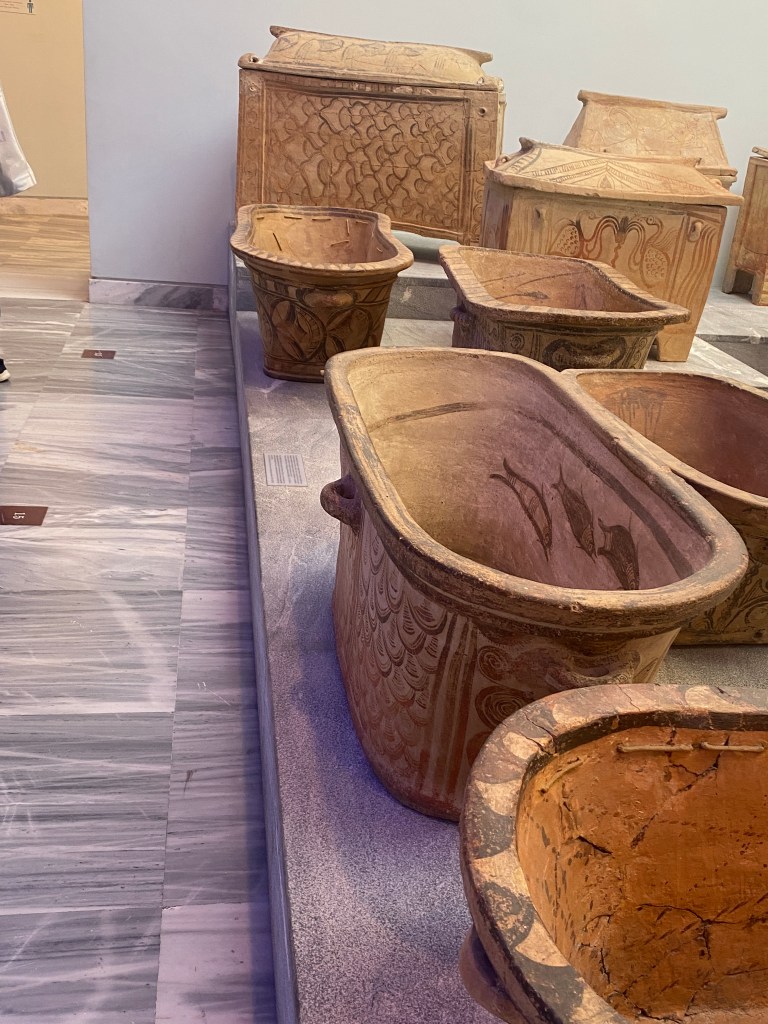
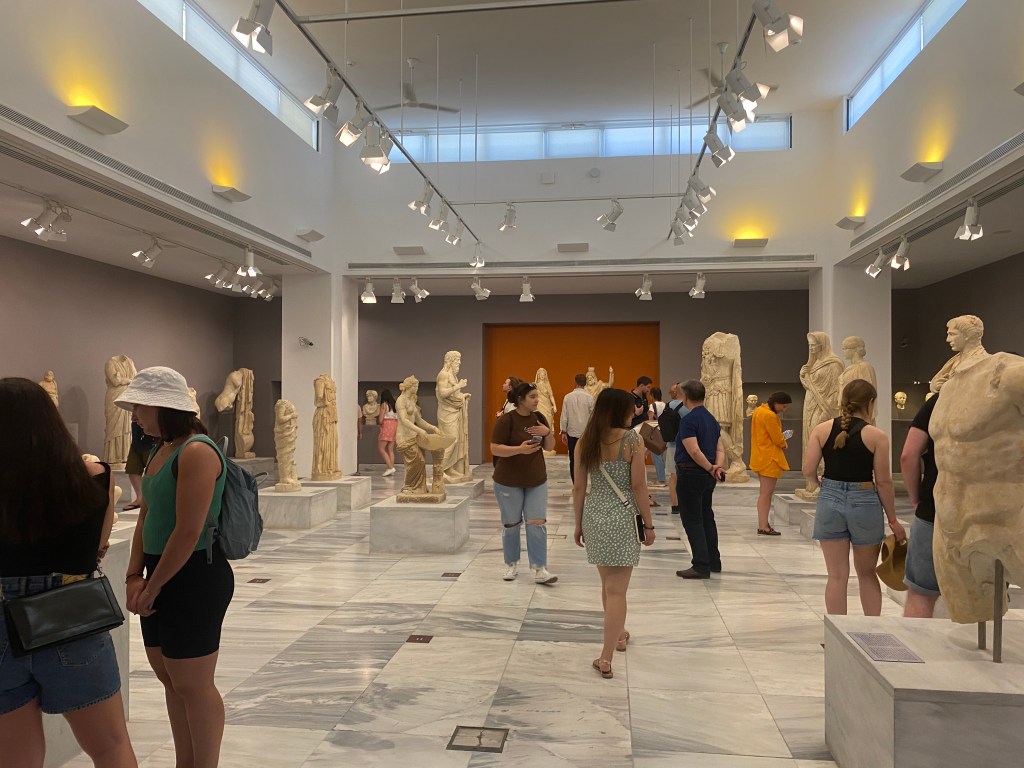
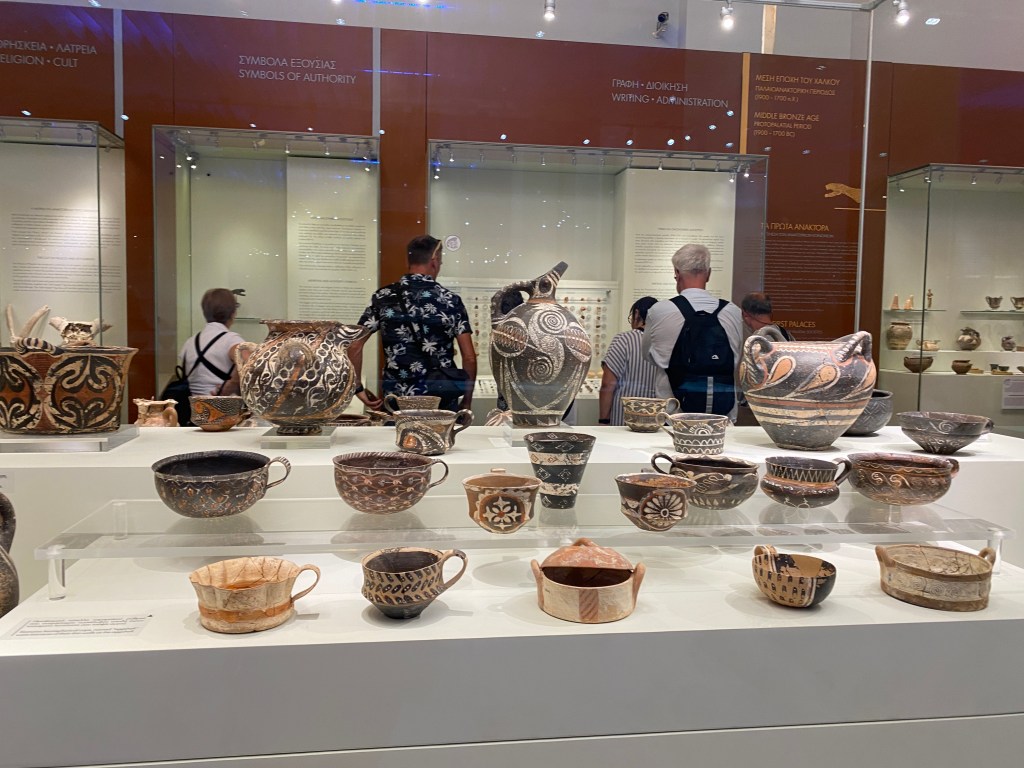
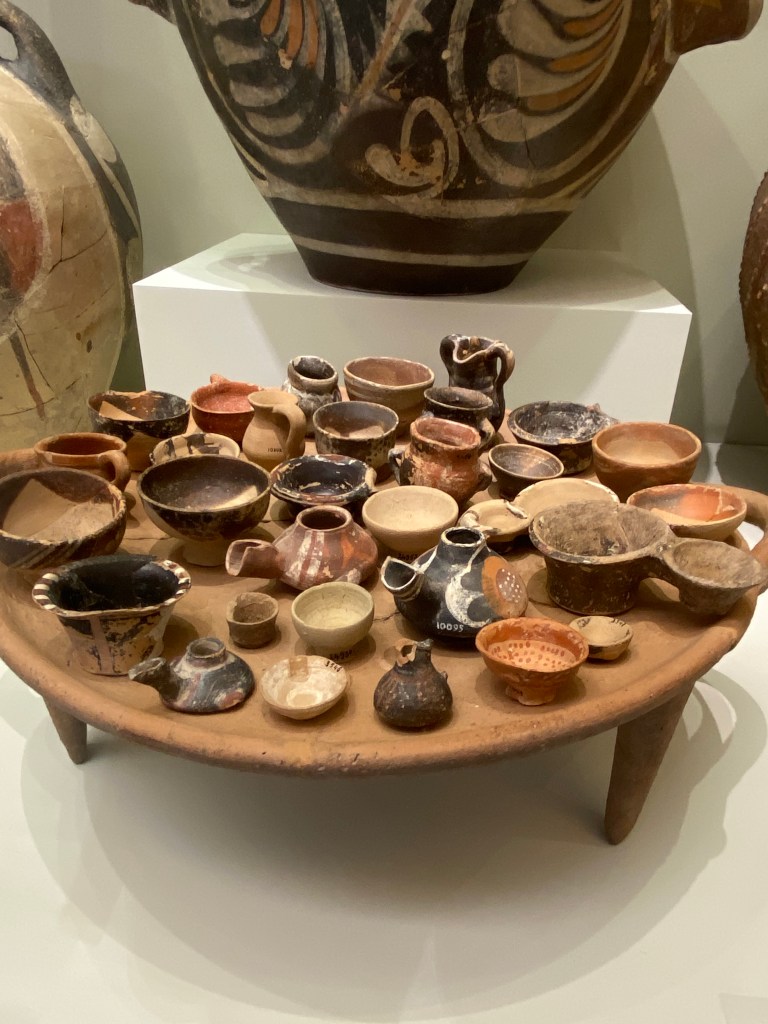
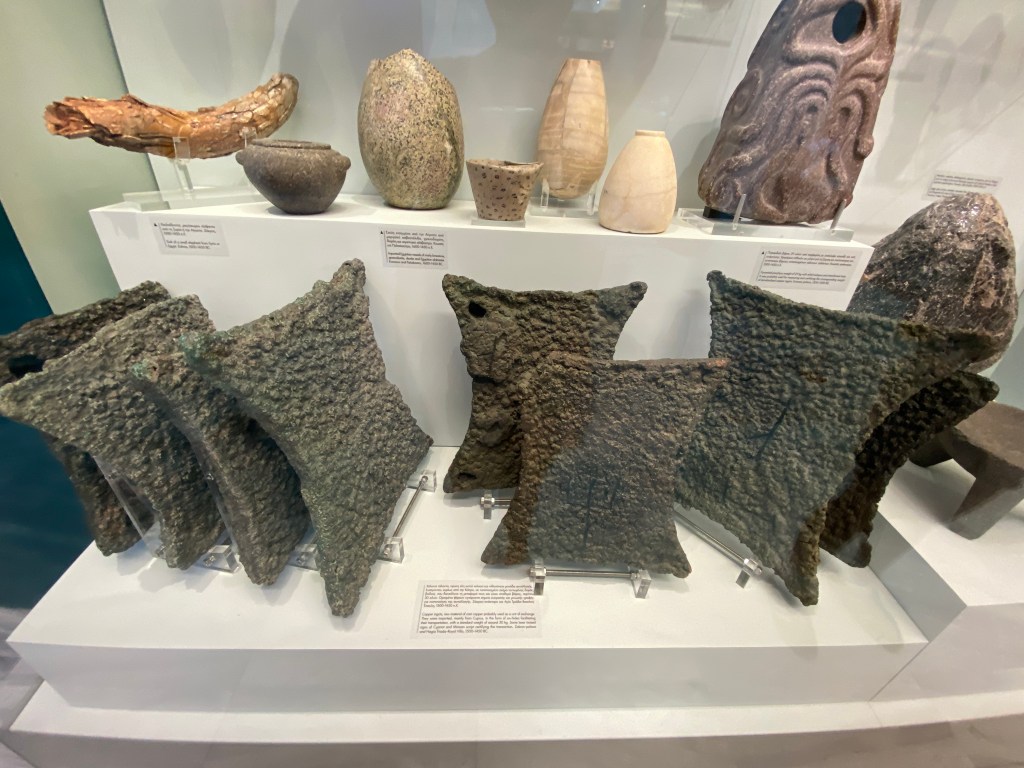
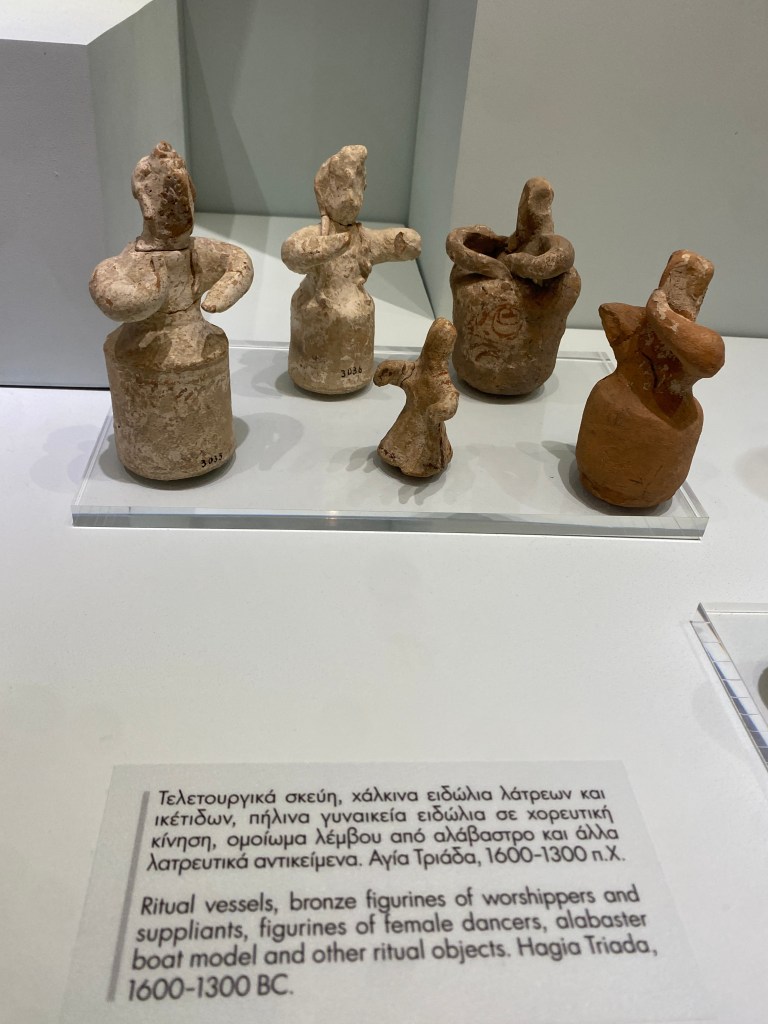
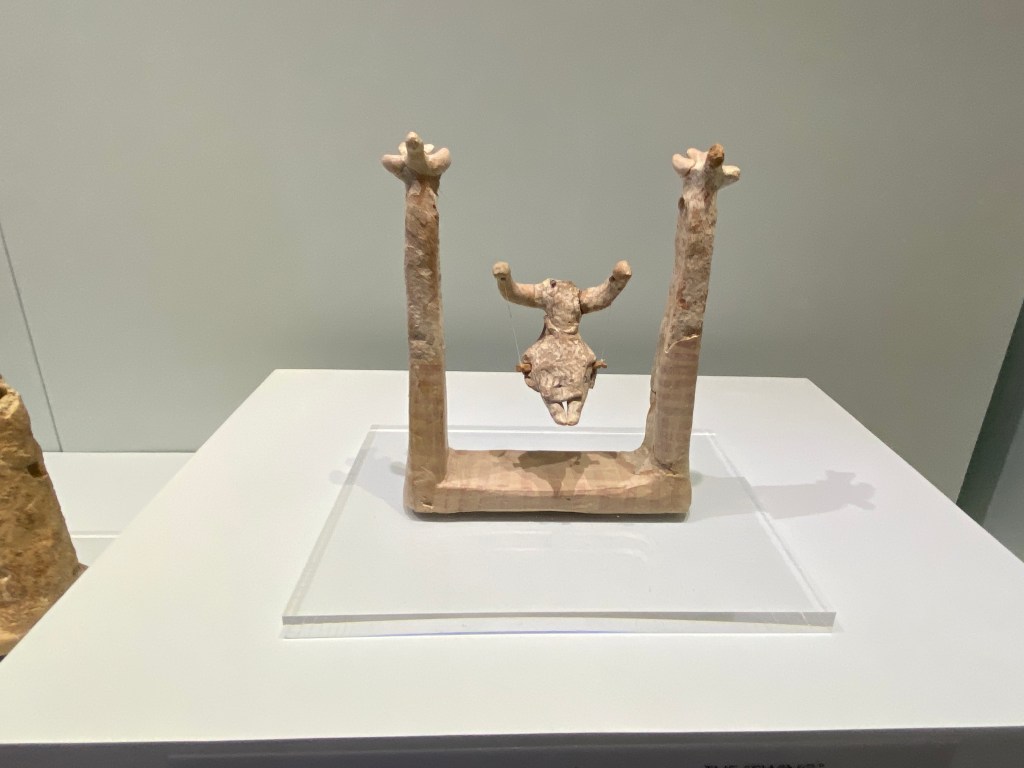
9) Heraklion Archeological Museum. One simply cannot go on a tour to Knossos Palace and skip the Heraklion Archeological Museum. To complete one’s journey in unlocking the secrets of these great Bronze Age people, a visit to the museum is non-negotiable.If you have noticed that many elements of the Knossos Palace looks surprisingly new for its age, you are definitely not imagining things. Amidst much criticisms, the palace has been reworked with multiple duplicates. If you would like to see the real deal, many of them are found at the Heraklion Archeological Museum. One of the most important museums in Greece and even Europe, this place houses everything you ever need to know and see about the Minoan culture. A true treasure trove, trust me that this museum is a must see in Crete. Might I also suggest that while you walk around the exhibitions, you plug into Roberta Jones’ Back to the Future series featuring The Palace of Knossos on Spotify?



 writingaboutpaintings
Leave a comment