Niko Pirosmani is an important figure in the evolution of Naïve and Neo-Primitive art, as well as the Russian avant-garde who encapsulated all the characteristics of the unsung hero during his lifetime. Untrained and uneducated, his naïve narrative style and simple mode of depicting things, people, and animals inspired and influenced generations of artists. A true Georgian in heart and soul, he faithfully depicted the people and animals that surrounded him in coeval Georgian life. His masterpieces are now celebrated in the most important museums of Tsibili. In every street corner, reproductions of varying quality are reprinted on cute little trinkets and souvenir, celebrating the iconic artist in both big ways and small.
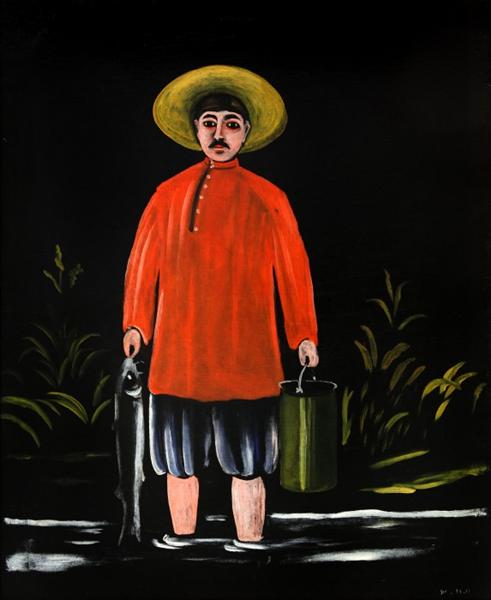
Not unlike his fellow artist Van Gogh, his fame only happened posthumously. He was greatly undervalued due to the lack of appreciation from his contemporaries as well as World War 1. During his living years, the artist worked as a servant and was lacking in professional ambition and desire for financial success. One can see the same unfortunate fate in his quest for romance too. Legend recounts that he fell so deeply in love with the captivating French actress Marguerite de Sèvres, who was in town to perform. During her stay in the city, Pirosmani would been seen grovelling and begging for Marguerite’s attention, even so far as to literally kiss the ground she walked on. One day, he sold all the possessions he had just to purchase all the flowers on the streets for her, filling the air with the sweet aroma of the most beautiful blooms outside her residence. Long story short, he did not get his fair lady even after this epic gesture of love.
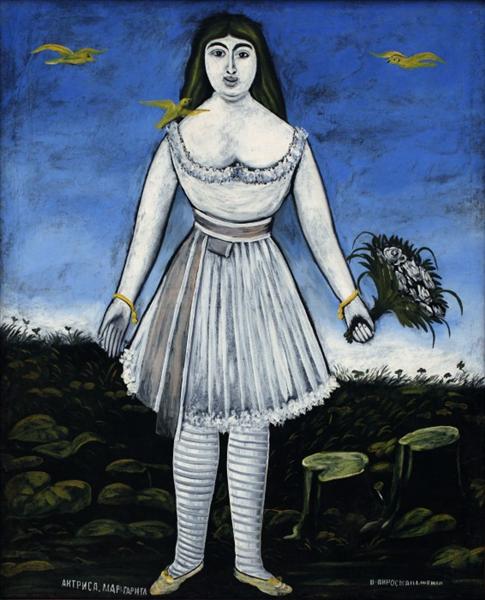
Nothing in his situation stopped him from taking a brush. Neither despair, heartbreak, rejection, homelessness nor a lack of recognition-none of the ugly aspects of his reality. He focused on subjects closed to his heart, found in the banal, human and humble often set against black oilcloth, as limited resources were available to him due to his status. Destitute and starving, the artist was happy to receive gifts in nature such as food and wine in exchange for shop signs and portraits. Alas, even his passing was not a grand affair, coming from starvation and grave illness, mirroring the unremarkable circumstances of his life. The artist breathed his last in a cold shack of a cellar Tsibilisi tavern in 1918.1
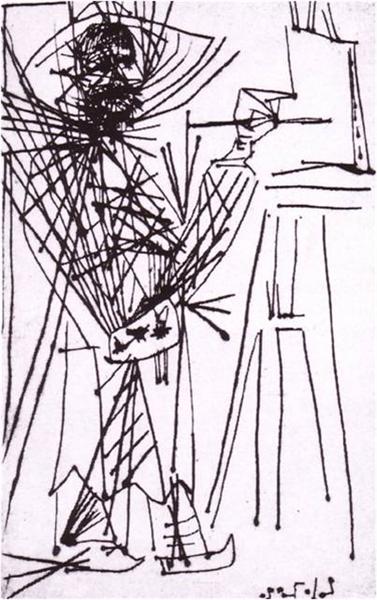
Today, the situation paints a major shift in circumstances. Young generations of Ukrainian and Russian artists found their unlikely leader in Pirosmani. Among the most devoted followers were the painters of Russian Futurism. While the pioneer Italian version of the movement fixated on the aesthetics of technology avoiding traditional elements and subject matter, Russian and Ukrainian Futurists focused on a new visual language in folk art and primitivist painting. For them, Naïve Art withwith its lack of formal training, offered a way to authentically connect with raw emotion and feeling.2 The artistic growth of painters such as Marc Chagall was also greatly shaped by his contributions. Pablo Picasso paid homage to the Georgian artist by dedicating an etching to him. Several other artists also honored Pirosmani with their own unique tributes.3 Pirosmani was truly a unique individual. He expressed himself unabashedly with what little he had. Poor in status but profoundly rich in spirit, his contribution was immense. A national hero of Georgia today, he truly embodies the words of Pericles where the Greek politician once said, “what you leave behind is not what is engraved in stone monuments, but what is woven into the lives of others.”
 writingaboutpaintings
Leave a comment