I thought I was just going uphill to a cathedral.
That’s how it began — a short detour, a side trip from Palermo. I imagined a church, perhaps lovely, perhaps forgettable. A brief uphill climb to tick something off the list. But the moment I stepped into Monreale, I realised how completely I had underestimated it.
The town itself was the first surprise: sunlit, hushed, more beautiful than I imagined — a place suspended just above the world, as if built to be closer to heaven. I had taken the city sightseeing bus up the mountain, assuming I’d be making the return trip within two hours. But as soon as I arrived at the town square, I knew I’d abandoned that plan. I would be staying far longer.
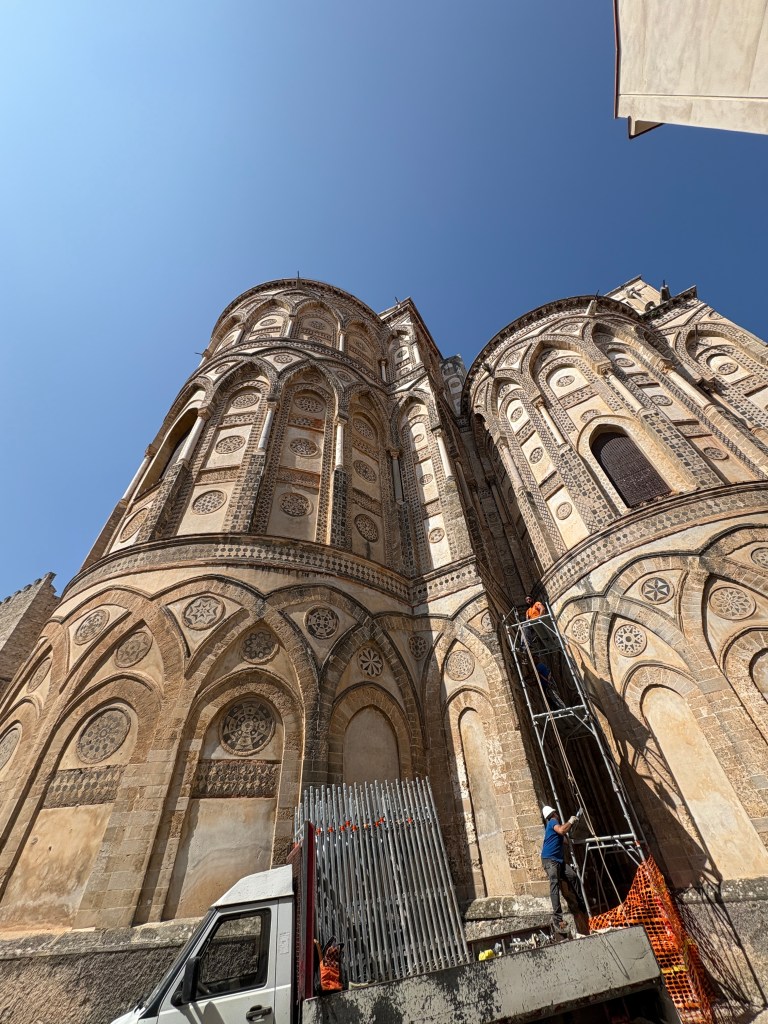
While orienting myself and looking for the entrance, I first encountered the side façade of the Duomo. It had curious features. Workmen were suspended on scaffolding, busy restoring a section. A woman nearby raised her phone to take pictures. I followed suit. As I zoomed in, one of the workmen noticed and teased me, grinning. Embarrassed, I scurried away — a scene straight out of a Fellini film. And the scruffy guy? He looked no less than a leading man in an orange tee. Soon I found the main entrance to the cathedral — while escaping my very own Fellini moment.
I had zero expectations. Monreale Cathedral was something I hadn’t deeply researched. Online sources did note that even though the Duomo was out of the way, it was worth every effort. Perched atop Monte Caputo, the cathedral offered not only panoramic views but also a position of strategic safety during times of invasion.
Having visited other remote religious sites, I’ve learned that the arduous journey is often part of the spiritual experience — a symbolic pilgrimage. A kind of cross to bear on the road to revelation. Monreale, it seemed, was no exception.
The architecture alone was compelling — a convergence of Byzantine, Norman, and Islamic influences. Here, history, artistry, and spirituality weren’t just themes; they were living presences.
And I was not disappointed.
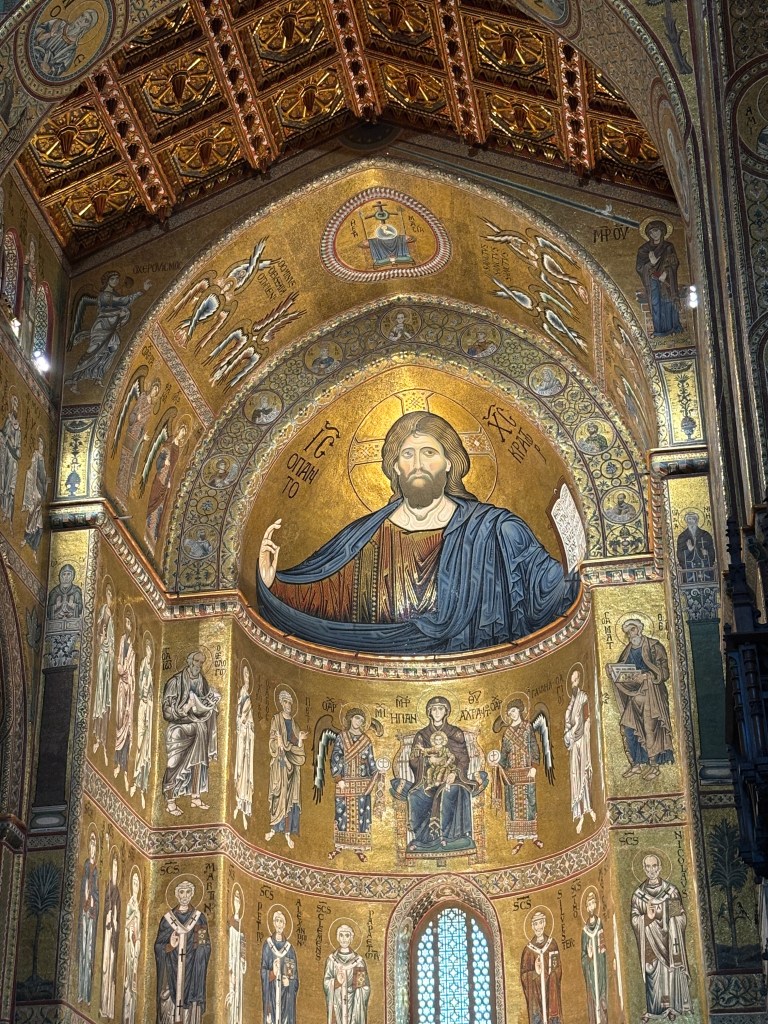
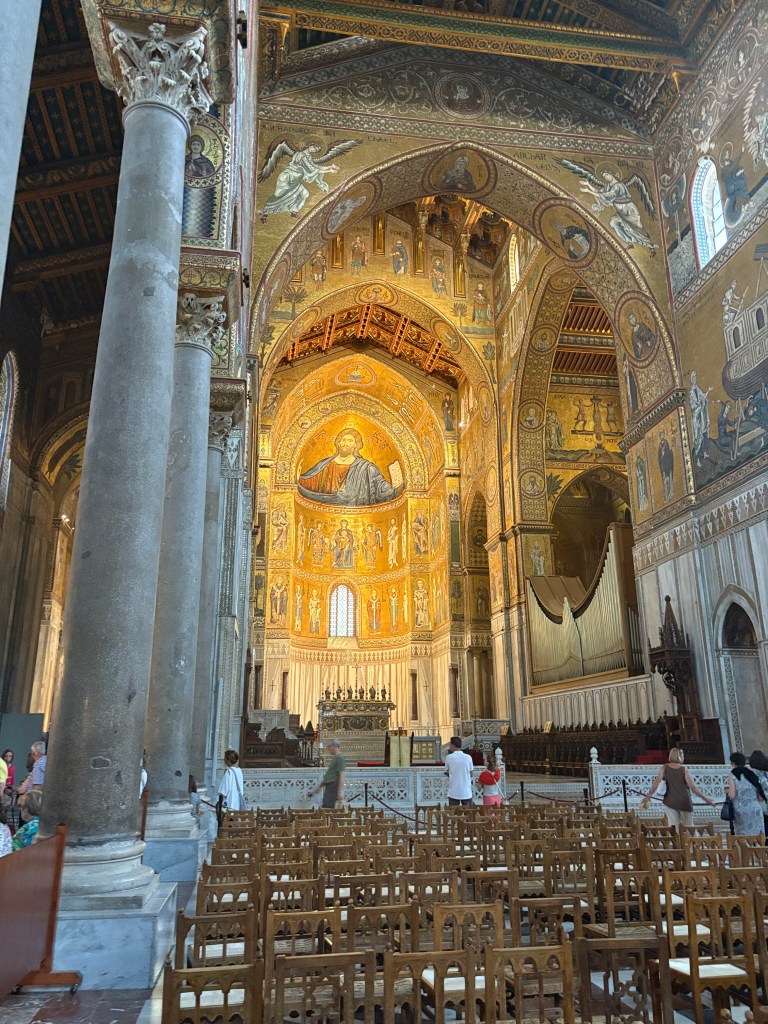
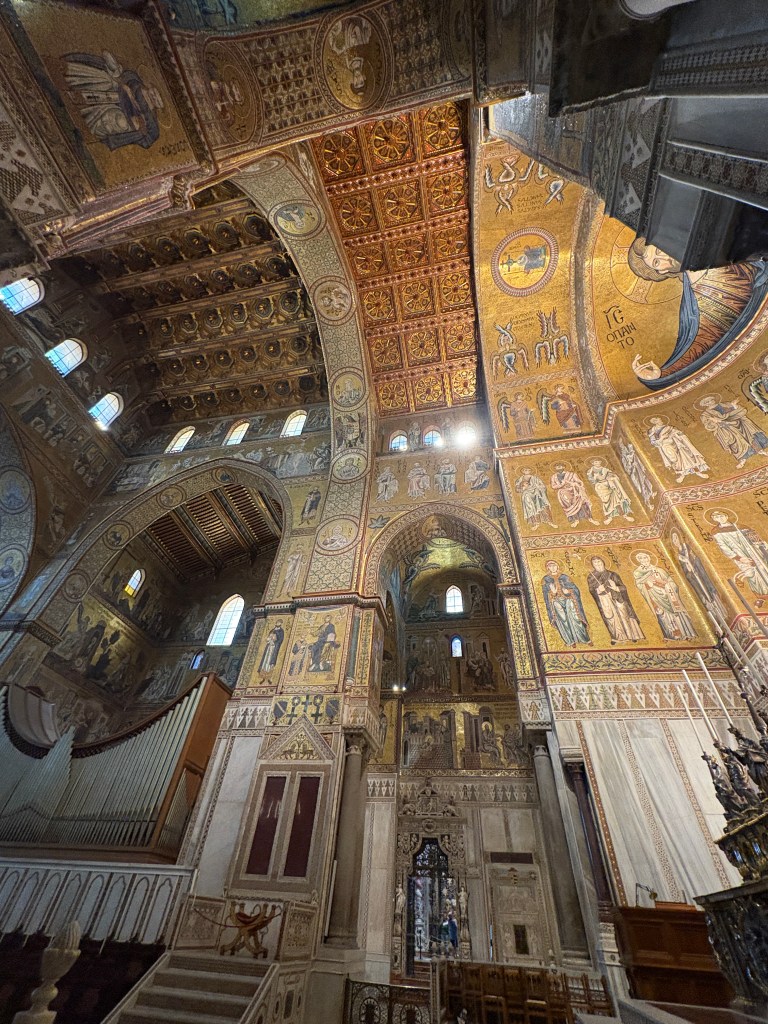
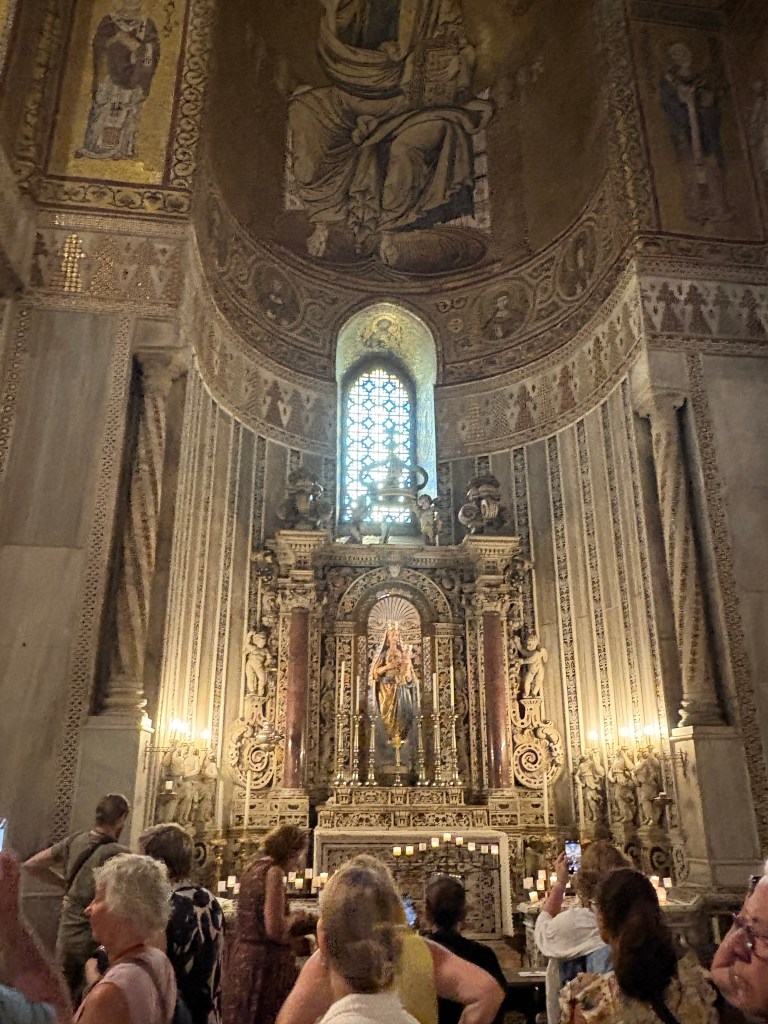
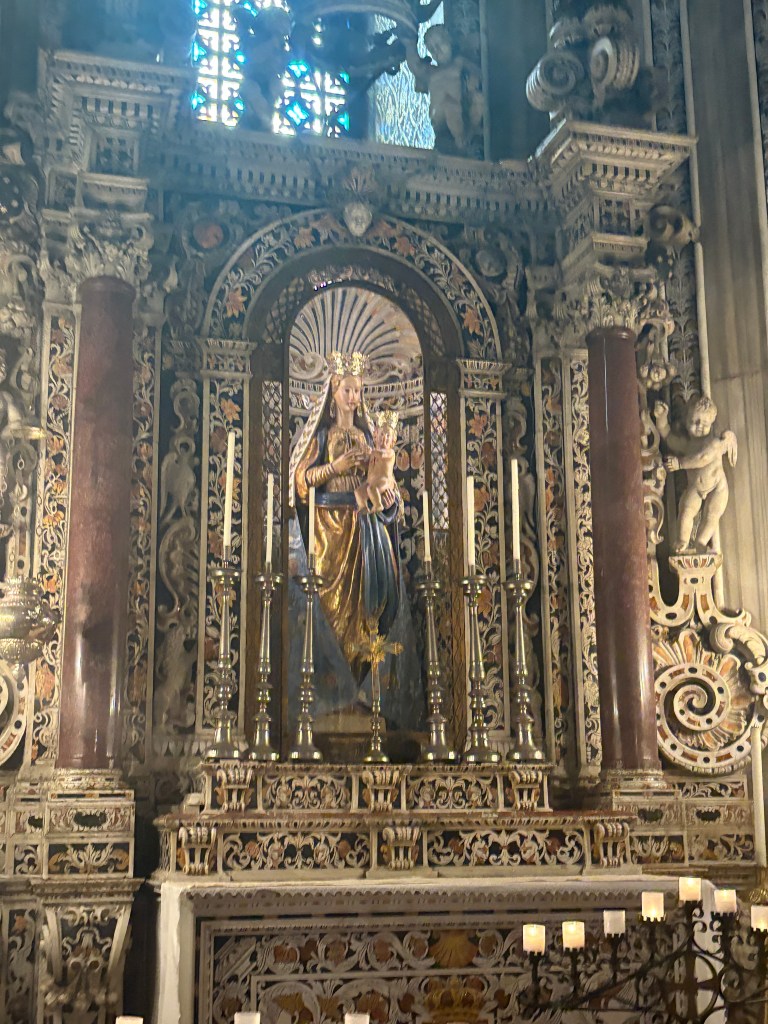
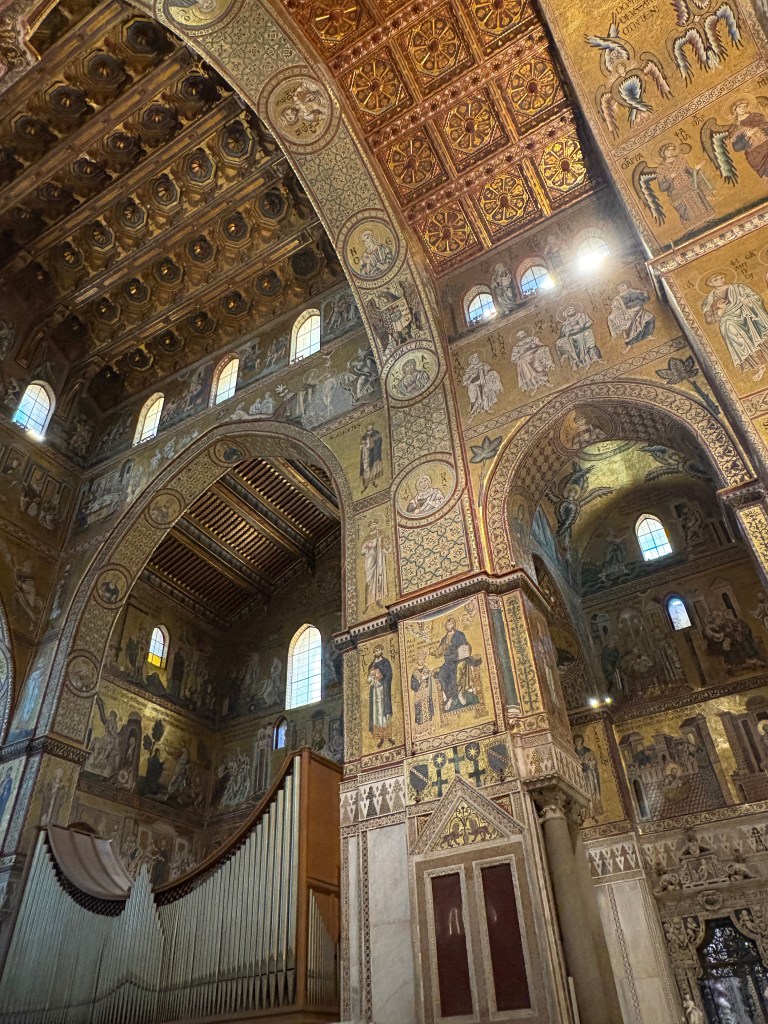
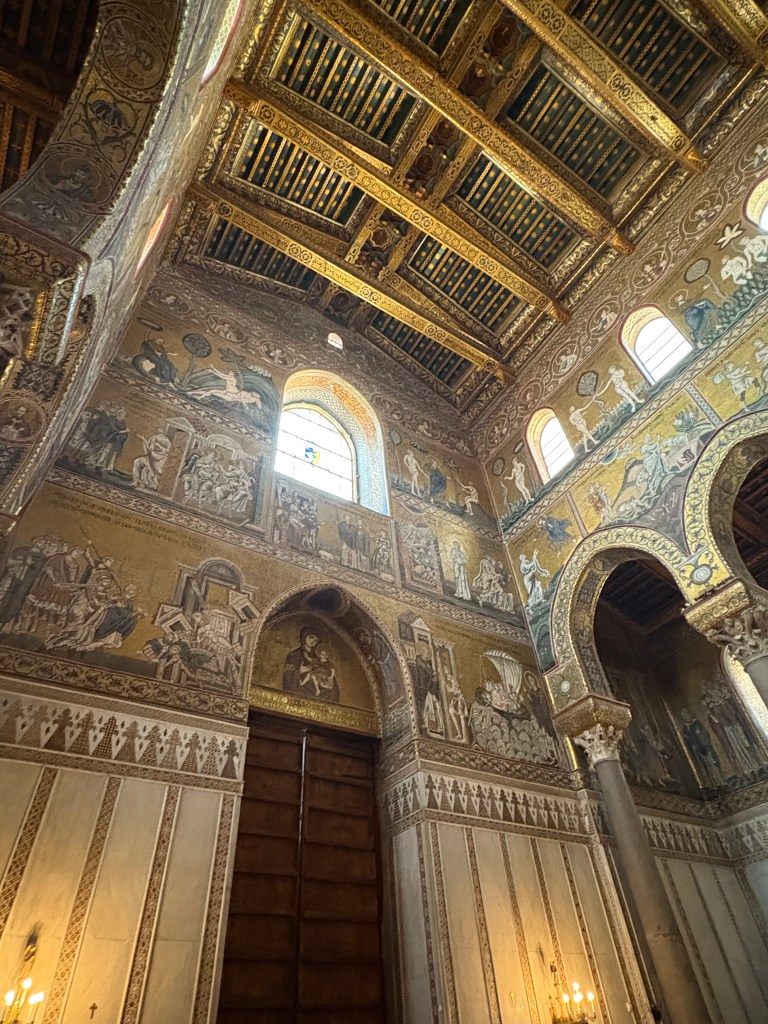
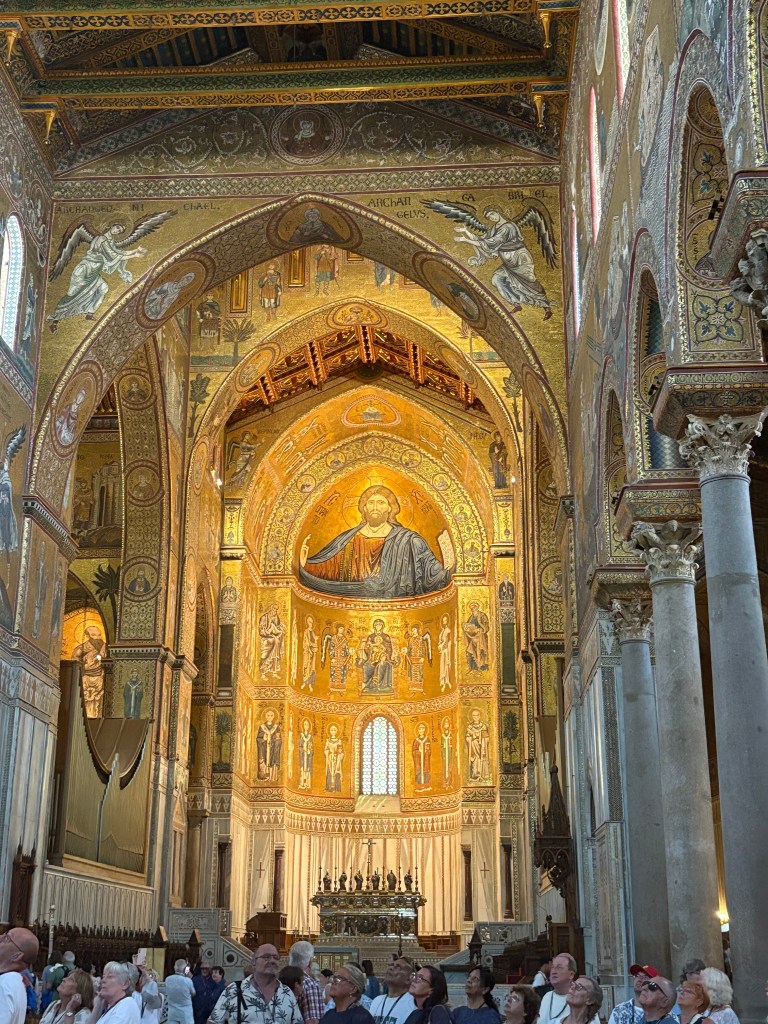
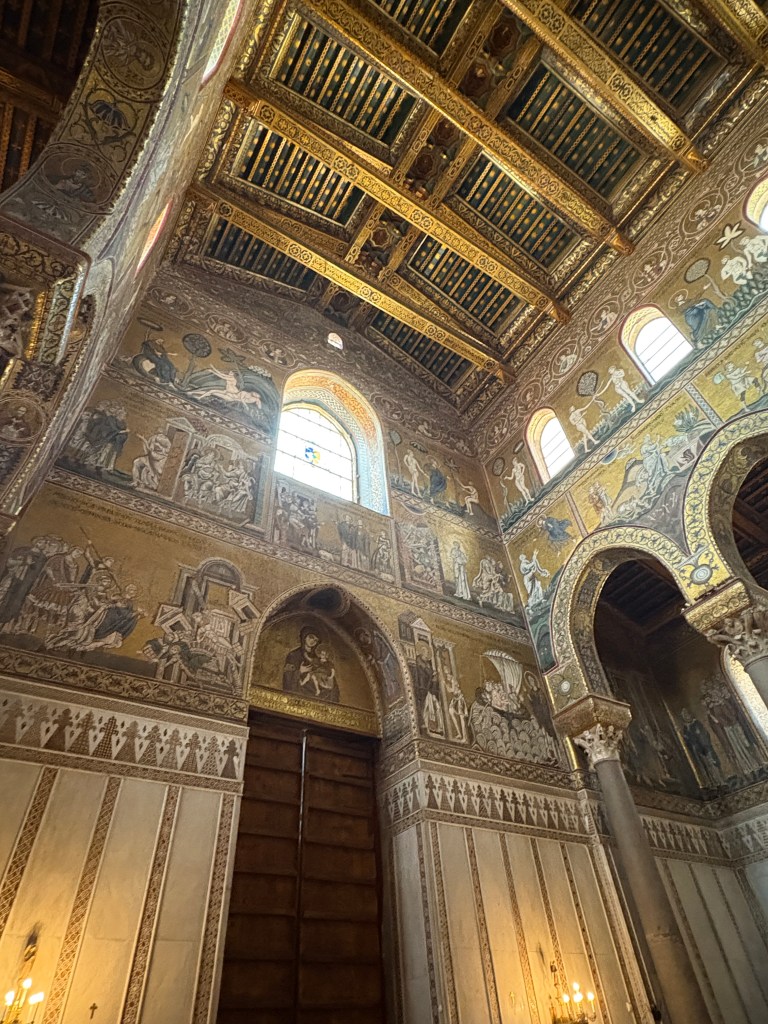
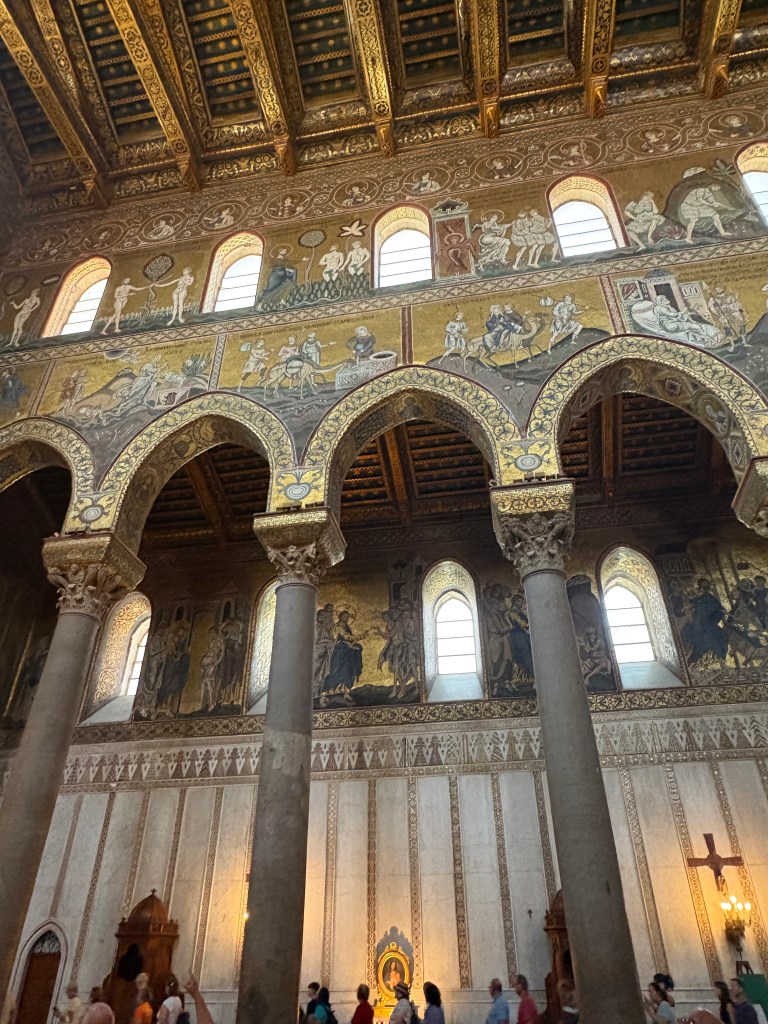
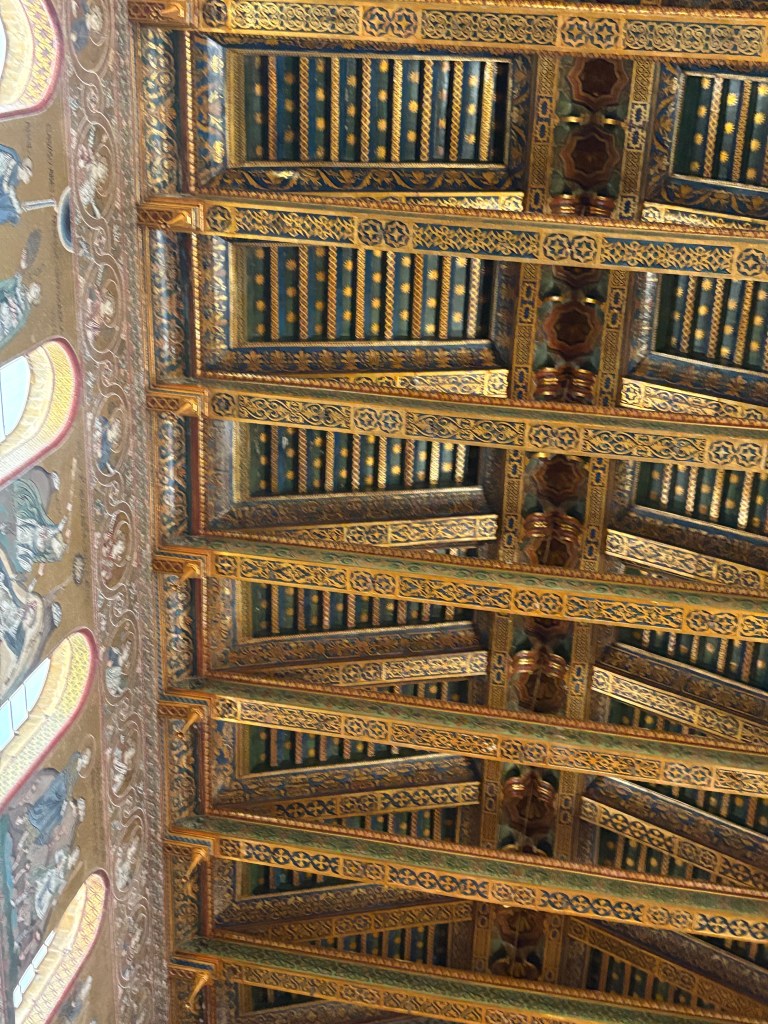
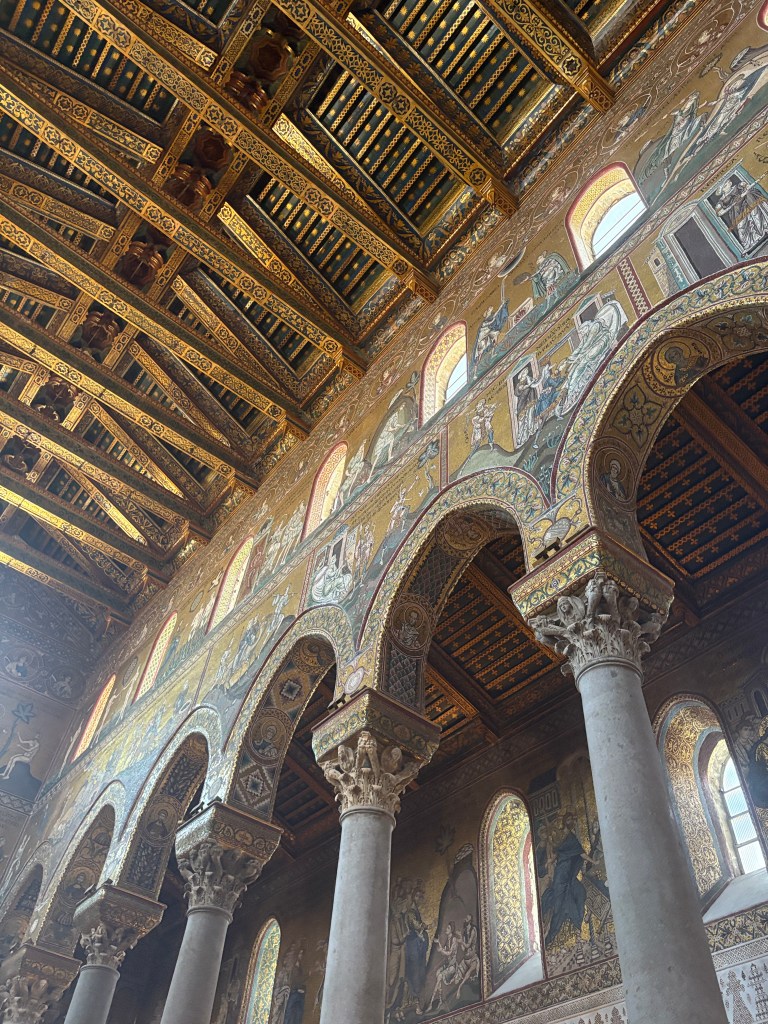
Stepping inside, I walked into a shimmering haven of mosaic. Every inch of the interior gleamed with Byzantine brilliance — saints, prophets, angels, and entire narratives unfolding across the walls and domes. My gaze darted about until our eyes met — mine and his.
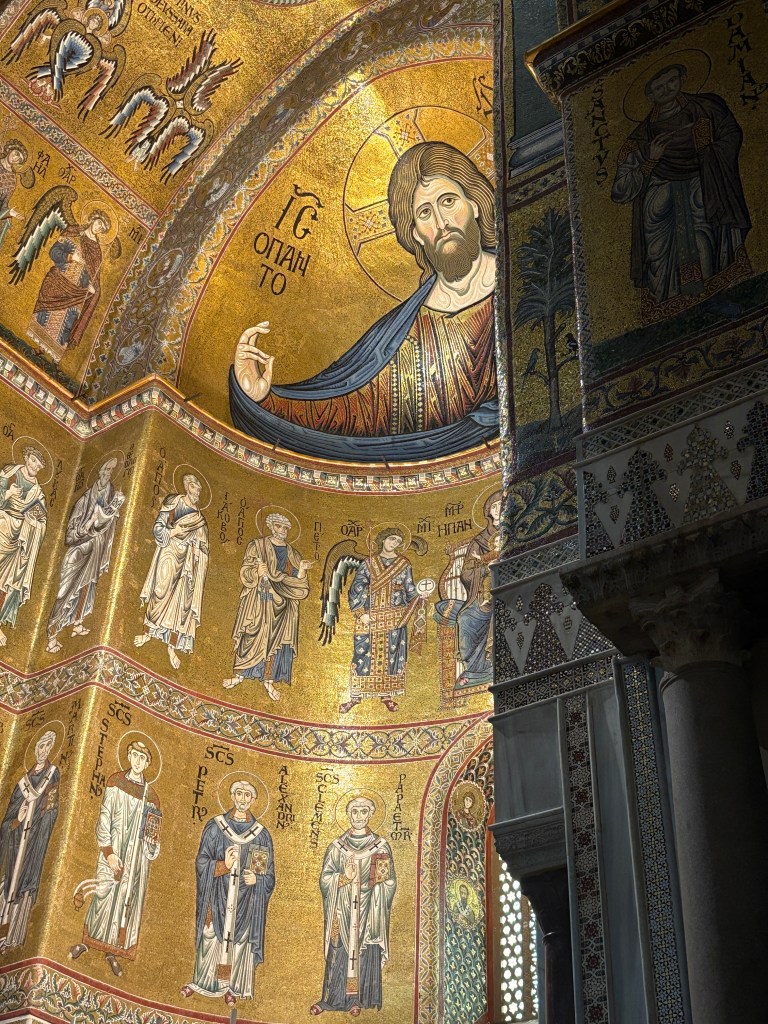
The face of Christ Pantocrator, looming from the apse, gazed out with an expression that held eternity. It should have overwhelmed me. But instead, I felt peace. And awe.
Unlike the familiar image of the suffering Christ on the cross, the Pantocrator represents Christ in glory — enthroned, eternal, omnipotent. “Pantokrátor” in Greek means “Ruler of All.” In this Byzantine vision, he raises one hand in blessing, while the other holds the Book of Gospels, opened to the verse:
“I am the light of the world; whoever follows me will not walk in darkness, but will have the light of life.” (John 8:12)
I lingered, bathing in the golden splendour that enveloped not just the cathedral, but me. It was a beauty that wasn’t just visual — it was palpable, pulsing like a heartbeat.
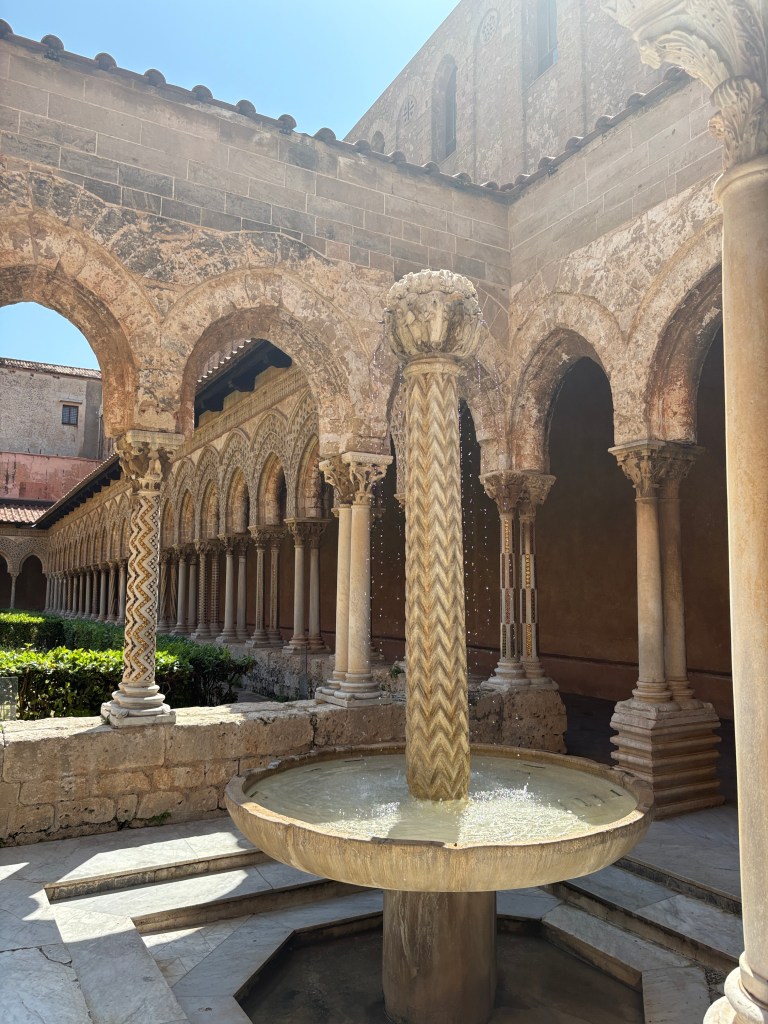
Then came the cloister, and with it, another kind of radiance.
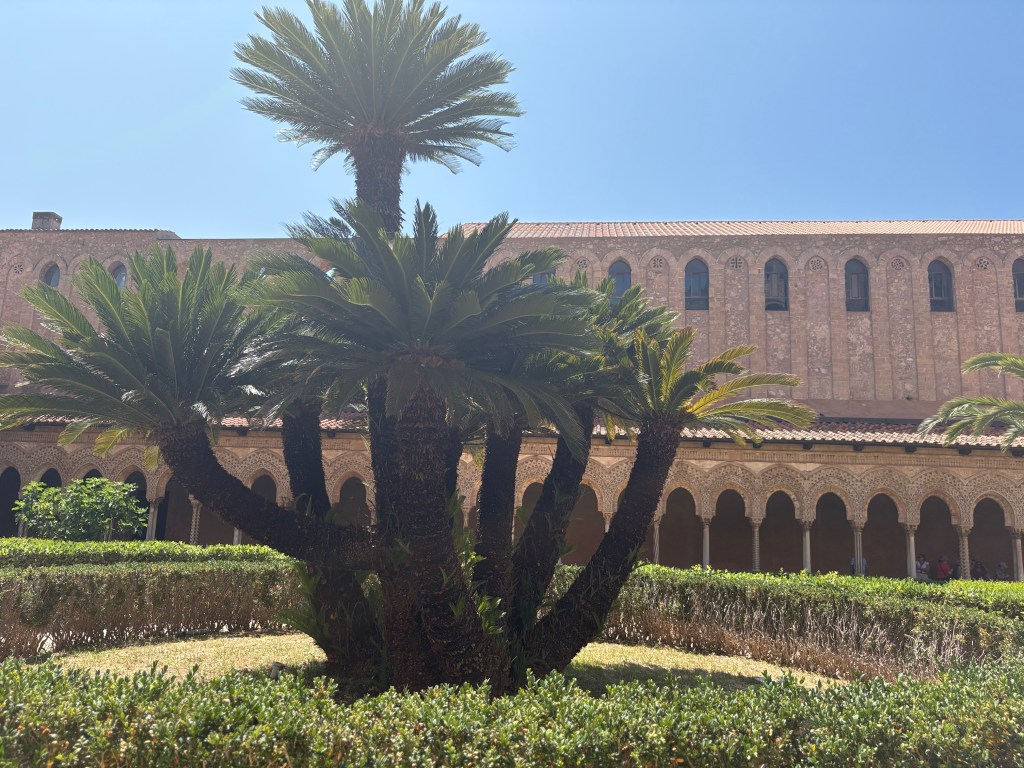
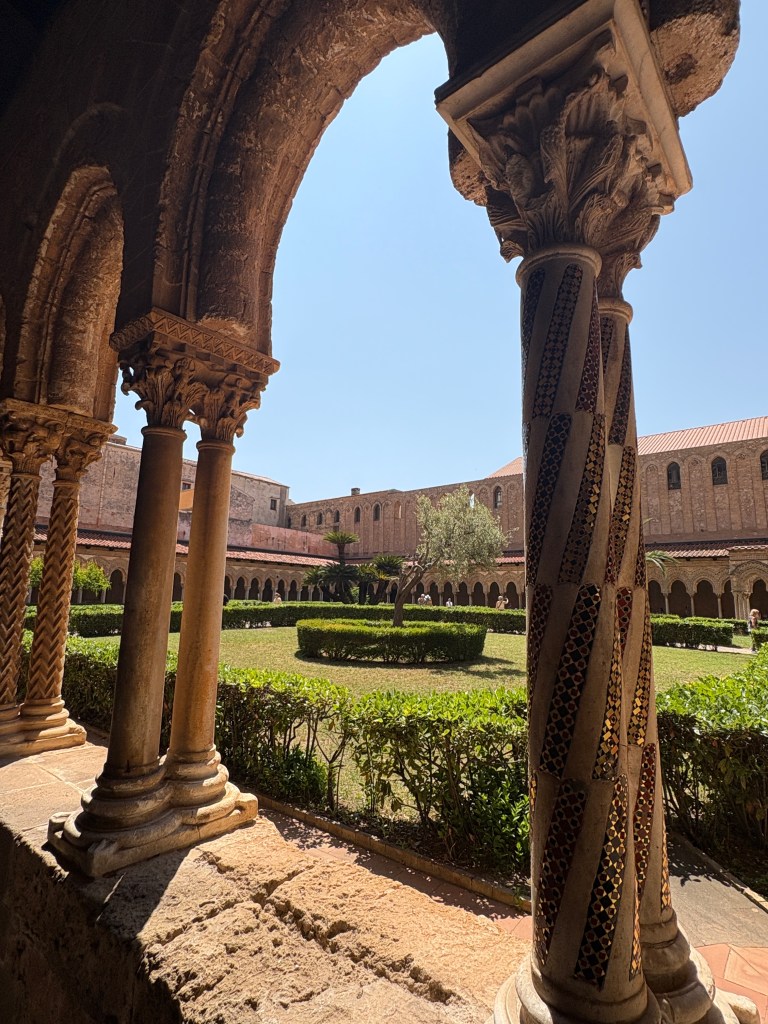
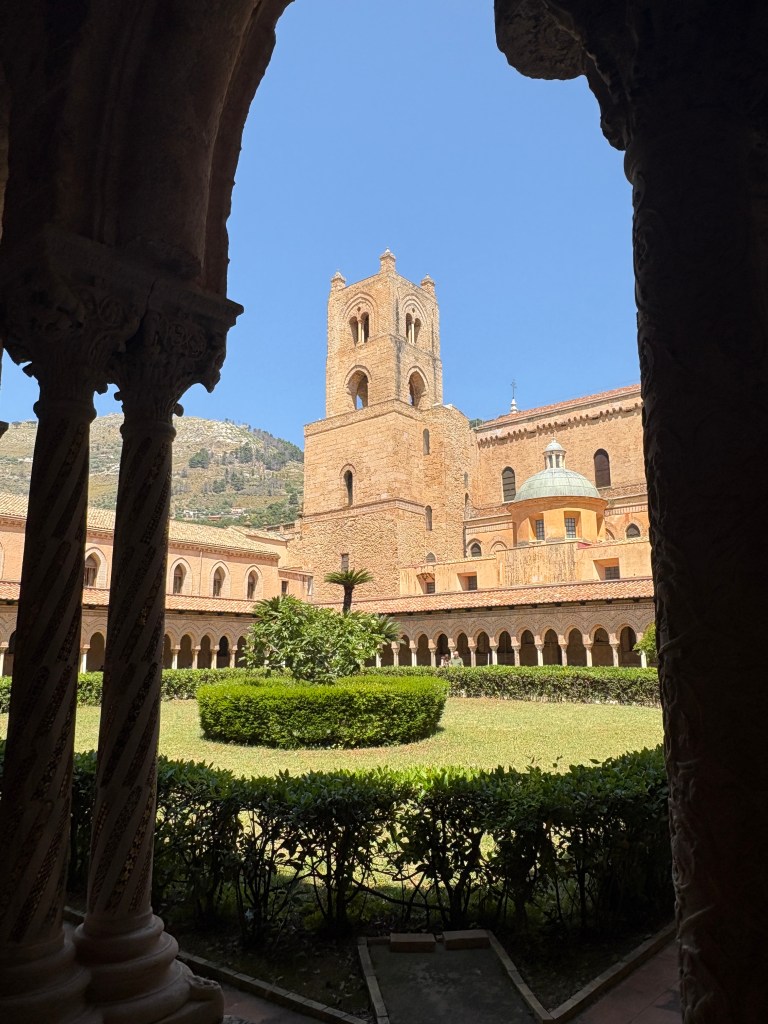
Cloisters are common in Norman architecture, so I expected its presence. But I hadn’t anticipated its impact. If there was ever a moment in my life when I felt I had died and gone to heaven, this was it.
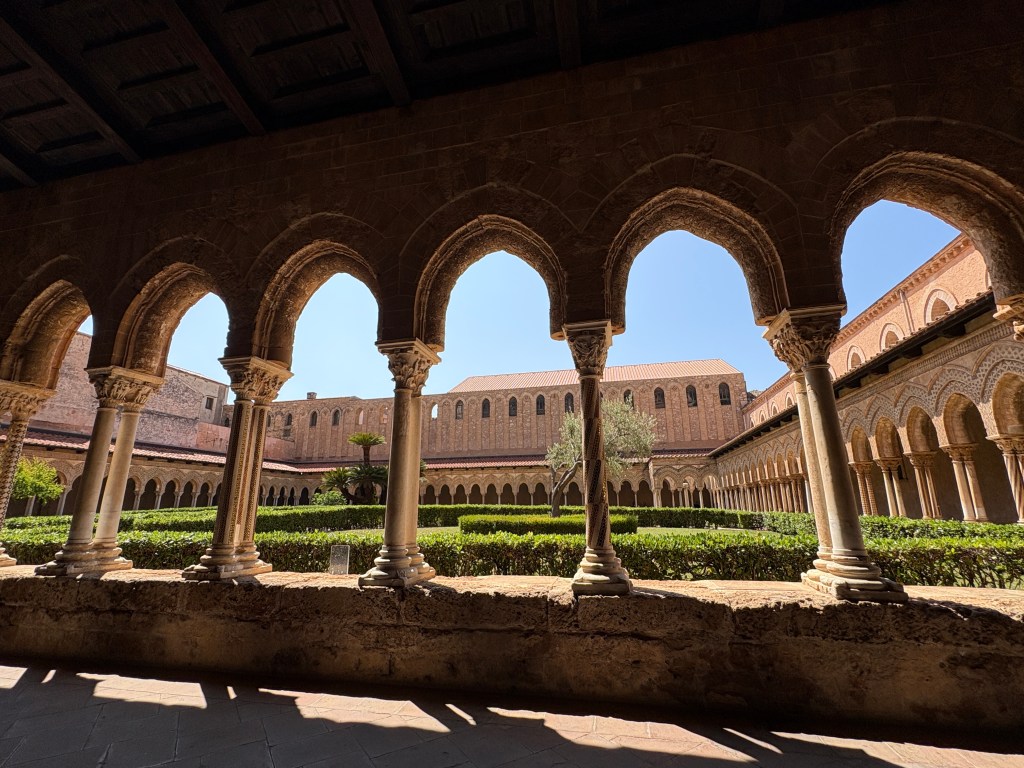
The courtyard glowed not with gold leaf, but with golden sunlight, softened through columns carved with intricate detail. Each column was its own world — some spiralled with vines, others etched with biblical scenes, others still with geometric arabesques that whispered of Islamic artisanship.
At the centre, a fountain trickled softly. Sunlight fell in rays across the garden, casting moving shadows on stone. My pace slowed. My breath did too. I sat there for what felt like forever, soaking in the moment — storing it like treasure in my heart.
If the cathedral was heaven above, the cloister was its garden below. I couldn’t choose between the two. I didn’t have to. Together, they formed a complete idea — a whisper of Sicily’s past as a vibrant meeting point of empires, faiths, and tongues.
Norman ambition. Byzantine vision. Arab artistry. Not blended, but coexisting — a luminous equilibrium.
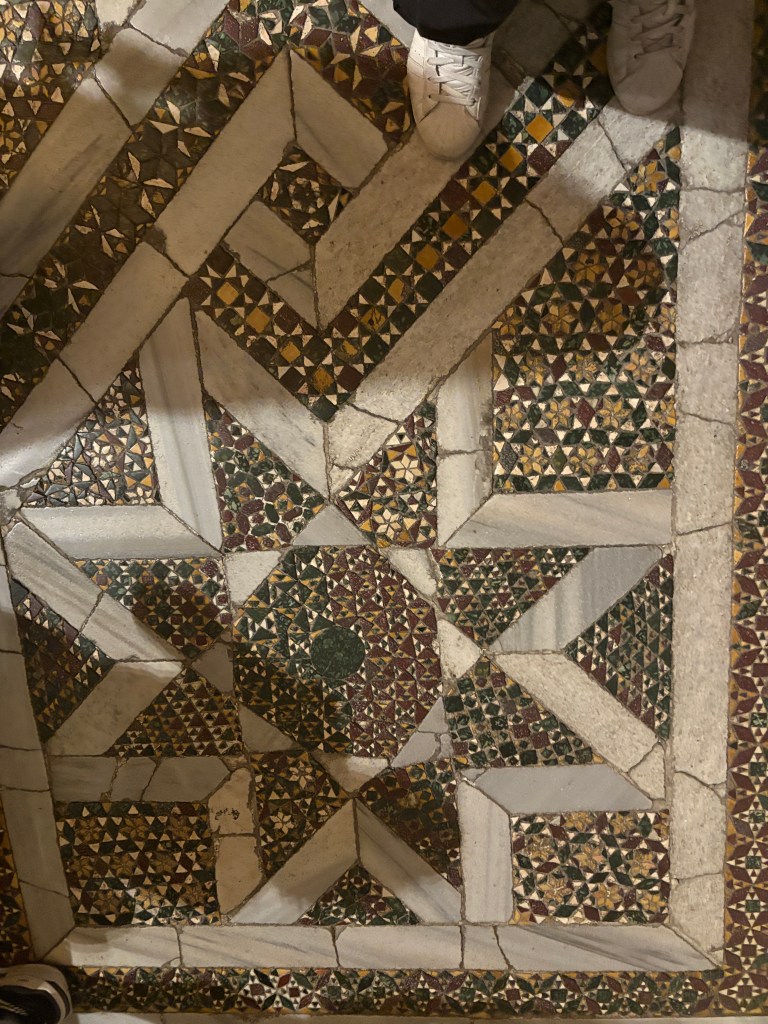
The palaces and decorative sensibilities of the Islamic period had left their mark. The Norman kings, captivated by Arab sophistication, adopted many stylistic elements. Even after the conquest, Muslim artisans remained — their techniques, like muqarnas, arabesques, and geometric motifs, enriching the architecture of power and faith alike.
There’s a phrase people use lightly sometimes: a perfect day.
But I know that when I look back on the best hours of my life, this will be one of them.
The gold.
The sunlight.
The silence.
The unexpected grace of a place I hadn’t planned for — but now, will never forget.
Legend has it that King William II of Sicily dreamt of the Virgin Mary beneath a tree. She led him to a hidden treasure and told him to build a church in her honour. He obeyed.
Little could he have known that he was laying the foundation for someone’s golden dream day, centuries later.
As the Italians say: sogni d’oro — sweet dreams.
I’ll be dreaming of this one for the rest of my life.
 writingaboutpaintings
Leave a comment