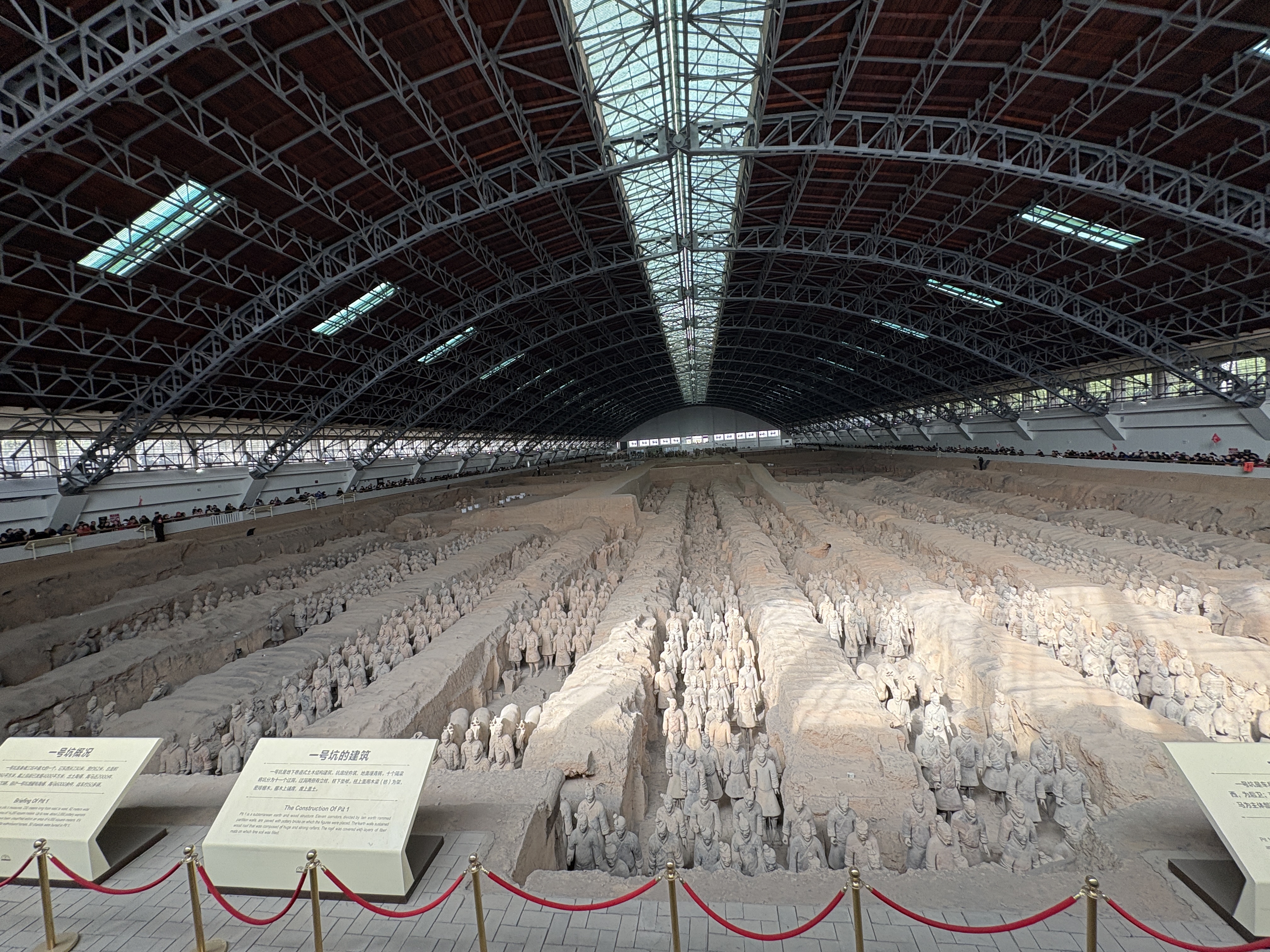
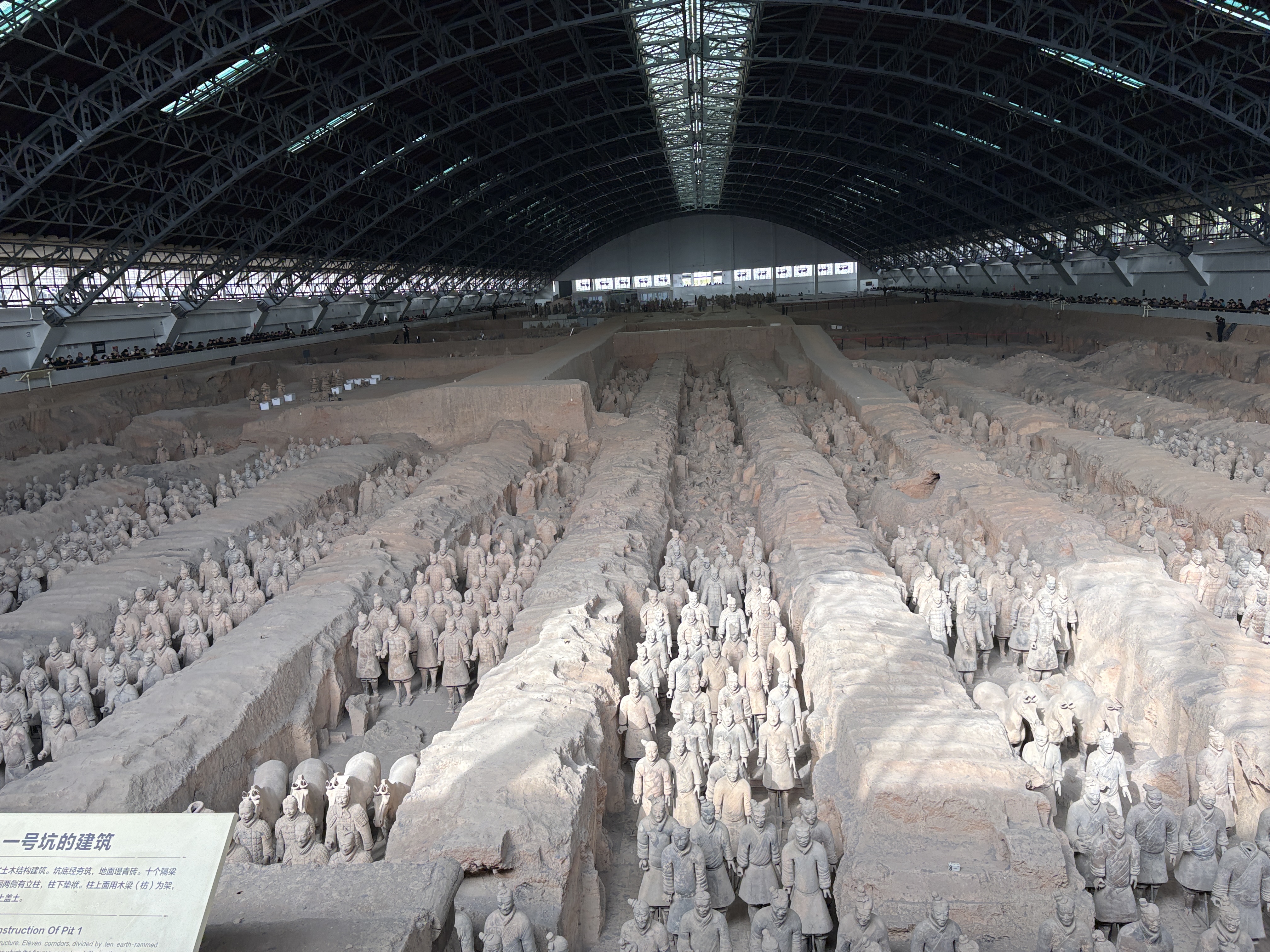
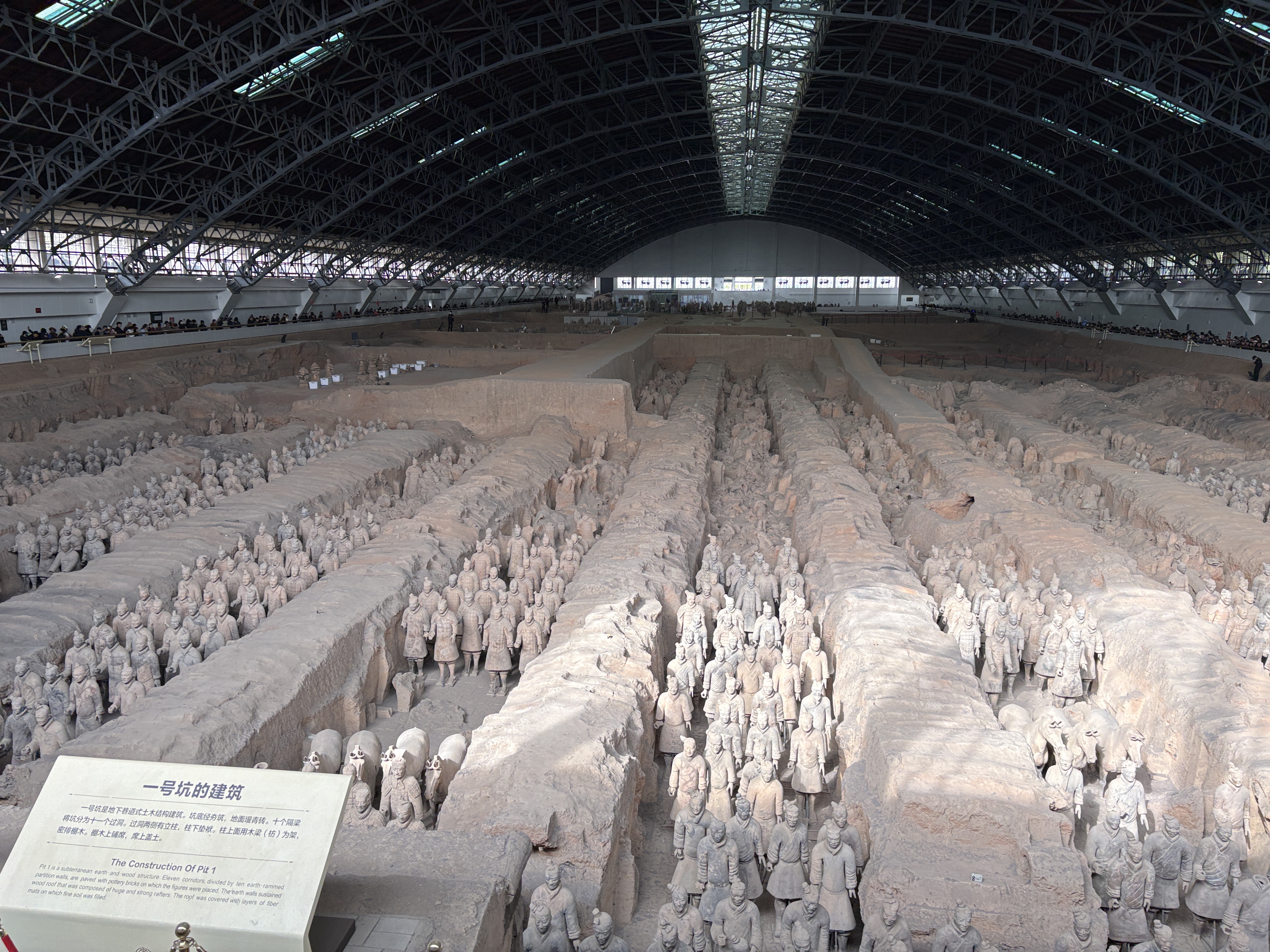
No one fears that a Greek statue might move. No one expects a mummy to rise. Both belong to systems that resolve death — through beauty, through ritual, through closure. The Terracotta Warriors belong to something else.
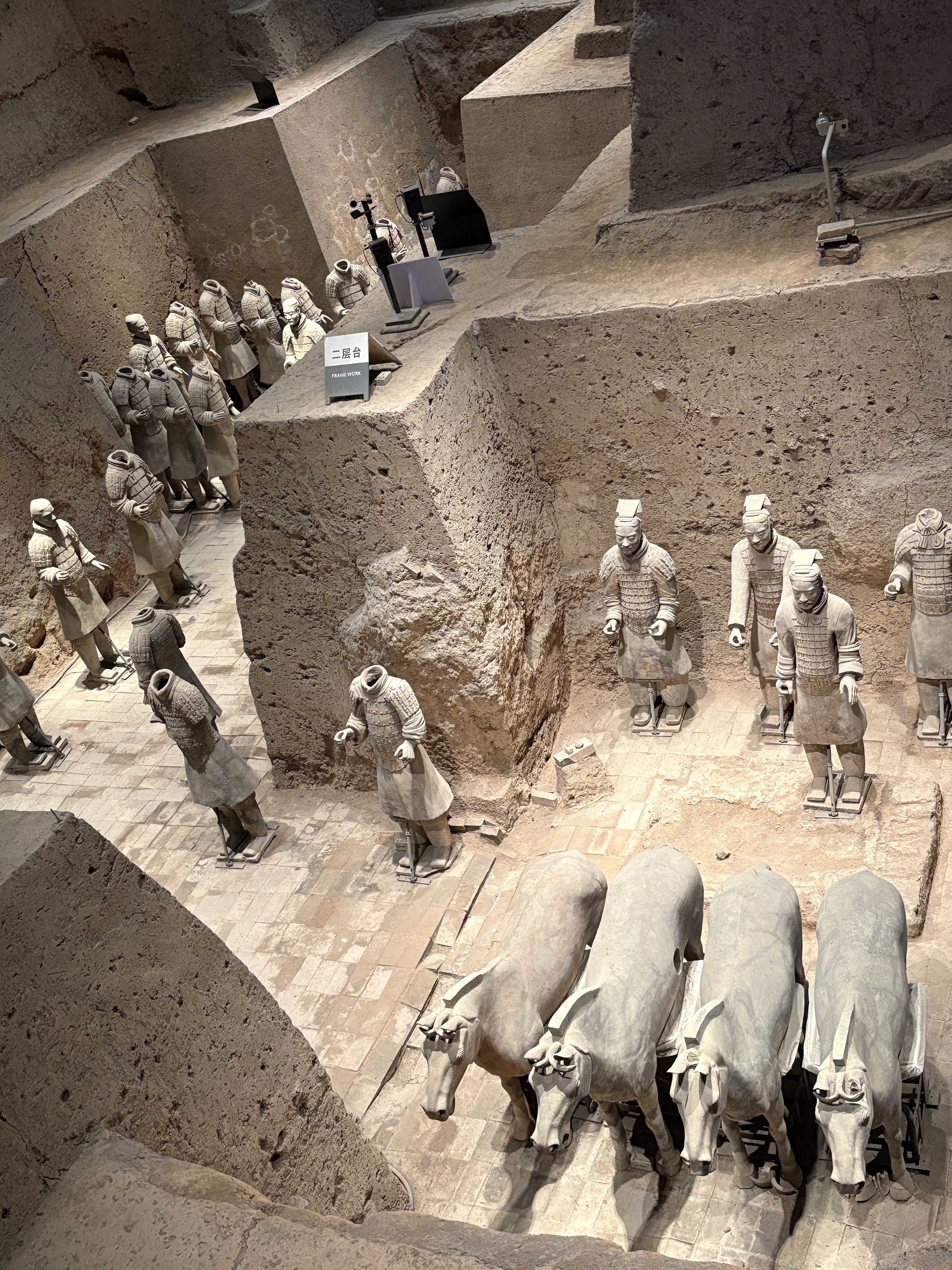
They stand in formation, armed, facing outward, as though still engaged in a task that has not yet ended. And standing before them, the thought arises almost immediately — not because it is rational, but because it feels possible. The thought does not come from imagination. It comes from what they are.
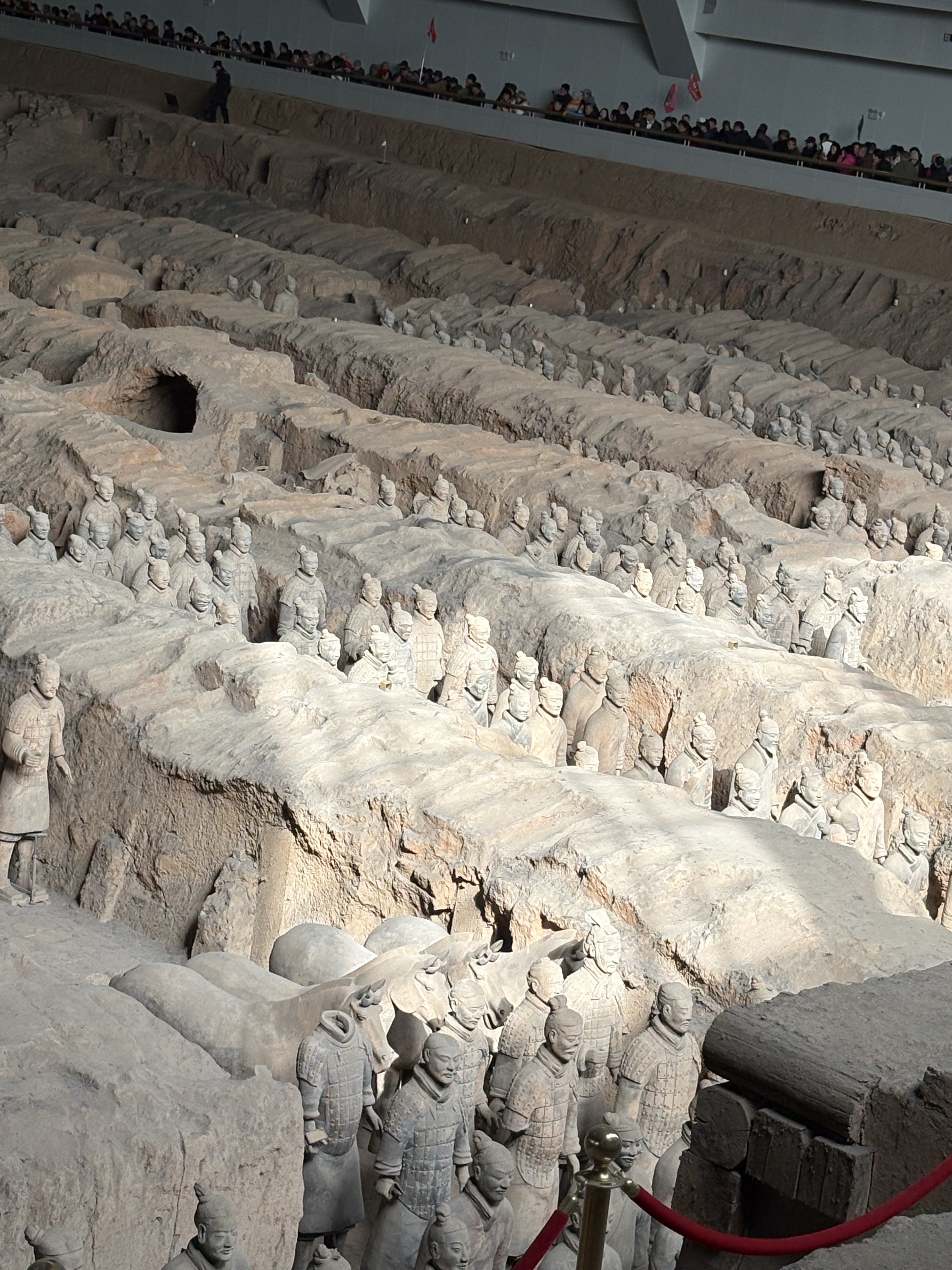
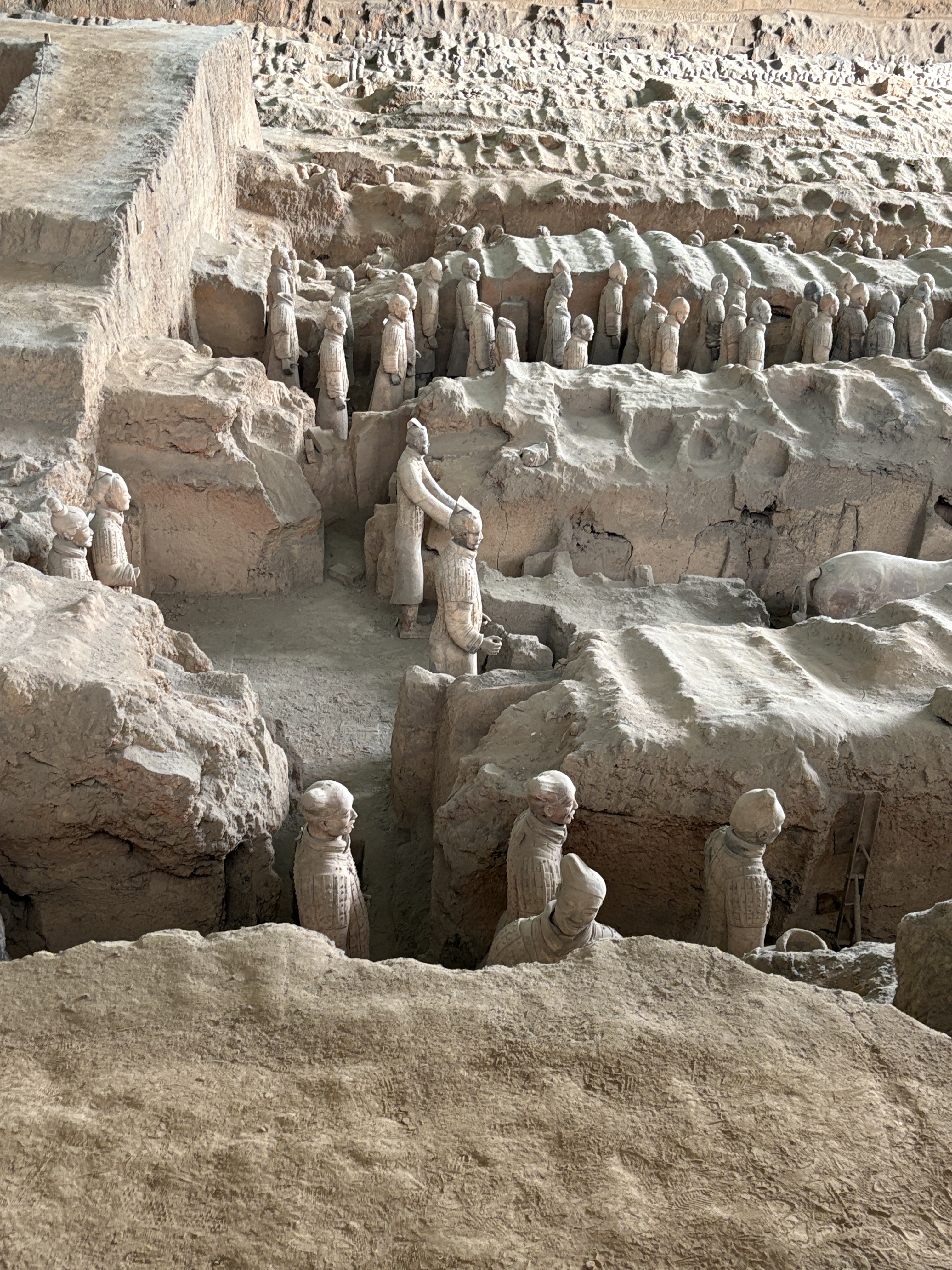
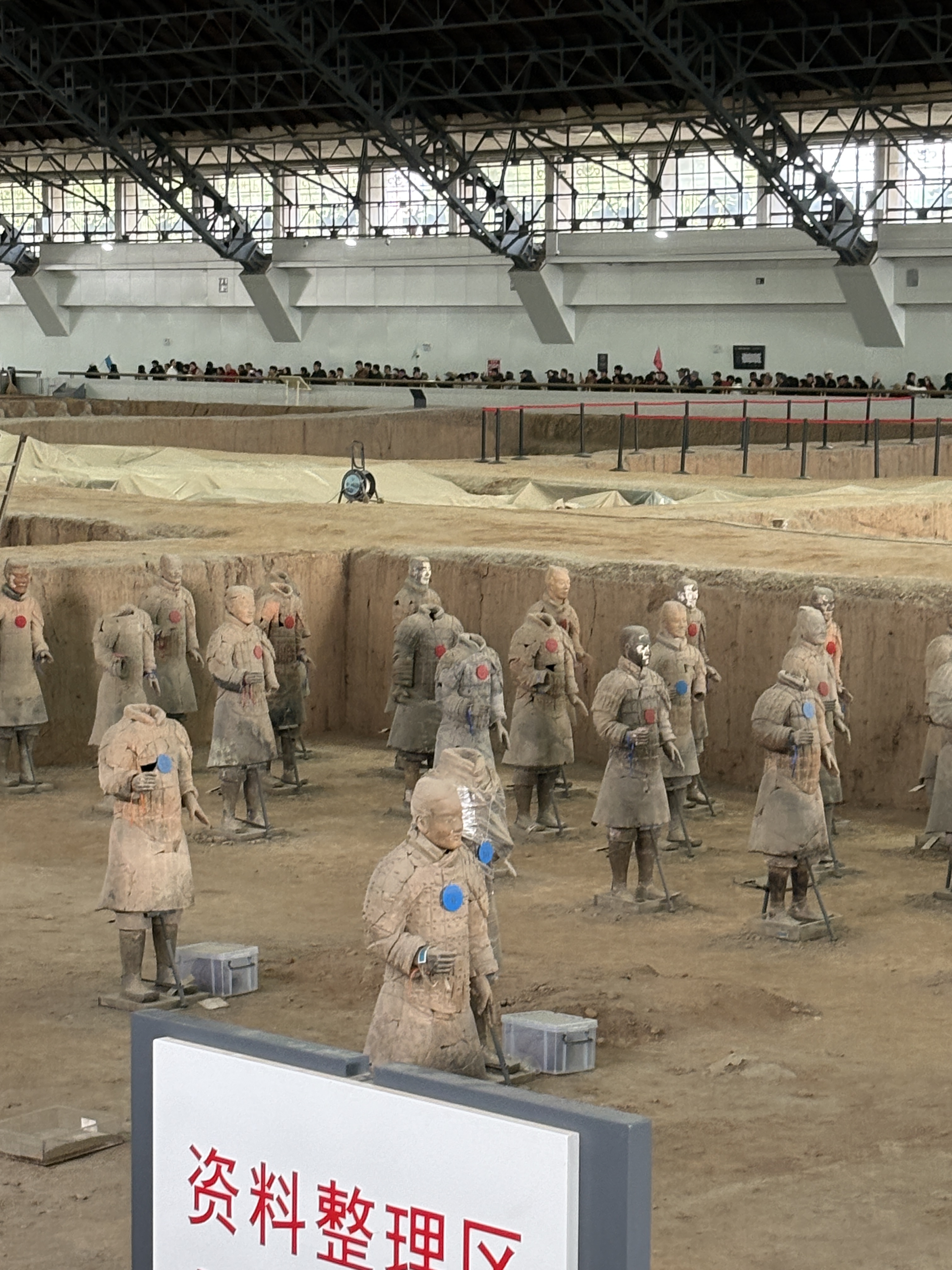
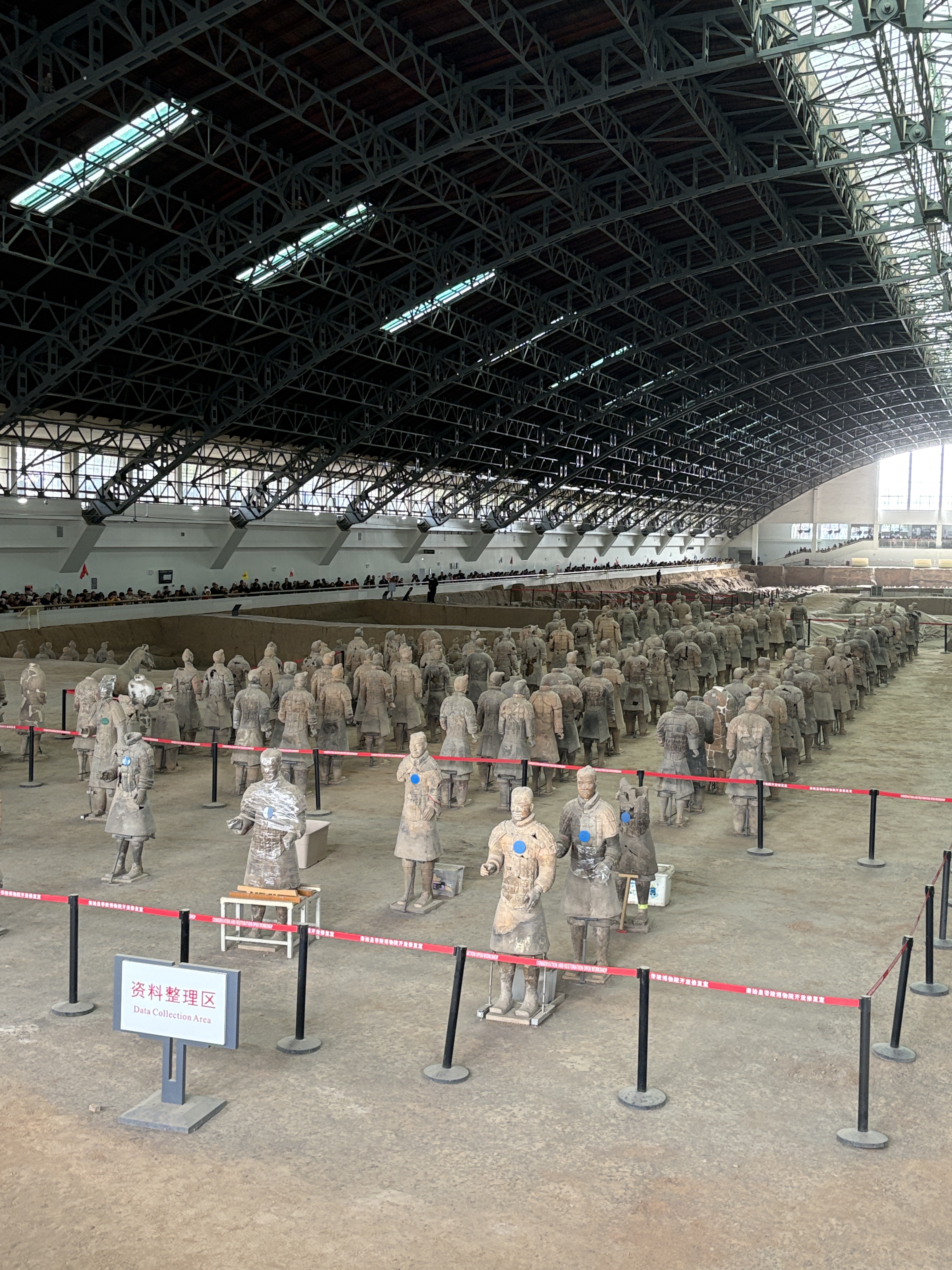
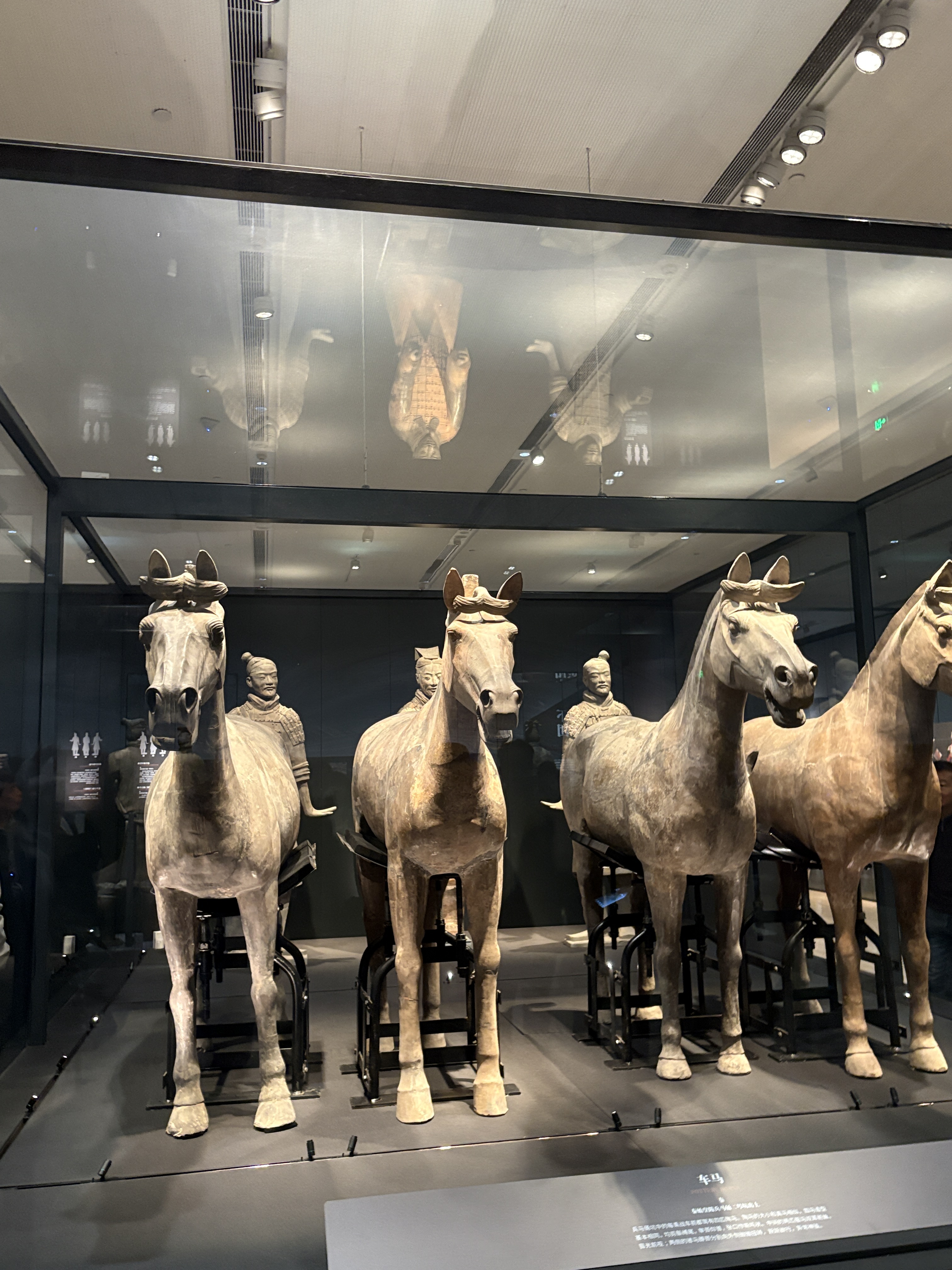
They are not arranged for remembrance. They are not composed for beauty. They are positioned. Each figure stands aligned with others, held in a posture that suggests not movement, but readiness. Weapons once accompanied them. Their bodies face outward. Their gaze does not meet yours. They do not acknowledge the viewer. And that is what unsettles — because it suggests, quietly but unmistakably, that you are not part of the scene they were made for.
This is not an army on display. It is an army interrupted.
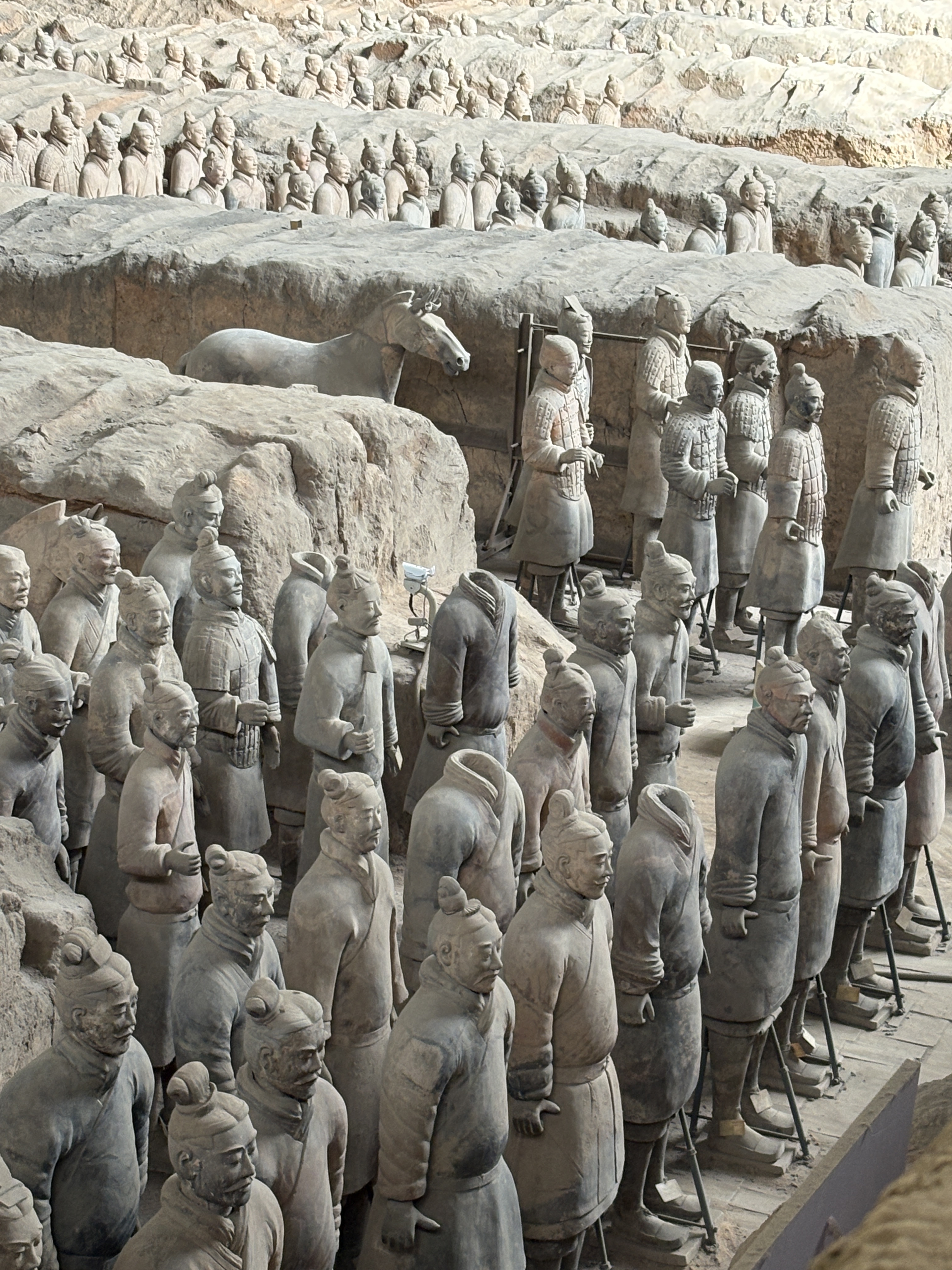
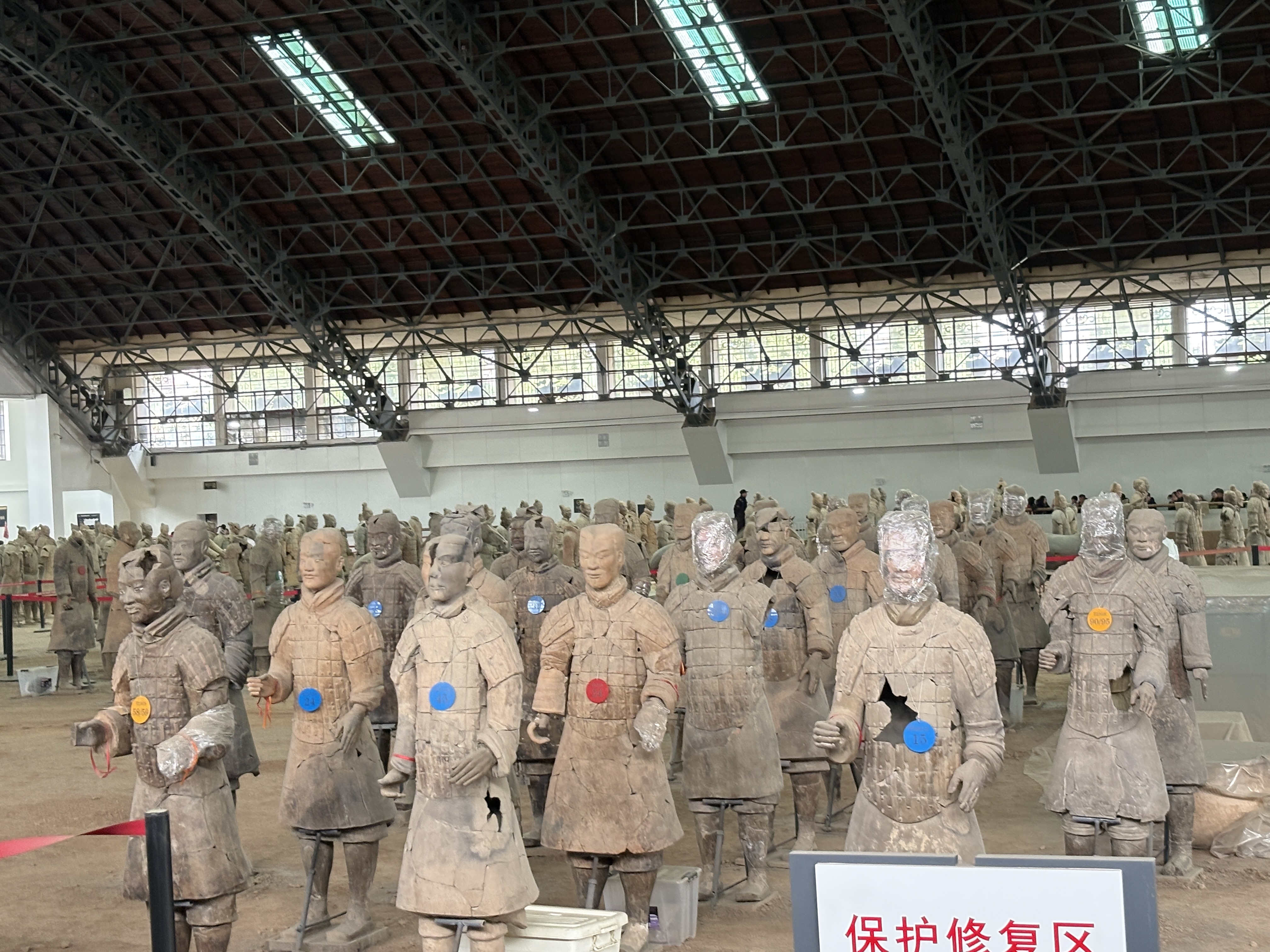
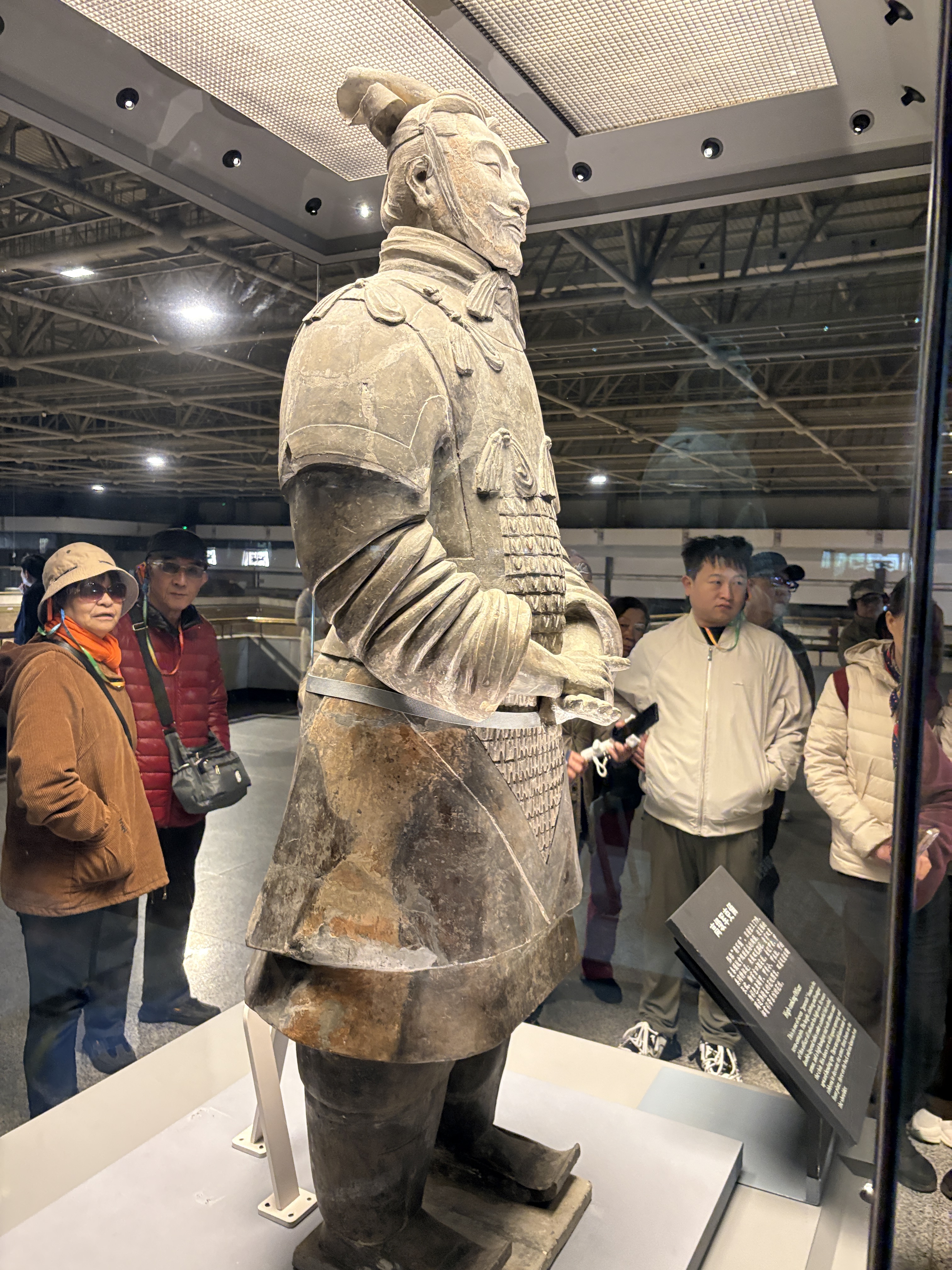
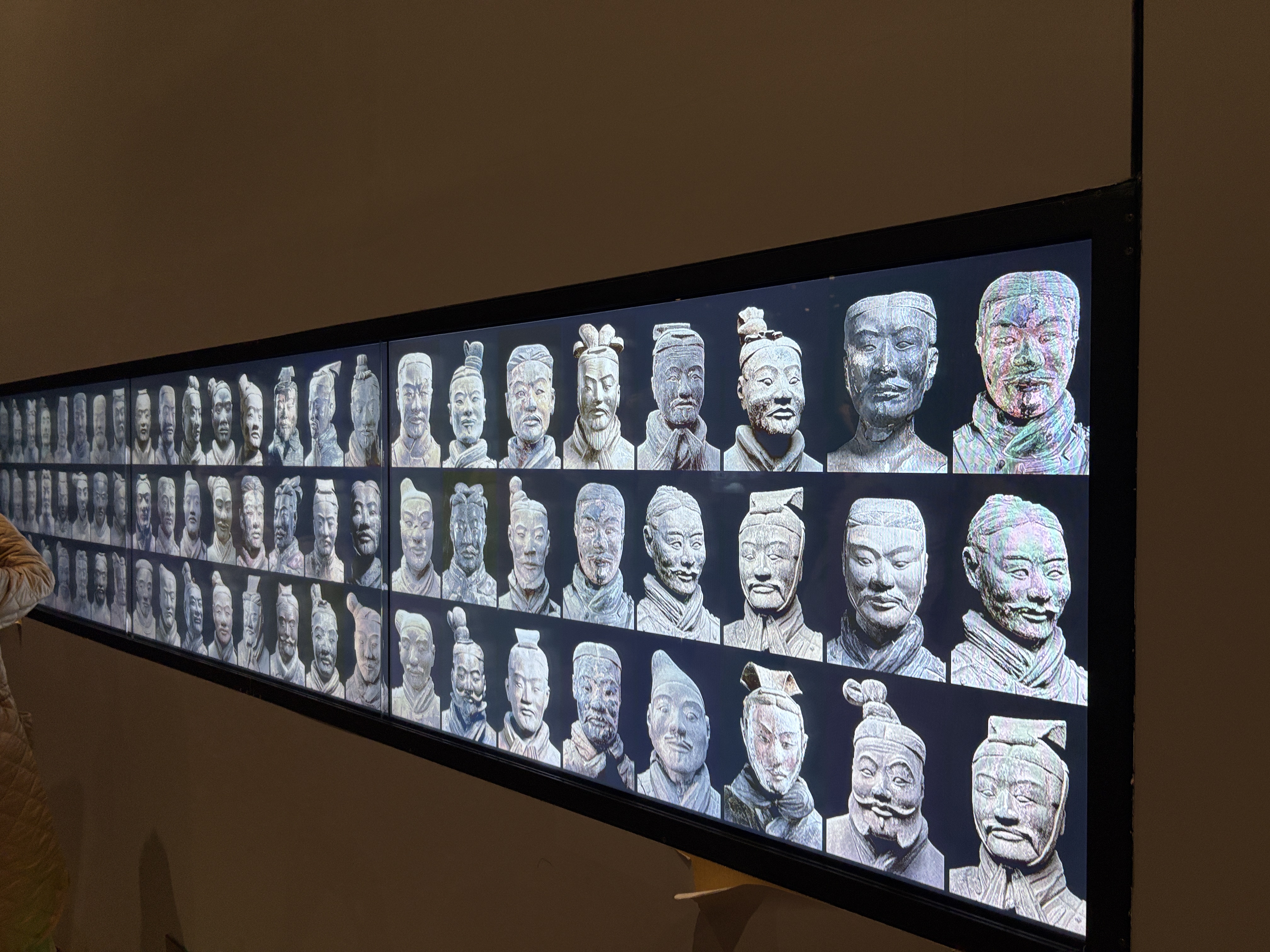
Up close, the faces shift the experience further. Each one is different — subtly modelled, distinct enough to suggest individuality. For a moment, they feel human. But step back, and that impression dissolves. The figures collapse into pattern. Individuality gives way to repetition. Person becomes unit. What remains is not a collection of lives, but a system — ordered, controlled, and unbroken. It is here that the unease sharpens, because what stands before us is not simply an artistic achievement, but the extension of an idea: that order could be imposed so completely that it would endure beyond death.
What they stand before is the tomb of Qin Shi Huang — a ruler remembered for both unification and brutality. Historical accounts describe forced labour on a massive scale, lives spent and lost in the construction of his empire and his tomb. Human sacrifice, too, was not absent. Concubines and artisans are said to have been buried in connection with the mausoleum complex. The presence of the army, then, is not a rejection of violence, but a refinement of it.
The warriors themselves are widely understood not to be portraits of specific individuals. And yet, their faces resist that conclusion. They resemble, in some ways, Roman portraiture more than Greek idealism — not perfected, but observed. Wrinkles, variation, asymmetry — the marks of lived presence. And yet, unlike Roman busts, they preserve no identity. No names. No histories. No recovery of the individual. Each face suggests a life once lived. But without context, without release, that suggestion shifts into something more unsettling — the impression that what was once human has not entirely disappeared.
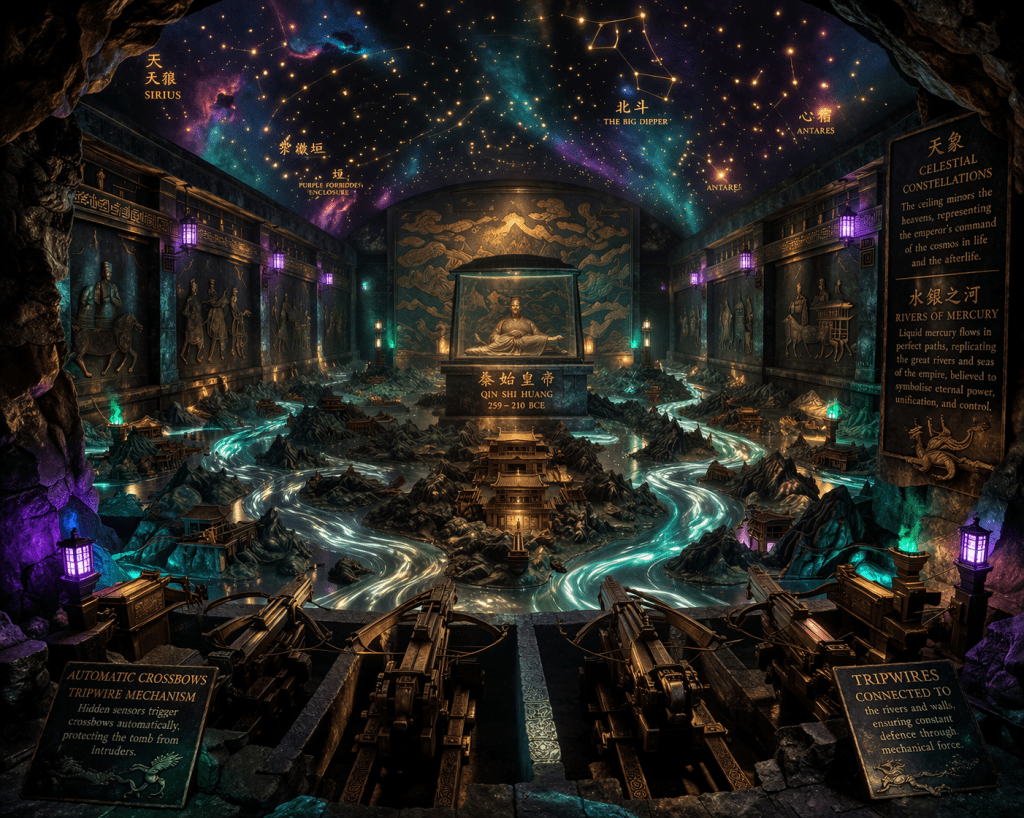
The emperor’s tomb itself remains sealed. Concealed beneath an earthen mound, without visible entrance, it was designed to resist intrusion. Ancient texts describe internal traps, mechanical defences, and rivers of mercury forming a miniature empire beneath the earth — a recreation of the world he ruled. Whether these accounts are literal or not is secondary to the fact that the tomb has never been opened. Not because it cannot be, but because to do so would risk destroying what remains intact.
And so, for once, we stop.
The army, however, did not fail in its purpose. Long before the tomb itself was ever approached, it established a boundary — a visible threshold that both revealed and concealed. It marked the presence of something greater while standing in its place, drawing attention yet holding distance. For centuries, it stood between the world above and the sealed space beneath, deterring intrusion not through violence, but through its very existence.
And when it was finally uncovered, it continued to serve — though not in the way the emperor could have intended.
The moment the warriors were exposed to air, their painted surfaces began to vanish. Colour curled and lifted, dissolving almost instantly into dust. What had once been vivid, distinct, and carefully rendered was reduced within moments to the muted uniformity we now see. What we are left with is not the army as it was created, but the army as it survives being seen.
In this way, the army did not simply guard the tomb. It absorbed the cost of its revelation.
It gave something up so that what lay behind it might remain intact.
The soldiers, already bound in formation and denied release in death, now undergo a second erasure. Their individuality — once carefully modelled, once vividly painted — continues to fade in the present. Not violently, but gradually. Not dramatically, but completely.
They do not resist this erasure.
They enact it.
And in doing so, they fulfil the emperor’s will with a precision that extends beyond his lifetime — guarding not only his tomb, but the conditions required for it to remain untouched.
The horror, then, is not simply that they might move.
It is that they do not need to.
They remain in position. Facing outward. Holding a line. And behind them lies a space we have chosen not to enter — intact, ordered, and untouched.
If one were to entertain the thought — that they might rise, that they might awaken — the question that follows is not what they would do, but whether anything would change at all.
Would they turn against the emperor who bound them to this endless duty?
Or would they remain, as they have always been — aligned, positioned, and obedient?
The more unsettling possibility is not rebellion, but continuation. That even in movement, nothing would be different.
That they would simply resume what was never meant to end. Not everything buried is waiting to be found. And here, perhaps for the first time, restraint is not a limitation, but a recognition —that some systems were never meant to be undone.
Developed in conversations with ChatGPT (OpenAI).


Leave a Reply